



 Chat with AI
Exam 7: Organohalides: Nucleophilic Substitutions and Eliminations

Exam 1: Structure and Bonding:acids and Bases41 Questions
Exam 2: Alkanes: the Nature of Organic Compounds44 Questions
Exam 3: Alkenes and Alkynes: the Nature of Organic Reactions40 Questions
Exam 4: Reactions of Alkenes and Alkynes44 Questions
Exam 5: Aromatic Compounds52 Questions
Exam 6: Sterechemistry at Tetrahedral Centers39 Questions
Exam 7: Organohalides: Nucleophilic Substitutions and Eliminations40 Questions
Exam 8: Alcohols, Phenols, Ethers, and Their Sulfur Analogs36 Questions
Exam 9: Aldehydes and Ketones: Nucleophilic Addition Reactions32 Questions
Exam 10: Carboxylic Acids and Derivatives: Nucleophilic Acyl Substitution Reactions63 Questions
Exam 11: Carbonyl Alpha-Substitution Reactions and Condensation Reactions38 Questions
Exam 12: Amines32 Questions
Exam 13: Structure Determination65 Questions
Exam 14: Biomolecules: Carbohydrates48 Questions
Exam 15: Biomolecules: Amino Acids, Peptides, and Proteins50 Questions
Exam 16: Biomolecules: Lipids and Nucleic Acids50 Questions
Exam 17: The Organic Chemistry of Metabolic Pathways40 Questions
Select questions type


Which of the following statements about an SN2 reaction is true?

Free
(Multiple Choice)
4.8/5  (79)
(79) Correct Answer: Verified
E
Which mechanism is favored by the reaction of a secondary alkyl bromide with potassium t-butoxide?
Free
(Multiple Choice)
4.9/5 (64)
(64) Correct Answer:Verified
VerifiedE
Instructions: For each question, provide structures for the reactants, intermediates, or products, as indicated. Draw the structures in the boxes provided.
-Draw: 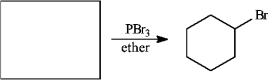
Free
(Essay)
4.8/5 (84)
(84) Correct Answer:Verified
Verified
Instructions: For each question, draw a structure corresponding to the given name.
-Draw:
3-iodoprop-1-ene
(Essay)
4.8/5 (81)
(81) Consider the reactions below to answer the following questions.
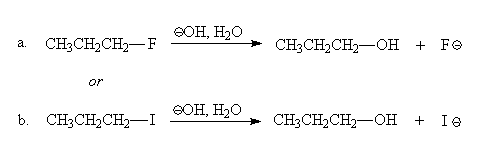 -Which reaction would be predicted to be faster? Explain.
 (Essay)
4.7/5 (70)
(70) Which is most reactive in an SN1 reaction? Explain your choice.
(Multiple Choice)
4.7/5 (70)
(70) Instructions: For each question, draw a structure corresponding to the given name.
-Draw:
(S)-2-bromobutane
(Essay)
4.9/5 (86)
(86) Instructions: Circle the correct response in each set below.
-Refer to instructions. The least reactive compound in an SN2 reaction. Explain your choice. 
(Essay)
4.8/5 (81)
(81) Instructions: Consider the pair of reactions below to answer the following question(s).
a.  or
b.
 -Refer to instructions. The alkyl bromide starting materials in these reactions are classified as:
or
b.
-Refer to instructions. The alkyl bromide starting materials in these reactions are classified as: (Multiple Choice)
4.9/5 (61)
(61) 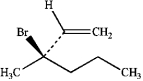
Instructions: Provide a IUPAC name for each of the following alkyl halides.
-Name:
CHI3 (iodoform)
(Short Answer)
4.8/5 (68)
(68) Instructions: Consider the reaction below to answer the following question(s).
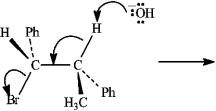 -Refer to instructions. The mechanism of this reaction is:
 (Multiple Choice)
5.0/5 (77)
(77) Instructions: For each question, draw a structure corresponding to the given name.
-Draw:
1,2-dichloro-1,1,2,2-tetrafluoroethane (Cryofluorane)
(Essay)
4.9/5 (97)
(97) Instructions: Consider the reaction below to answer the following question(s).
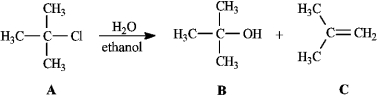 -Refer to instructions. Compound C is the:
 (Multiple Choice)
4.8/5 (79)
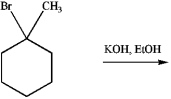
(79) 
Instructions: Consider the pair of reactions below to answer the following question(s).
a.
or
b.
-Refer to instructions. The mechanism for these reactions is:
or
b.
-Refer to instructions. The mechanism for these reactions is: (Multiple Choice)
4.8/5 (84)
(84) Instructions:
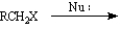
For each substrate below, choose which reaction type is favored. Place the letter of the reaction type in the blank above the substrate.
-Refer to Instructions.
_____ 
(Multiple Choice)
4.7/5 (81)
(81) Instructions: Provide a IUPAC name for each of the following alkyl halides.
-Name:  (Halothane)
 (Short Answer)
4.8/5 (82)
(82) Instructions: Consider the reaction below to answer the following question.
 -Refer to instructions. The mechanism for this reaction is:
 (Multiple Choice)
4.8/5 (89)
(89) 
Filters
- Essay(0)
- Multiple Choice(0)
- Short Answer(0)
- True False(0)
- Matching(0)