



 Chat with AI
Exam 9: Application: International Trade


The North American Free Trade Agreement

 (72)
 Verified
C
Figure 9-9 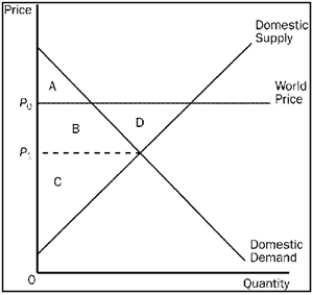 -Refer to Figure 9-9. Total surplus in this market after trade is
 (72) VerifiedC
What are the arguments in favor of trade restrictions, and what are the counterarguments? According to most economists, do any of these arguments really justify trade restrictions? Explain.
(78) VerifiedArguments mentioned in the text include the jobs argument, the national security argument, the infant industry argument, the unfair competition argument, and the protection-as-a-bargaining-chip argument. These arguments and counter-arguments are outlined in section 9-3 of the text. Most economists would dismiss the jobs argument, the infant industry argument, and the unfair competition argument on strictly economic grounds. The bargaining-chip argument carries high risks of economic harm if the threat doesn't work. The national-security argument balances economic loss from trade restriction against the benefit of long-term national survival, and is probably the argument that economists would most likely buy if it were clear that the industry being protected was clearly crucial to national security.
There are only increases in total surplus when a country exports a good, since more units of the country's output of that good are produced.
(61) Figure 9-18. On the diagram below, Q represents the quantity of peaches and P represents the price of peaches. The domestic country is Isoland. 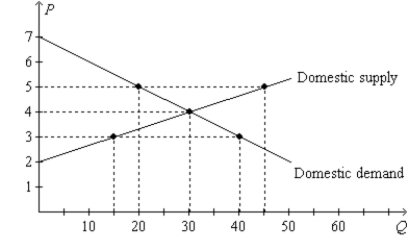 -Refer to Figure 9-18. If Isoland allows international trade, then it will be an exporter of peaches if and only if the world price of peaches is
 (76) Figure 9-29
The following diagram shows the domestic demand and domestic supply curves in a market. Assume that the world price in this market is $1 per unit. 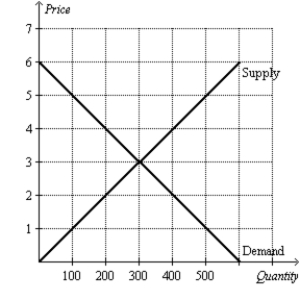 -Refer to Figure 9-29. Suppose the country imposes a $1 per unit tariff. If the country allows trade with a tariff, how many units will be imported?
 (68) Figure 9-25
The following diagram shows the domestic demand and supply in a market. Assume that the world price in this market is $10 per unit. 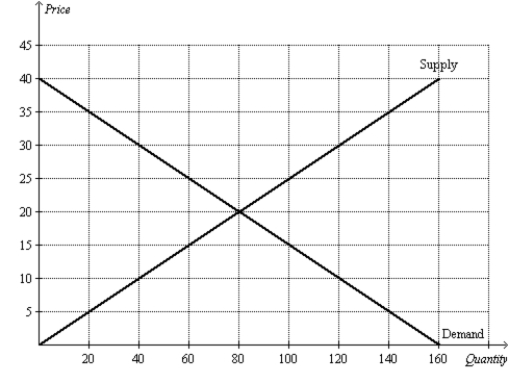 -Refer to Figure 9-25. With free trade and a $5 per unit tariff, the country
 (96) Figure 9-5
The figure illustrates the market for tricycles in a country. 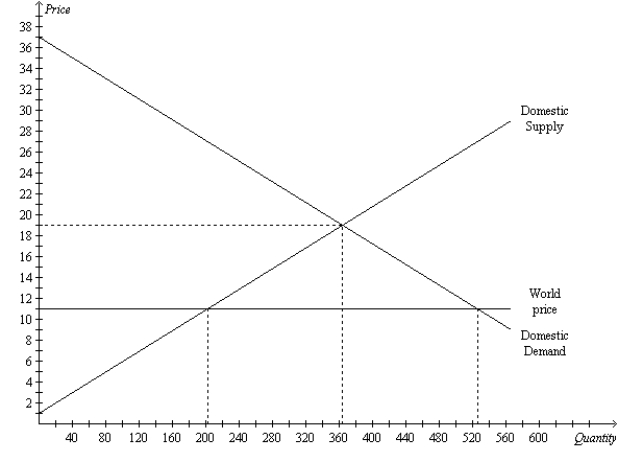 -Refer to Figure 9-5. If this country allows free trade in tricycles,
 (76) Figure 9-5
The figure illustrates the market for tricycles in a country.
-Refer to Figure 9-5. With trade, consumer surplus is
-Refer to Figure 9-5. With trade, consumer surplus is (63) The before-trade price of fish in Germany is $8.00 per pound. The world price of fish is $6.00 per pound. Germany is a price-taker in the fish market. If Germany allows trade in fish, then Germany will become an
(79) Figure 9-23
The following diagram shows the domestic demand and domestic supply for a market. Assume that the world price in this market is $120 per unit. 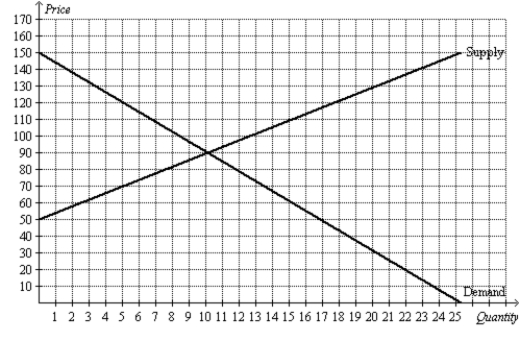 -Refer to Figure 9-23. Producer surplus with free trade is
 (72) Figure 9-7. The figure applies to the nation of Wales and the good is cheese. 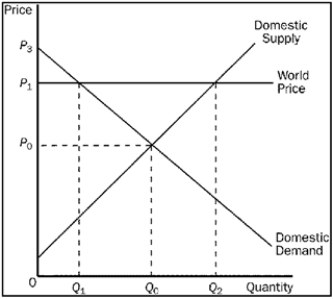 -Refer to Figure 9-7. Which of the following is a valid equation for Welsh consumer surplus with trade?
 (79) Figure 9-22
The following diagram shows the domestic demand and domestic supply in a market. In addition, assume that the world price in this market is $40 per unit. 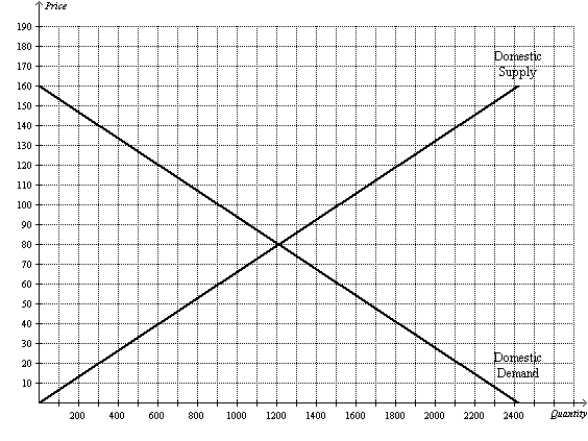 -When a country allows trade and becomes an importer of jet skis,
 (68) Economists view free trade as a way to raise living standards both at home and abroad.
(77) When a country takes a multilateral approach to free trade, it
(71) Critics of free trade sometimes argue that allowing imports from foreign countries causes a reduction in the number of domestic jobs. An economist would argue that
(79) The rules established under the General Agreement on Tariffs and Trade (GATT) are enforced by an international body called the World Trade Organization (WTO).
(87) Figure 9-17 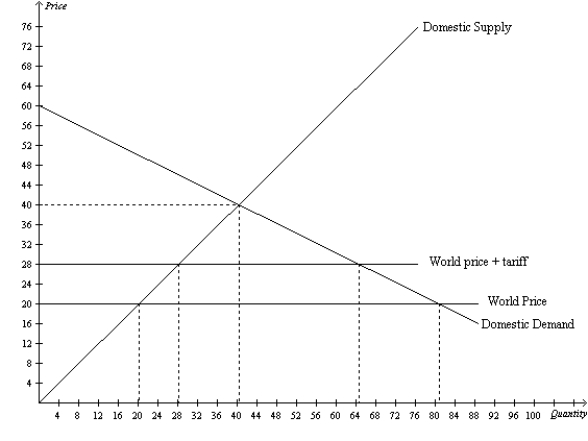 -Refer to Figure 9-17. With free trade, the country imports
 (68) 
Filters
- Essay(0)
- Multiple Choice(0)
- Short Answer(0)
- True False(0)
- Matching(0)