



 Chat with AI
Exam 44: Assisting in Minor Surgery

Exam 1: Introduction to Medical Assisting76 Questions
Exam 2: Healthcare and the Healthcare Team80 Questions
Exam 3: Professionalism and Success75 Questions
Exam 4: Interpersonal Communication97 Questions
Exam 5: Legal and Ethical Issues85 Questions
Exam 6: Infection Control Fundamentals74 Questions
Exam 7: Safety and Patient Reception73 Questions
Exam 8: Office Equipment and Supplies155 Questions
Exam 9: Examination and Treatment Areas97 Questions
Exam 10: Written and Electronic Communication84 Questions
Exam 11: Medical Records and Documentation75 Questions
Exam 12: Electronic Health Records72 Questions
Exam 13: Managing Medical Records74 Questions
Exam 14: Telephone Techniques89 Questions
Exam 15: Patient Education75 Questions
Exam 16: Schedule Management80 Questions
Exam 17: Insurance Billing80 Questions
Exam 18: Diagnostic Coding74 Questions
Exam 19: Procedure Coding75 Questions
Exam 20: Patient Collections and Financial Management142 Questions
Exam 21: Organization of the Body145 Questions
Exam 22: The Integumentary System100 Questions
Exam 23: The Skeletal System154 Questions
Exam 24: The Muscular System100 Questions
Exam 25: The Cardiovascular System89 Questions
Exam 26: The Blood74 Questions
Exam 27: The Lymphatic and Immune Systems78 Questions
Exam 28: The Respiratory System91 Questions
Exam 29: The Nervous System130 Questions
Exam 30: The Urinary System91 Questions
Exam 31: The Reproductive Systems124 Questions
Exam 32: The Digestive System112 Questions
Exam 33: The Endocrine System80 Questions
Exam 34: Special Senses92 Questions
Exam 35: Infection Control Practices105 Questions
Exam 36: Patient Interview and History96 Questions
Exam 37: Vital Signs and Measurements93 Questions
Exam 38: Assisting With a General Physical Exam75 Questions
Exam 39: Assisting in Reproductive and Urinary Specialties74 Questions
Exam 40: Assisting in Pediatrics75 Questions
Exam 41: Assisting in Geriatrics75 Questions
Exam 42: Assisting in Other Medical Specialties75 Questions
Exam 43: Assisting in Eye and Ear Care75 Questions
Exam 44: Assisting in Minor Surgery92 Questions
Exam 45: Orientation to the Lab85 Questions
Exam 46: Microbiology and Disease117 Questions
Exam 47: Processing and Testing Urine and Stool Samples95 Questions
Exam 48: Collecting, Processing, and Testing Blood Specimens75 Questions
Exam 49: Electrocardiography and Pulmonary Function Testing94 Questions
Exam 50: Diagnostic Imaging79 Questions
Exam 51: Principles of Pharmacology104 Questions
Exam 52: Math and Dosage Calculations74 Questions
Exam 53: Medication Administration76 Questions
Exam 54: Physical Therapy and Rehabilitation78 Questions
Exam 55: Nutrition and Health90 Questions
Exam 56: Practice Management76 Questions
Exam 57: Emergency Preparedness105 Questions
Exam 58: Preparing for the World of Work76 Questions
Select questions type


A requisition slip and a specimen container are placed in a special _________ bag labeled with a biohazard symbol and sent to the laboratory for processing.
(Short Answer)
4.7/5  (86)
(86) The medication that causes the loss of sensation either locally or generally is called a(n) ________.
(Short Answer)
4.7/5 (87)
(87) A(n) ________ is an unsterile assistant who is free to move about the room and attend to unsterile needs.
(Short Answer)
4.9/5 (80)
(80) Any procedures that occur during surgery are known as ________ procedures.
(Short Answer)
4.8/5 (65)
(65) The procedure that uses a needle, probe, or loop heated by electric current to destroy the target tissue is called ________.
(Short Answer)
4.7/5 (86)
(86) When preparing the patient's skin for surgery, after applying the antiseptic what is the next step?
(Multiple Choice)
4.8/5 (73)
(73) A common type of instrument tray that is used for the removal of a nail is called a(n) _______ tray.
(Short Answer)
4.8/5 (92)
(92) Which preoperative instruction is given to a patient who is scheduled for a minor surgical procedure in the medical office?
(Multiple Choice)
4.8/5 (71)
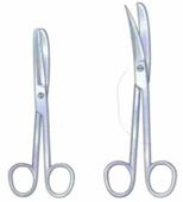
(71) 
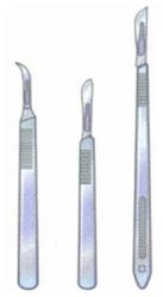
The use of extreme cold to destroy unwanted tissue is called ________; this procedure is often used to remove skin lesions and lesions on the cervix.
(Short Answer)
4.9/5 (93)
(93) The area used during a surgical procedure that is free of microorganisms is the ________ ________.
(Short Answer)
4.9/5 (76)
(76) The purpose of ________ _______ is to eliminate all microorganisms.
(Short Answer)
4.9/5 (91)
(91) Which of the following is the appropriate way to pour a sterile solution into a sterile bowl that is on a sterile field?
(Multiple Choice)
4.9/5 (84)
(84) Anesthetics that are applied directly to the skin and affect only the area to which they are applied are ________ anesthetics.
(Short Answer)
4.8/5 (78)
(78) Which is the appropriate way to cleanse an area before surgery?
(Multiple Choice)
4.8/5 (75)
(75) Which of the following would you include in teaching a patient who has had cryosurgery?
(Multiple Choice)
4.8/5 (94)
(94) 
Filters
- Essay(0)
- Multiple Choice(0)
- Short Answer(0)
- True False(0)
- Matching(0)