



 Chat with AI
Exam 57: Emergency Preparedness

Exam 1: Introduction to Medical Assisting76 Questions
Exam 2: Healthcare and the Healthcare Team80 Questions
Exam 3: Professionalism and Success75 Questions
Exam 4: Interpersonal Communication97 Questions
Exam 5: Legal and Ethical Issues85 Questions
Exam 6: Infection Control Fundamentals74 Questions
Exam 7: Safety and Patient Reception73 Questions
Exam 8: Office Equipment and Supplies155 Questions
Exam 9: Examination and Treatment Areas97 Questions
Exam 10: Written and Electronic Communication84 Questions
Exam 11: Medical Records and Documentation75 Questions
Exam 12: Electronic Health Records72 Questions
Exam 13: Managing Medical Records74 Questions
Exam 14: Telephone Techniques89 Questions
Exam 15: Patient Education75 Questions
Exam 16: Schedule Management80 Questions
Exam 17: Insurance Billing80 Questions
Exam 18: Diagnostic Coding74 Questions
Exam 19: Procedure Coding75 Questions
Exam 20: Patient Collections and Financial Management142 Questions
Exam 21: Organization of the Body145 Questions
Exam 22: The Integumentary System100 Questions
Exam 23: The Skeletal System154 Questions
Exam 24: The Muscular System100 Questions
Exam 25: The Cardiovascular System89 Questions
Exam 26: The Blood74 Questions
Exam 27: The Lymphatic and Immune Systems78 Questions
Exam 28: The Respiratory System91 Questions
Exam 29: The Nervous System130 Questions
Exam 30: The Urinary System91 Questions
Exam 31: The Reproductive Systems124 Questions
Exam 32: The Digestive System112 Questions
Exam 33: The Endocrine System80 Questions
Exam 34: Special Senses92 Questions
Exam 35: Infection Control Practices105 Questions
Exam 36: Patient Interview and History96 Questions
Exam 37: Vital Signs and Measurements93 Questions
Exam 38: Assisting With a General Physical Exam75 Questions
Exam 39: Assisting in Reproductive and Urinary Specialties74 Questions
Exam 40: Assisting in Pediatrics75 Questions
Exam 41: Assisting in Geriatrics75 Questions
Exam 42: Assisting in Other Medical Specialties75 Questions
Exam 43: Assisting in Eye and Ear Care75 Questions
Exam 44: Assisting in Minor Surgery92 Questions
Exam 45: Orientation to the Lab85 Questions
Exam 46: Microbiology and Disease117 Questions
Exam 47: Processing and Testing Urine and Stool Samples95 Questions
Exam 48: Collecting, Processing, and Testing Blood Specimens75 Questions
Exam 49: Electrocardiography and Pulmonary Function Testing94 Questions
Exam 50: Diagnostic Imaging79 Questions
Exam 51: Principles of Pharmacology104 Questions
Exam 52: Math and Dosage Calculations74 Questions
Exam 53: Medication Administration76 Questions
Exam 54: Physical Therapy and Rehabilitation78 Questions
Exam 55: Nutrition and Health90 Questions
Exam 56: Practice Management76 Questions
Exam 57: Emergency Preparedness105 Questions
Exam 58: Preparing for the World of Work76 Questions
Select questions type


Your brother has been working in the backyard, trimming bushes and pulling weeds. He was not wearing gloves, and suddenly he comes into the house looking scared and holding his lower arm. He has been bitten by a snake that he thinks was a rattlesnake. You call EMS immediately. Until help arrives, what will you do for your brother?
(Multiple Choice)
4.8/5  (78)
(78) A massive, widespread infection that affects the ability of the blood vessels to circulate blood results in ________ shock.
(Short Answer)
5.0/5 (84)
(84) Blowing the nose too hard, local irritation or dryness, or frequent sneezing can result in a nosebleed, called ________.
(Short Answer)
4.9/5 (72)
(72) You are having lunch with friends at a local restaurant. Suddenly, you notice someone at the table next to yours putting his hands up to his throat. He has a fearful look on his face. Which of the following is the appropriate first action to take?
(Multiple Choice)
4.9/5 (77)
(77) The condition in which the body's fluid intake is not sufficient to meet its fluid needs because of vomiting, excessive heat and sweating, diarrhea, or lack of food or fluid intake is called ________.
(Short Answer)
4.9/5 (71)
(71) A tetanus toxoid is administered for an infectious bite if the patient has not received one in the last ____.
(Multiple Choice)
4.9/5 (84)
(84) 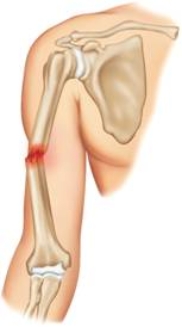
Which of the following is an acute infection caused by Staphylococcus aureus?
(Multiple Choice)
4.8/5 (98)
(98) One of your duties in the medical office may be to check and ________ crash cart items periodically.
(Short Answer)
5.0/5 (77)
(77) Which of the following would you include in the care of a patient who has sustained a concussion?
(Multiple Choice)
4.7/5 (77)
(77) A common medical disorder that is characterized by spasmodic narrowing of the bronchi, causing wheezing, coughing, and shortness of breath, is ________.
(Short Answer)
4.8/5 (67)
(67) When communicating with non-English-speaking patients during an emergency, you can use ________ throughout the process to help them understand you.
(Short Answer)
4.9/5 (77)
(77) Which of the following is part of the care of a severed ear?
(Multiple Choice)
4.8/5 (87)
(87) Symptoms of ________, or high blood sugar, include dry mouth, intense thirst, muscle weakness, and blurred vision.
(Short Answer)
4.7/5 (81)
(81) Which of the following steps would you include if a patient has ingested poison but is alert and not having convulsions?
(Multiple Choice)
5.0/5 (77)
(77) 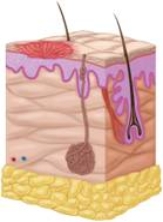 -Which type of wound, pictured here, occurs when someone slides across gravel during a softball game?
 (Multiple Choice)
4.8/5 (86)
(86) 
Filters
- Essay(0)
- Multiple Choice(0)
- Short Answer(0)
- True False(0)
- Matching(0)