



 Chat with AI
Exam 24: Animal Diversity Ii: Vertebrates

Exam 1: An Introduction to Life on Earth91 Questions
Exam 2: Atoms, Molecules, and Life90 Questions
Exam 3: Biological Molecules98 Questions
Exam 4: Cell Structure and Function90 Questions
Exam 5: Cell Membrane Structure and Function96 Questions
Exam 6: Energy Flow in the Life of a Cell90 Questions
Exam 7: Capturing Solar Energy: Photosynthesis101 Questions
Exam 8: Harvesting Energy: Glycolysis and Cellular Respiration91 Questions
Exam 9: The Continuity of Life: Cellular Reproduction90 Questions
Exam 10: Patterns of Inheritance93 Questions
Exam 11: Dna: the Molecule of Heredity90 Questions
Exam 12: Gene Expression and Regulation90 Questions
Exam 13: Biotechnology90 Questions
Exam 14: Principles of Evolution98 Questions
Exam 15: How Populations Evolve110 Questions
Exam 16: The Origin of Species92 Questions
Exam 17: The History of Life119 Questions
Exam 18: Systematics: Seeking Order Amidst Diversity91 Questions
Exam 19: The Diversity of Prokaryotes and Viruses97 Questions
Exam 20: The Diversity of Protists102 Questions
Exam 21: The Diversity of Plants103 Questions
Exam 22: The Diversity of Fungi105 Questions
Exam 23: Animal Diversity I: Invertebrates101 Questions
Exam 24: Animal Diversity Ii: Vertebrates118 Questions
Exam 25: Animal Behavior119 Questions
Exam 26: Population Growth and Regulation116 Questions
Exam 27: Community Interactions124 Questions
Exam 28: How Do Ecosystems Work124 Questions
Exam 29: Earths Diverse Ecosystems126 Questions
Exam 30: Conserving Earths Biodiversity110 Questions
Exam 31: Homeostasis and the Organization of the Animal Body95 Questions
Exam 32: Circulation89 Questions
Exam 33: Respiration92 Questions
Exam 34: Nutrition and Digestion91 Questions
Exam 35: The Urinary System90 Questions
Exam 36: Defenses Against Disease89 Questions
Exam 37: Chemical Control of the Animal Body: the Endocrine System129 Questions
Exam 38: The Nervous System111 Questions
Exam 39: The Senses90 Questions
Exam 40: Action and Support: the Muscles and Skeleton90 Questions
Exam 41: Animal Reproduction117 Questions
Exam 42: Animal Development123 Questions
Exam 43: Plant Anatomy and Nutrient Transport95 Questions
Exam 44: Plant Reproduction and Development90 Questions
Exam 45: Plant Responses to the Environment87 Questions
Select questions type



The shelled egg of reptiles prevents the egg from dehydrating. True or False?
(True/False)
4.9/5  (83)
(83) A swamp contains lungfishes, lampreys, and ray-finned fishes. As the swamp begins to dry out, which fishes will better survive and why?
(Essay)
5.0/5 (70)
(70) Which of the following BEST describes the major problem(s)amphibians face?
(Multiple Choice)
4.9/5 (84)
(84) The skeletons of ray-finned fishes are made of cartilage. True or False?
(True/False)
4.9/5 (64)
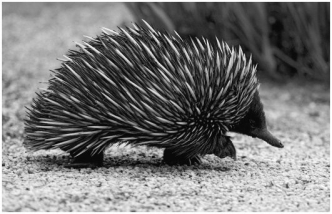
(64) On a remote island, a new animal is found. It has a four-chambered heart and lungs and is endothermic. It has internal fertilization, lays shelled eggs, and nurses its young after they hatch. This animal is most likely a(n):
(Multiple Choice)
4.8/5 (87)
(87) Fins composed of rod-shaped bones surrounded by thick layers of muscle are characteristic of:
(Multiple Choice)
4.9/5 (79)
(79) The placenta in mammals is responsible for gas exchange for the embryo. True or False?
(True/False)
4.9/5 (86)
(86) All chordates have pharyngeal gill slits at some point during their development. True or False?
(True/False)
4.9/5 (84)
(84) A terrestrial vertebrate that has scales and a three-chambered heart is a(n):
(Multiple Choice)
4.7/5 (97)
(97) Lampreys have reduced the size of commercial fish populations in the Great Lakes because they:
(Multiple Choice)
4.8/5 (74)
(74) 
Filters
- Essay(0)
- Multiple Choice(0)
- Short Answer(0)
- True False(0)
- Matching(0)