



 Chat with AI
Exam 27: Community Interactions

Exam 1: An Introduction to Life on Earth91 Questions
Exam 2: Atoms, Molecules, and Life90 Questions
Exam 3: Biological Molecules98 Questions
Exam 4: Cell Structure and Function90 Questions
Exam 5: Cell Membrane Structure and Function96 Questions
Exam 6: Energy Flow in the Life of a Cell90 Questions
Exam 7: Capturing Solar Energy: Photosynthesis101 Questions
Exam 8: Harvesting Energy: Glycolysis and Cellular Respiration91 Questions
Exam 9: The Continuity of Life: Cellular Reproduction90 Questions
Exam 10: Patterns of Inheritance93 Questions
Exam 11: Dna: the Molecule of Heredity90 Questions
Exam 12: Gene Expression and Regulation90 Questions
Exam 13: Biotechnology90 Questions
Exam 14: Principles of Evolution98 Questions
Exam 15: How Populations Evolve110 Questions
Exam 16: The Origin of Species92 Questions
Exam 17: The History of Life119 Questions
Exam 18: Systematics: Seeking Order Amidst Diversity91 Questions
Exam 19: The Diversity of Prokaryotes and Viruses97 Questions
Exam 20: The Diversity of Protists102 Questions
Exam 21: The Diversity of Plants103 Questions
Exam 22: The Diversity of Fungi105 Questions
Exam 23: Animal Diversity I: Invertebrates101 Questions
Exam 24: Animal Diversity Ii: Vertebrates118 Questions
Exam 25: Animal Behavior119 Questions
Exam 26: Population Growth and Regulation116 Questions
Exam 27: Community Interactions124 Questions
Exam 28: How Do Ecosystems Work124 Questions
Exam 29: Earths Diverse Ecosystems126 Questions
Exam 30: Conserving Earths Biodiversity110 Questions
Exam 31: Homeostasis and the Organization of the Animal Body95 Questions
Exam 32: Circulation89 Questions
Exam 33: Respiration92 Questions
Exam 34: Nutrition and Digestion91 Questions
Exam 35: The Urinary System90 Questions
Exam 36: Defenses Against Disease89 Questions
Exam 37: Chemical Control of the Animal Body: the Endocrine System129 Questions
Exam 38: The Nervous System111 Questions
Exam 39: The Senses90 Questions
Exam 40: Action and Support: the Muscles and Skeleton90 Questions
Exam 41: Animal Reproduction117 Questions
Exam 42: Animal Development123 Questions
Exam 43: Plant Anatomy and Nutrient Transport95 Questions
Exam 44: Plant Reproduction and Development90 Questions
Exam 45: Plant Responses to the Environment87 Questions
Select questions type


A protist lives in the gut of a termite, breaking down the cellulose that the termite ingests and providing glucose to benefit both of them. This kind of relationship is called ________.
(Essay)
4.9/5  (83)
(83) Two weed species live in the same patch of ground. One has very deep roots to tap into ground water. The other has broad, shallow roots to take advantage of the frequent light rains that don't penetrate very deeply into the soil. This is an example of ________.
(Essay)
4.9/5 (68)
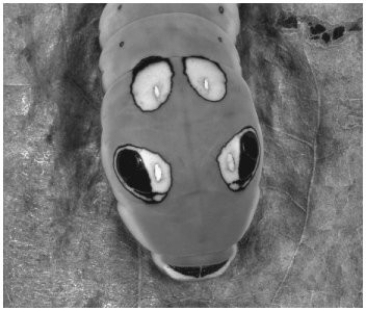
(68) There are several species of plain-looking, brownish-gray moths that, when they spread their wings, have large bright red or orange eye-shaped circles on their hind wings. What is this adaptation called, and what advantage does it give to the moth?
(Essay)
4.8/5 (71)
(71) You suspect that the American alligator is a keystone species in specific habitats in Florida. How could you experimentally prove or disprove this hypothesis?
(Essay)
4.9/5 (75)
(75) Two families of feral cats move into the same barn. One family preys on the mice; the other preys on the pigeons. This behavior is an example of:
(Multiple Choice)
4.7/5 (90)
(90) Similar climax communities distributed over a very large geographical area are known as ________.
(Essay)
4.7/5 (75)
(75) Which behavioral response to the threat of predation is most likely to be selected for in a species that uses camouflage for protection from predators?
(Multiple Choice)
4.8/5 (82)
(82) A certain species of animal represents just 3% of the biomass in its ecosystem. We might classify this as a keystone species if its removal:
(Multiple Choice)
4.8/5 (84)
(84) Succession after a disturbance such as forest harvest or a landslide is referred to as ________ succession.
(Essay)
5.0/5 (79)
(79)  -The succession shown in the illustration is:
On the slopes of the Washington Cascades, ecologists have studied some closely related vole species for decades. Many of these vole species, when they occur on separate mountains, tend to choose very similar food sizes. However, when these species occur together on the same mountain slope, their food choices tend to differ, with some species selecting small seeds and others feeding exclusively on larger seeds. This behavior may be an example of:
(Multiple Choice)
4.7/5 (70)
(70) If an insect eats the lettuce seedlings in your yard, it is acting most like a(n):
(Multiple Choice)
4.9/5 (77)
(77) Hawks that eat field mice are practicing mutualism. True or False?
(True/False)
4.9/5 (75)
(75) What kinds of plant species are likely to be pioneers in secondary succession? Explain why.
(Essay)
4.7/5 (74)
(74) 
Many plants produce chemicals that are used as medicines. For example, the drug digitalis, which stimulates the human heart, is derived from foxglove, a poisonous plant. What advantage does producing toxic compounds have for the plant?
(Essay)
4.8/5 (74)
(74) Humans contract bacterial infections such as tuberculosis or syphilis. What is this ecological relationship called?
(Multiple Choice)
4.9/5 (71)
(71) Succession after a catastrophic disturbance such as a volcanic eruption is referred to as ________ succession.
(Essay)
5.0/5 (70)
(70) 
Filters
- Essay(0)
- Multiple Choice(0)
- Short Answer(0)
- True False(0)
- Matching(0)