



 Chat with AI
Exam 31: Homeostasis and the Organization of the Animal Body

Exam 1: An Introduction to Life on Earth91 Questions
Exam 2: Atoms, Molecules, and Life90 Questions
Exam 3: Biological Molecules98 Questions
Exam 4: Cell Structure and Function90 Questions
Exam 5: Cell Membrane Structure and Function96 Questions
Exam 6: Energy Flow in the Life of a Cell90 Questions
Exam 7: Capturing Solar Energy: Photosynthesis101 Questions
Exam 8: Harvesting Energy: Glycolysis and Cellular Respiration91 Questions
Exam 9: The Continuity of Life: Cellular Reproduction90 Questions
Exam 10: Patterns of Inheritance93 Questions
Exam 11: Dna: the Molecule of Heredity90 Questions
Exam 12: Gene Expression and Regulation90 Questions
Exam 13: Biotechnology90 Questions
Exam 14: Principles of Evolution98 Questions
Exam 15: How Populations Evolve110 Questions
Exam 16: The Origin of Species92 Questions
Exam 17: The History of Life119 Questions
Exam 18: Systematics: Seeking Order Amidst Diversity91 Questions
Exam 19: The Diversity of Prokaryotes and Viruses97 Questions
Exam 20: The Diversity of Protists102 Questions
Exam 21: The Diversity of Plants103 Questions
Exam 22: The Diversity of Fungi105 Questions
Exam 23: Animal Diversity I: Invertebrates101 Questions
Exam 24: Animal Diversity Ii: Vertebrates118 Questions
Exam 25: Animal Behavior119 Questions
Exam 26: Population Growth and Regulation116 Questions
Exam 27: Community Interactions124 Questions
Exam 28: How Do Ecosystems Work124 Questions
Exam 29: Earths Diverse Ecosystems126 Questions
Exam 30: Conserving Earths Biodiversity110 Questions
Exam 31: Homeostasis and the Organization of the Animal Body95 Questions
Exam 32: Circulation89 Questions
Exam 33: Respiration92 Questions
Exam 34: Nutrition and Digestion91 Questions
Exam 35: The Urinary System90 Questions
Exam 36: Defenses Against Disease89 Questions
Exam 37: Chemical Control of the Animal Body: the Endocrine System129 Questions
Exam 38: The Nervous System111 Questions
Exam 39: The Senses90 Questions
Exam 40: Action and Support: the Muscles and Skeleton90 Questions
Exam 41: Animal Reproduction117 Questions
Exam 42: Animal Development123 Questions
Exam 43: Plant Anatomy and Nutrient Transport95 Questions
Exam 44: Plant Reproduction and Development90 Questions
Exam 45: Plant Responses to the Environment87 Questions
Select questions type


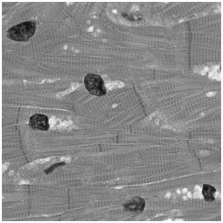
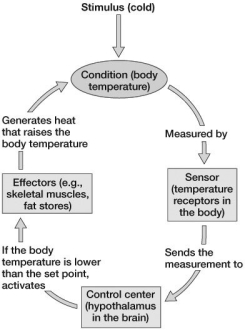

Most body systems maintain homeostasis through ________ systems.
(Multiple Choice)
4.7/5  (75)
(75) In addition to the nervous system, which vertebrate organ system controls physiological processes in animals?
(Multiple Choice)
4.9/5 (81)
(81) In humans, the body needs to maintain oxygen levels within narrow homeostatic ranges. If the blood oxygen level drops below that range, the body responds by:
(Multiple Choice)
4.9/5 (75)
(75) Tightly packed collagen fibers arranged in either parallel rows or meshwork are characteristic of ________ connective tissue.
(Essay)
4.8/5 (97)
(97) An organism's ability to maintain a consistent blood pH requires:
(Multiple Choice)
4.9/5 (83)
(83) The mucus-secreting glands of the respiratory system are composed of ________ tissue.
(Multiple Choice)
4.9/5 (74)
(74) When the body's response to swelling caused by an insect bite is to release histamine, which causes more swelling and releases more histamine, the organism is using a ________ feedback loop.
(Essay)
4.8/5 (73)
(73) Cartilage, bone, and blood are examples of ________ tissue.
(Multiple Choice)
4.9/5 (64)
(64) Cardiac muscle requires input from the nervous system to contract. True or False?
(True/False)
4.8/5 (65)
(65) What is the primary reason internal homeostasis must be maintained?
(Multiple Choice)
4.8/5 (85)
(85)  -The tissue in the photograph is an example of ________ tissue.
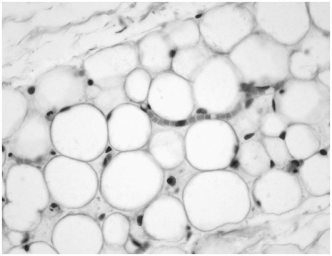
-The tissue in the photograph is an example of ________ tissue. (Multiple Choice)
4.7/5 (82)
(82) What characteristics of stratified epithelium make it suitable as an external covering?
(Essay)
4.8/5 (78)
(78) Which of the following controls the temperature in endothermic animals?
(Multiple Choice)
4.8/5 (99)
(99) 
Filters
- Essay(0)
- Multiple Choice(0)
- Short Answer(0)
- True False(0)
- Matching(0)