



 Chat with AI
Exam 7: Alkenes and Alkynes

Exam 1: Structure and Bonding29 Questions
Exam 2: Polar Covalent Bonds; Acids and Bases41 Questions
Exam 3: Organic Compounds: Alkanes and Their Stereochemistry32 Questions
Exam 4: Organic Compounds: Cycloalkanes and Their Stereochemistry29 Questions
Exam 5: Stereochemistry at Tetrahedral Centers40 Questions
Exam 6: An Overview of Organic Reactions39 Questions
Exam 7: Alkenes and Alkynes36 Questions
Exam 8: Reactions of Alkenes and Alkynes38 Questions
Exam 9: Aromatic Compounds37 Questions
Exam 10: Structure Determination: Mass Spectrometry, Infrared Spectroscopy, and Ultraviolet Spectroscopy42 Questions
Exam 10: Structure Determination: Mass Spectrometry, Infrared Spectroscopy, and Ultraviolet Spectroscopy43 Questions
Exam 11: Structure Determination: Nuclear Magnetic Resonance Spectroscopy41 Questions
Exam 12: Organohalides: Nucleophilic Substitutions and Eliminations43 Questions
Exam 13: Alcohols, Phenols, and Thiols; Ethers and Sulfides38 Questions
Exam 14: Aldehydes and Ketones: Nucleophilic Addition Reactions36 Questions
Exam 15: Carboxylic Acids and Nitriles36 Questions
Exam 16: Carboxylic Acid Derivatives: Nucleophilic Acyl Substitution Reactions46 Questions
Exam 17: Carbonyl Alpha-Substitution and Condensation Reactions46 Questions
Exam 18: Amines and Heterocycles36 Questions
Exam 19: Biomolecules: Amino Acids, Peptides, and Proteins52 Questions
Exam 20: Amino Acid Metabolism32 Questions
Exam 21: Biomolecules: Carbohydrates49 Questions
Exam 22: Carbohydrate Metabolism45 Questions
Exam 23: Biomolecules: Lipids and Their Metabolism42 Questions
Exam 24: Biomolecules: Nucleic Acids and Their Metabolism34 Questions
Exam 26: Orbitals and Organic Chemistry: Pericyclic Reactionse44 Questions
Exam 27: Synthetic Polymerse35 Questions
Select questions type


Using curved arrows, write a mechanism for the following reaction. If carbocations are formed, specify if they are primary, secondary or tertiary. 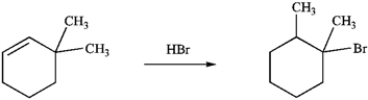
(Essay)
4.9/5  (79)
(79) Pent-2-ene is an example of a disubstituted alkene. Use this alkene to answer the following question(s).  -Refer to instructions. Circle the isomer of pent-2-ene that is most stable.
 (Essay)
5.0/5 (83)
(83) Predict the major organic product(s) in the reaction below. If more than one major organic product is expected, draw each one. 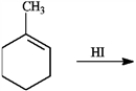
(Essay)
5.0/5 (81)
(81) Dieldrin, C12H8Cl6O, is a pentacyclic (five-ring) compound formerly used as an insecticide. Use this information to answer the following question(s).
-Refer to instructions. Calculate the degree of unsaturation for Dieldrin.
(Essay)
4.7/5 (87)
(87) Dieldrin, C12H8Cl6O, is a pentacyclic (five-ring) compound formerly used as an insecticide. Use this information to answer the following question(s).
-Refer to instructions. How many double bonds does dieldrin have?
(Essay)
4.8/5 (70)
(70) A molecule has three degrees of unsaturation. In this molecule there would be
(Multiple Choice)
4.9/5 (75)
(75) 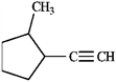
Below are all the chemical structures and intermediates involved in a reaction. On the structures provided, show all electron flow using the arrow formalism for the complete stepwise mechanism. 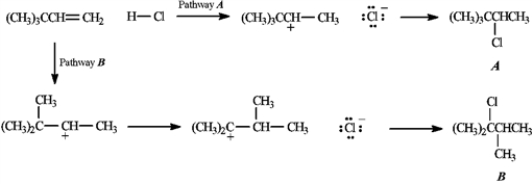
(Essay)
4.8/5 (76)
(76) Provide names for each structure below. Be sure to include the cis,trans or E,Z designations where applicable.
-Which of the following substituents has the highest priority according to the Cahn-Ingold-Prelog system?
(Multiple Choice)
4.9/5 (76)
(76) The following reaction is carried out in cyclohexane with the application of heat. Write the complete equation for the reaction below. If more than one major organic product is expected, draw each one. 
(Essay)
4.9/5 (91)
(91) 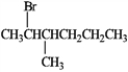
Match each definition to the term it describes.
-Predicts that the more stable carbocation intermediate is formed in electrophilic additions to alkenes.
(Multiple Choice)
4.8/5 (70)
(70) Rank the carbocations below in order of increasing stability (least stable = 1; most stable = 3). Place the number corresponding to the carbocation's relative stability in the blank below the structure. 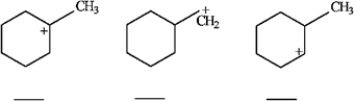
(Essay)
4.7/5 (91)
(91) Match each definition to the term it describes.
-Predicts that the transition state of an exergonic reaction step structurally resembles the reactant.
(Multiple Choice)
4.8/5 (86)
(86) Match each definition to the term it describes.
-Predicts the total number of multiple bonds and rings.
(Multiple Choice)
4.8/5 (78)
(78) 
Filters
- Essay(0)
- Multiple Choice(0)
- Short Answer(0)
- True False(0)
- Matching(0)