



 Chat with AI
Exam 13: Alcohols, Phenols, and Thiols; Ethers and Sulfides

Exam 1: Structure and Bonding29 Questions
Exam 2: Polar Covalent Bonds; Acids and Bases41 Questions
Exam 3: Organic Compounds: Alkanes and Their Stereochemistry32 Questions
Exam 4: Organic Compounds: Cycloalkanes and Their Stereochemistry29 Questions
Exam 5: Stereochemistry at Tetrahedral Centers40 Questions
Exam 6: An Overview of Organic Reactions39 Questions
Exam 7: Alkenes and Alkynes36 Questions
Exam 8: Reactions of Alkenes and Alkynes38 Questions
Exam 9: Aromatic Compounds37 Questions
Exam 10: Structure Determination: Mass Spectrometry, Infrared Spectroscopy, and Ultraviolet Spectroscopy42 Questions
Exam 10: Structure Determination: Mass Spectrometry, Infrared Spectroscopy, and Ultraviolet Spectroscopy43 Questions
Exam 11: Structure Determination: Nuclear Magnetic Resonance Spectroscopy41 Questions
Exam 12: Organohalides: Nucleophilic Substitutions and Eliminations43 Questions
Exam 13: Alcohols, Phenols, and Thiols; Ethers and Sulfides38 Questions
Exam 14: Aldehydes and Ketones: Nucleophilic Addition Reactions36 Questions
Exam 15: Carboxylic Acids and Nitriles36 Questions
Exam 16: Carboxylic Acid Derivatives: Nucleophilic Acyl Substitution Reactions46 Questions
Exam 17: Carbonyl Alpha-Substitution and Condensation Reactions46 Questions
Exam 18: Amines and Heterocycles36 Questions
Exam 19: Biomolecules: Amino Acids, Peptides, and Proteins52 Questions
Exam 20: Amino Acid Metabolism32 Questions
Exam 21: Biomolecules: Carbohydrates49 Questions
Exam 22: Carbohydrate Metabolism45 Questions
Exam 23: Biomolecules: Lipids and Their Metabolism42 Questions
Exam 24: Biomolecules: Nucleic Acids and Their Metabolism34 Questions
Exam 26: Orbitals and Organic Chemistry: Pericyclic Reactionse44 Questions
Exam 27: Synthetic Polymerse35 Questions
Select questions type


Draw structures corresponding to each of the following IUPAC names.
-Draw:
cyclopropyl ethyl sulfide

Free
(Essay)
4.8/5  (71)
(71) Correct Answer: Verified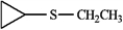
The following IR spectrum would most likely be associated with 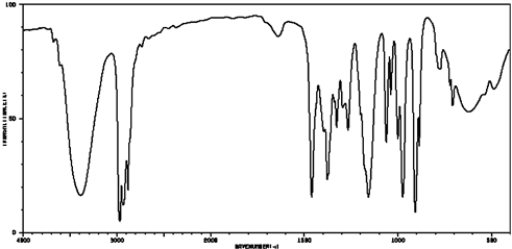
Free
(Multiple Choice)
4.8/5 (82)
(82) Correct Answer:Verified
VerifiedC
To answer the following question(s), consider the reaction below.  -Refer to instructions. The conversion of an alcohol into an alkyl chloride by reaction with SOCl2 is an example of:
Free
(Multiple Choice)
4.9/5 (76)
(76) Correct Answer:Verified
VerifiedD
Consider the Grignard reaction below to answer the following question(s). 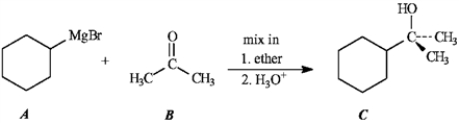 -Refer to instructions. The nucleophile in this reaction is indicated by letter _____.
 (Multiple Choice)
4.8/5 (76)
(76) 
Which of the following is probably the least useful in IR characterization of a compound?
(Multiple Choice)
4.7/5 (77)
(77) 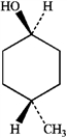
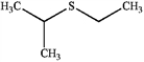
What is the best way to make the following ether by a Williamson ether synthesis? 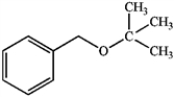
(Essay)
4.9/5 (74)
(74) What is the major organic product obtained from the following reaction? 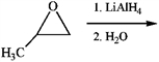
(Multiple Choice)
4.9/5 (89)
(89) 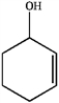
Which of the following would not react with either Na2Cr2O7 or pyridinium chlorochromate? A  B
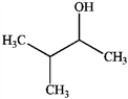 C
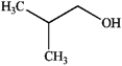 D
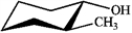
B C D (Multiple Choice)
4.7/5 (75)
(75) Predict the major products of the following by drawing the structures of A and B. 
(Essay)
5.0/5 (72)
(72) Consider the Grignard reaction below to answer the following question(s).
-A useful and general method for the synthesis of alcohols is the addition of Grignard reagents to carbonyl compounds. Show what Grignard reagent and what carbonyl compound you would start with to prepare each alcohol below. List all possibilities. 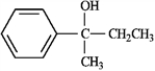
-A useful and general method for the synthesis of alcohols is the addition of Grignard reagents to carbonyl compounds. Show what Grignard reagent and what carbonyl compound you would start with to prepare each alcohol below. List all possibilities. (Essay)
4.8/5 (83)
(83) Draw structures corresponding to each of the following IUPAC names.
-Draw:
2, 4, 6-trinitrophenol
(Essay)
4.9/5 (91)
(91) To answer the following question(s), consider the reaction below.
-Refer to instructions. Provide the complete IUPAC name for the starting material in this reaction and classify the alcohol as primary, secondary, or tertiary.
-Refer to instructions. Provide the complete IUPAC name for the starting material in this reaction and classify the alcohol as primary, secondary, or tertiary. (Short Answer)
4.9/5 (74)
(74) Which of the following ethers cannot be prepared by a Williamson ether synthesis?
(Multiple Choice)
4.8/5 (84)
(84) 
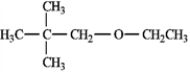
How would you synthesize the following class of quinones (ubiquinones) from the corresponding hydroquinones? 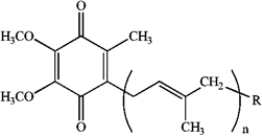
(Essay)
4.9/5 (80)
(80) 
Filters
- Essay(0)
- Multiple Choice(0)
- Short Answer(0)
- True False(0)
- Matching(0)