



 Chat with AI
Exam 10: Structure Determination: Mass Spectrometry, Infrared Spectroscopy, and Ultraviolet Spectroscopy

Exam 1: Structure and Bonding29 Questions
Exam 2: Polar Covalent Bonds; Acids and Bases41 Questions
Exam 3: Organic Compounds: Alkanes and Their Stereochemistry32 Questions
Exam 4: Organic Compounds: Cycloalkanes and Their Stereochemistry29 Questions
Exam 5: Stereochemistry at Tetrahedral Centers40 Questions
Exam 6: An Overview of Organic Reactions39 Questions
Exam 7: Alkenes and Alkynes36 Questions
Exam 8: Reactions of Alkenes and Alkynes38 Questions
Exam 9: Aromatic Compounds37 Questions
Exam 10: Structure Determination: Mass Spectrometry, Infrared Spectroscopy, and Ultraviolet Spectroscopy42 Questions
Exam 10: Structure Determination: Mass Spectrometry, Infrared Spectroscopy, and Ultraviolet Spectroscopy43 Questions
Exam 11: Structure Determination: Nuclear Magnetic Resonance Spectroscopy41 Questions
Exam 12: Organohalides: Nucleophilic Substitutions and Eliminations43 Questions
Exam 13: Alcohols, Phenols, and Thiols; Ethers and Sulfides38 Questions
Exam 14: Aldehydes and Ketones: Nucleophilic Addition Reactions36 Questions
Exam 15: Carboxylic Acids and Nitriles36 Questions
Exam 16: Carboxylic Acid Derivatives: Nucleophilic Acyl Substitution Reactions46 Questions
Exam 17: Carbonyl Alpha-Substitution and Condensation Reactions46 Questions
Exam 18: Amines and Heterocycles36 Questions
Exam 19: Biomolecules: Amino Acids, Peptides, and Proteins52 Questions
Exam 20: Amino Acid Metabolism32 Questions
Exam 21: Biomolecules: Carbohydrates49 Questions
Exam 22: Carbohydrate Metabolism45 Questions
Exam 23: Biomolecules: Lipids and Their Metabolism42 Questions
Exam 24: Biomolecules: Nucleic Acids and Their Metabolism34 Questions
Exam 26: Orbitals and Organic Chemistry: Pericyclic Reactionse44 Questions
Exam 27: Synthetic Polymerse35 Questions
Select questions type


Which of the following bonds undergoes stretching at the highest frequency?

Free
(Multiple Choice)
4.9/5  (92)
(92) Correct Answer: Verified
A
Below is the mass spectrum of an unknown hydrocarbon. In addition, this hydrocarbon shows characteristic absorption at 2100 cm−1 in its IR spectrum. Give the structure of this unknown. 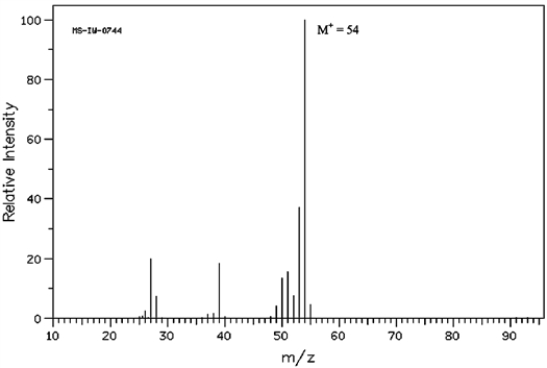 (Spectrum obtained from: SDBSWeb: http://www.aist.go.jp/RIODB/SDBS/)
Free
(Essay)
4.8/5 (81)
(81) Correct Answer:Verified
VerifiedThe formula weight of 54 corresponds to a molecular formula of C4H6, which has two degrees of unsaturation. Possible structures for this formula are:  The IR data is consistent with an internal alkyne, so the compound is but-2-yne.
Select the most reasonable formula for the compounds with the following mass spectral data.
-Refer to instructions. M+ at m/z = 216
Free
(Multiple Choice)
4.9/5 (80)
(80) Correct Answer:Verified
VerifiedB
Match each of the following groups of bond-types to the region of the infrared spectrum in which their absorptions occur.
-C=O, C=N, and C=C bond absorptions.
(Multiple Choice)
4.8/5 (83)
(83) Which of the following compounds gives an infrared spectrum with peaks at 3000−3500 cm−1 and ˜1750 cm−1?
(Multiple Choice)
4.9/5 (85)
(85) Which of the following compounds would have the longest λmax in the UV region of the electromagnetic spectrum? A 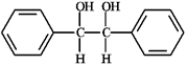 B
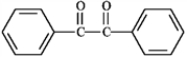 C
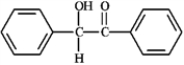
B C (Multiple Choice)
4.8/5 (84)
(84) Which of the following compounds gives an infrared spectrum with a peak at strong 1730 cm−1?
(Multiple Choice)
4.7/5 (84)
(84) Match each of the following groups of bond-types to the region of the infrared spectrum in which their absorptions occur.
-triple bond stretching vibrations.
(Multiple Choice)
4.9/5 (79)
(79) Which of the following compounds gives an infrared spectrum with peaks at 3300 cm−1 (sharp peak) and 2150 cm−1 (sharp peak)?
(Multiple Choice)
4.9/5 (71)
(71) What are the units for electromagnetic radiation used in infrared spectroscopy?
(Multiple Choice)
4.9/5 (69)
(69) Refer to the mass spectrum of 2-methylbutane shown below to answer the following question(s). 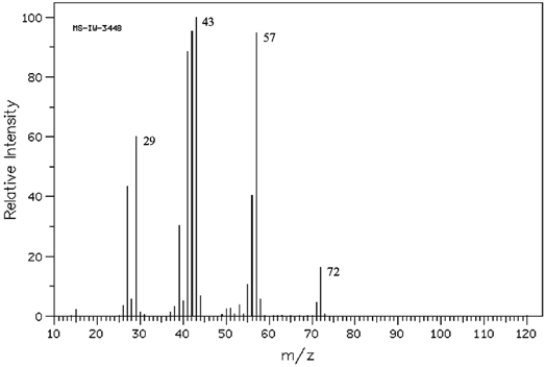 (Spectrum obtained from: SDBSWeb: http://www.aist.go.jp/RIODB/SDBS/)
-Refer to instructions. What peak represents M+?
(Spectrum obtained from: SDBSWeb: http://www.aist.go.jp/RIODB/SDBS/)
-Refer to instructions. What peak represents M+? (Essay)
4.9/5 (74)
(74) Match each of the following groups of bond-types to the region of the infrared spectrum in which their absorptions occur.
-N−H, C−H, and O−H stretching and bending motions.
(Multiple Choice)
4.8/5 (85)
(85) What are the masses of the charged fragments produced by the dehydration of the following compound? 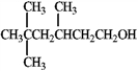
(Essay)
4.9/5 (92)
(92) At what approximate positions might the compound below show IR absorptions? 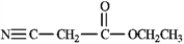
(Essay)
4.8/5 (73)
(73) Select the most reasonable formula for the compounds with the following mass spectral data.
-Refer to instructions. M+ at m/z = 101
(Multiple Choice)
4.9/5 (74)
(74) Which of the following compounds gives an infrared spectrum with peaks at 3300 cm−1 (strong, broad peak) and 1640 cm−1 (sharp, weak peak)?
(Multiple Choice)
4.8/5 (85)
(85) Refer to the mass spectrum of 2-methylbutane shown below to answer the following question(s). (Spectrum obtained from: SDBSWeb: http://www.aist.go.jp/RIODB/SDBS/)
-Refer to instructions. Propose structures for fragment ions at m/z = 57, 43, and 29.
(Spectrum obtained from: SDBSWeb: http://www.aist.go.jp/RIODB/SDBS/)
-Refer to instructions. Propose structures for fragment ions at m/z = 57, 43, and 29. (Essay)
4.8/5 (74)
(74) Consider the compound below:  a)At what approximate positions might the compound show IR absorptions?
b)How would this spectrum differ from that of cyclohexanol?
a)At what approximate positions might the compound show IR absorptions?
b)How would this spectrum differ from that of cyclohexanol? (Essay)
4.9/5 (83)
(83) 
Filters
- Essay(0)
- Multiple Choice(0)
- Short Answer(0)
- True False(0)
- Matching(0)