



 Chat with AI
Exam 11: Structure Determination: Nuclear Magnetic Resonance Spectroscopy

Exam 1: Structure and Bonding29 Questions
Exam 2: Polar Covalent Bonds; Acids and Bases41 Questions
Exam 3: Organic Compounds: Alkanes and Their Stereochemistry32 Questions
Exam 4: Organic Compounds: Cycloalkanes and Their Stereochemistry29 Questions
Exam 5: Stereochemistry at Tetrahedral Centers40 Questions
Exam 6: An Overview of Organic Reactions39 Questions
Exam 7: Alkenes and Alkynes36 Questions
Exam 8: Reactions of Alkenes and Alkynes38 Questions
Exam 9: Aromatic Compounds37 Questions
Exam 10: Structure Determination: Mass Spectrometry, Infrared Spectroscopy, and Ultraviolet Spectroscopy42 Questions
Exam 10: Structure Determination: Mass Spectrometry, Infrared Spectroscopy, and Ultraviolet Spectroscopy43 Questions
Exam 11: Structure Determination: Nuclear Magnetic Resonance Spectroscopy41 Questions
Exam 12: Organohalides: Nucleophilic Substitutions and Eliminations43 Questions
Exam 13: Alcohols, Phenols, and Thiols; Ethers and Sulfides38 Questions
Exam 14: Aldehydes and Ketones: Nucleophilic Addition Reactions36 Questions
Exam 15: Carboxylic Acids and Nitriles36 Questions
Exam 16: Carboxylic Acid Derivatives: Nucleophilic Acyl Substitution Reactions46 Questions
Exam 17: Carbonyl Alpha-Substitution and Condensation Reactions46 Questions
Exam 18: Amines and Heterocycles36 Questions
Exam 19: Biomolecules: Amino Acids, Peptides, and Proteins52 Questions
Exam 20: Amino Acid Metabolism32 Questions
Exam 21: Biomolecules: Carbohydrates49 Questions
Exam 22: Carbohydrate Metabolism45 Questions
Exam 23: Biomolecules: Lipids and Their Metabolism42 Questions
Exam 24: Biomolecules: Nucleic Acids and Their Metabolism34 Questions
Exam 26: Orbitals and Organic Chemistry: Pericyclic Reactionse44 Questions
Exam 27: Synthetic Polymerse35 Questions
Select questions type


Nuclear magnetic resonance spectroscopy provides information about a molecule's:
(Multiple Choice)
4.8/5  (72)
(72) The following questions pertain to the display of NMR spectra. Match a term to each description below.
-The vertical axis of spectrum displays the _____ of the signal.
(Multiple Choice)
4.9/5 (81)
(81) For each of the compounds below tell how many signals you would expect the molecule to have in its normal, broadband decoupled 13C NMR spectra.
-Arrange the following compounds in order of increasing number of signals in a 13C NMR spectrum. 
(Essay)
4.7/5 (80)
(80) Which of the following combinations of peaks appears in the 1H NMR spectrum of 2-methylpropane?
(Multiple Choice)
4.7/5 (77)
(77) The following questions pertain to the display of NMR spectra. Match a term to each description below.
-The exact place on the spectrum at which a nucleus absorbs is called its _____.
(Multiple Choice)
4.8/5 (85)
(85) How many sets of equivalent protons are there in hexane, 2-methylhexane, and 3-methylhexane, respectively?
(Short Answer)
4.9/5 (89)
(89) Answer the following question(s) for the compound whose 1H NMR spectra is shown below.
C4H8O 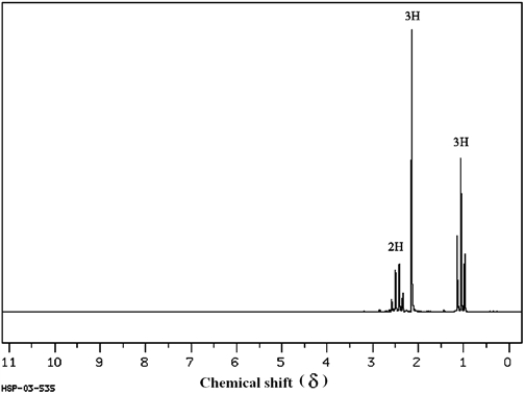 (Spectrum obtained from: SDBSWeb: http://www.aist.go.jp/RIODB/SDBS/)
-Refer to instructions. Propose a structure for this compound.
(Spectrum obtained from: SDBSWeb: http://www.aist.go.jp/RIODB/SDBS/)
-Refer to instructions. Propose a structure for this compound. (Essay)
4.8/5 (69)
(69) How many positive and negative peaks appear in the DEPT-135 spectrum of 2,4-dimethylpentane?
(Multiple Choice)
4.7/5 (78)
(78) Refer to the structure of 3-methylbutan-2-one below to answer the following question(s). 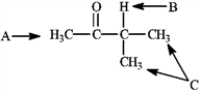 -Refer to instructions. What is the splitting pattern for the hydrogens in 3-methylbutan-2-one labeled A, B, and C, respectively?
 (Multiple Choice)
4.8/5 (80)
(80) Predict the splitting patterns you would expect for each proton in the molecules below:
-Predict: 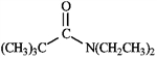
(Essay)
4.7/5 (75)
(75) How many signals appear in the broadband-decoupled 13C NMR spectrum of 1,2-dibromobenzene?
(Multiple Choice)
5.0/5 (70)
(70) Refer to the structure of 3-methylbutan-2-one below to answer the following question(s).
-A compound with the molecular formula C5H12O produces only two singlets in the 1H NMR spectrum.
a)Propose a structure for this compound.
b)How many signals would be present in the 13C NMR for this structure?
-A compound with the molecular formula C5H12O produces only two singlets in the 1H NMR spectrum.
a)Propose a structure for this compound.
b)How many signals would be present in the 13C NMR for this structure? (Essay)
4.8/5 (82)
(82) Predict the splitting patterns you would expect for each proton in the molecules below:
-Predict: 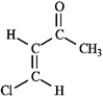
(Essay)
4.9/5 (72)
(72) Which of the following combinations of peaks appears in the 1H NMR spectrum of diethyl ether, CH3CH2OCH2CH3?
(Multiple Choice)
4.9/5 (80)
(80) For each of the compounds below tell how many signals you would expect the molecule to have in its normal, broadband decoupled 13C NMR spectra.
-Number of signals: 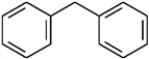
(Essay)
4.9/5 (75)
(75) Which of the following compounds gives a 1H NMR spectrum consisting of only two singlets?
(Multiple Choice)
4.9/5 (71)
(71) For each of the compounds below tell how many signals you would expect the molecule to have in its normal, broadband decoupled 13C NMR spectra.
-Number of signals: 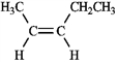
(Essay)
4.9/5 (85)
(85) Answer the following question(s) for the compound whose 1H NMR spectra is shown below.
C4H8O (Spectrum obtained from: SDBSWeb: http://www.aist.go.jp/RIODB/SDBS/)
-Refer to instructions. Describe each signal in terms of its integration, splitting and chemical shift.
(Spectrum obtained from: SDBSWeb: http://www.aist.go.jp/RIODB/SDBS/)
-Refer to instructions. Describe each signal in terms of its integration, splitting and chemical shift. (Essay)
4.8/5 (61)
(61) For each of the compounds below tell how many signals you would expect the molecule to have in its normal, broadband decoupled 13C NMR spectra.
-Which of the following would produce only singlets in an 1H NMR spectrum? A 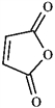 B
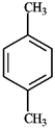 C
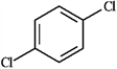 D

B C D (Multiple Choice)
4.8/5 (86)
(86) How many signals appear in the broadband-decoupled 13C NMR spectrum of 1,3-dibromobenzene?
(Multiple Choice)
4.9/5 (80)
(80) 
Filters
- Essay(0)
- Multiple Choice(0)
- Short Answer(0)
- True False(0)
- Matching(0)