



 Chat with AI
Exam 12: Organohalides: Nucleophilic Substitutions and Eliminations

Exam 1: Structure and Bonding29 Questions
Exam 2: Polar Covalent Bonds; Acids and Bases41 Questions
Exam 3: Organic Compounds: Alkanes and Their Stereochemistry32 Questions
Exam 4: Organic Compounds: Cycloalkanes and Their Stereochemistry29 Questions
Exam 5: Stereochemistry at Tetrahedral Centers40 Questions
Exam 6: An Overview of Organic Reactions39 Questions
Exam 7: Alkenes and Alkynes36 Questions
Exam 8: Reactions of Alkenes and Alkynes38 Questions
Exam 9: Aromatic Compounds37 Questions
Exam 10: Structure Determination: Mass Spectrometry, Infrared Spectroscopy, and Ultraviolet Spectroscopy42 Questions
Exam 10: Structure Determination: Mass Spectrometry, Infrared Spectroscopy, and Ultraviolet Spectroscopy43 Questions
Exam 11: Structure Determination: Nuclear Magnetic Resonance Spectroscopy41 Questions
Exam 12: Organohalides: Nucleophilic Substitutions and Eliminations43 Questions
Exam 13: Alcohols, Phenols, and Thiols; Ethers and Sulfides38 Questions
Exam 14: Aldehydes and Ketones: Nucleophilic Addition Reactions36 Questions
Exam 15: Carboxylic Acids and Nitriles36 Questions
Exam 16: Carboxylic Acid Derivatives: Nucleophilic Acyl Substitution Reactions46 Questions
Exam 17: Carbonyl Alpha-Substitution and Condensation Reactions46 Questions
Exam 18: Amines and Heterocycles36 Questions
Exam 19: Biomolecules: Amino Acids, Peptides, and Proteins52 Questions
Exam 20: Amino Acid Metabolism32 Questions
Exam 21: Biomolecules: Carbohydrates49 Questions
Exam 22: Carbohydrate Metabolism45 Questions
Exam 23: Biomolecules: Lipids and Their Metabolism42 Questions
Exam 24: Biomolecules: Nucleic Acids and Their Metabolism34 Questions
Exam 26: Orbitals and Organic Chemistry: Pericyclic Reactionse44 Questions
Exam 27: Synthetic Polymerse35 Questions
Select questions type


For each question, provide structures for the reactants, intermediates, or products, as indicated. Draw the structures in the boxes provided.
-Draw: 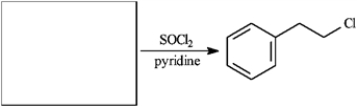
(Essay)
4.9/5  (77)
(77) For each question, provide structures for the reactants, intermediates, or products, as indicated. Draw the structures in the boxes provided.
-Draw: 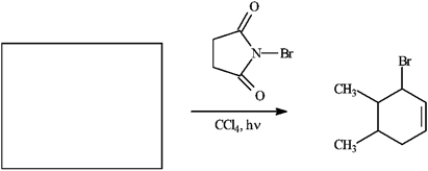
(Essay)
4.9/5 (77)
(77) Which of the following represents the transition state of the SN2 reaction between methyl iodide and ammonia?
(Multiple Choice)
5.0/5 (80)
(80) What is the rate law for the E2 reaction of an alkyl halide (RX) with sodium ethoxide (NaOEt) in ethanol solvent (EtOH)?
(Multiple Choice)
4.8/5 (72)
(72) Circle the correct response in each set below.
-Refer to instructions. The least reactive compound in an SN2 reaction. Explain your choice. 
(Essay)
4.8/5 (77)
(77) Consider the pair of reactions below to answer the following question(s).
a.  or
b.
 -Refer to instructions. The alkyl bromide starting materials in these reactions are classified as:
or
b.
-Refer to instructions. The alkyl bromide starting materials in these reactions are classified as: (Multiple Choice)
5.0/5 (93)
(93) Which mechanism is favored by the reaction of a secondary alkyl bromide with potassium t-butoxide?
(Multiple Choice)
4.9/5 (75)
(75) Which of the following statements about an SN2 reaction is true?
(Multiple Choice)
4.8/5 (77)
(77) Consider the pair of reactions below to answer the following question(s).
a.  or
b.
 -Refer to instructions. If the alkyl halide in each of these reactions was an alkyl chloride instead of the bromide,
or
b.
-Refer to instructions. If the alkyl halide in each of these reactions was an alkyl chloride instead of the bromide, (Multiple Choice)
4.9/5 (88)
(88) Provide a IUPAC name for each of the following alkyl halides.
-Name: 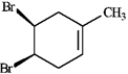
(Short Answer)
4.9/5 (77)
(77) 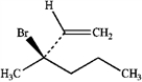
Upon treatment with base, the following isotopically labeled compound gives rise to a major and a minor elimination product. Draw their structures and label each as major or minor. 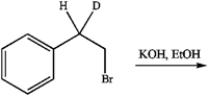
(Essay)
4.9/5 (90)
(90) For each question, draw a structure corresponding to the given name.
-Draw:
trans-1-sec-butyl-3-chlorocyclohexane
(Essay)
4.9/5 (66)
(66) Consider the reaction below to answer the following question(s). 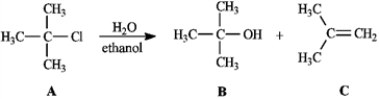 -Refer to instructions. Compound B is the:
 (Multiple Choice)
4.8/5 (83)
(83) Circle the correct response in each set below.
-Refer to instructions. The best nucleophile in a substitution reaction at a primary carbon. 
(Essay)
5.0/5 (70)
(70) Circle the correct response in each set below.
-Refer to instructions. The least reactive compound in an SN1 reaction. 
(Essay)
5.0/5 (87)
(87) For each question, provide structures for the reactants, intermediates, or products, as indicated. Draw the structures in the boxes provided.
-Draw: 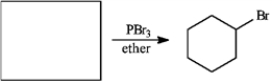
(Essay)
4.8/5 (83)
(83) Provide a IUPAC name for each of the following alkyl halides.
-Name:
The solvents: CCl4 and CH2Cl2
(Short Answer)
4.9/5 (71)
(71) Consider the reaction below to answer the following question(s). 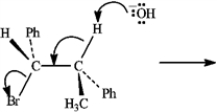 -Refer to instructions. Write the product that results from the indicated electron flow in the reaction, showing any resulting stereochemistry
 (Essay)
4.7/5 (78)
(78) Circle the correct response in each set below.
-Refer to instructions. The best leaving group in an elimination reaction. 
(Essay)
4.7/5 (58)
(58) 
Filters
- Essay(0)
- Multiple Choice(0)
- Short Answer(0)
- True False(0)
- Matching(0)