



 Chat with AI
Exam 22: Carbohydrate Metabolism

Exam 1: Structure and Bonding29 Questions
Exam 2: Polar Covalent Bonds; Acids and Bases41 Questions
Exam 3: Organic Compounds: Alkanes and Their Stereochemistry32 Questions
Exam 4: Organic Compounds: Cycloalkanes and Their Stereochemistry29 Questions
Exam 5: Stereochemistry at Tetrahedral Centers40 Questions
Exam 6: An Overview of Organic Reactions39 Questions
Exam 7: Alkenes and Alkynes36 Questions
Exam 8: Reactions of Alkenes and Alkynes38 Questions
Exam 9: Aromatic Compounds37 Questions
Exam 10: Structure Determination: Mass Spectrometry, Infrared Spectroscopy, and Ultraviolet Spectroscopy42 Questions
Exam 10: Structure Determination: Mass Spectrometry, Infrared Spectroscopy, and Ultraviolet Spectroscopy43 Questions
Exam 11: Structure Determination: Nuclear Magnetic Resonance Spectroscopy41 Questions
Exam 12: Organohalides: Nucleophilic Substitutions and Eliminations43 Questions
Exam 13: Alcohols, Phenols, and Thiols; Ethers and Sulfides38 Questions
Exam 14: Aldehydes and Ketones: Nucleophilic Addition Reactions36 Questions
Exam 15: Carboxylic Acids and Nitriles36 Questions
Exam 16: Carboxylic Acid Derivatives: Nucleophilic Acyl Substitution Reactions46 Questions
Exam 17: Carbonyl Alpha-Substitution and Condensation Reactions46 Questions
Exam 18: Amines and Heterocycles36 Questions
Exam 19: Biomolecules: Amino Acids, Peptides, and Proteins52 Questions
Exam 20: Amino Acid Metabolism32 Questions
Exam 21: Biomolecules: Carbohydrates49 Questions
Exam 22: Carbohydrate Metabolism45 Questions
Exam 23: Biomolecules: Lipids and Their Metabolism42 Questions
Exam 24: Biomolecules: Nucleic Acids and Their Metabolism34 Questions
Exam 26: Orbitals and Organic Chemistry: Pericyclic Reactionse44 Questions
Exam 27: Synthetic Polymerse35 Questions
Select questions type


Draw the structure of the ultimate organic glycolysis product of α-glucose. 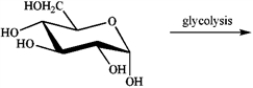
(Essay)
4.9/5  (79)
(79) Which enzyme catalyzes a reaction that is a major control point for glycolysis?
(Multiple Choice)
4.8/5 (76)
(76) Which group of small molecules best fit the boxes associated with the reaction shown? 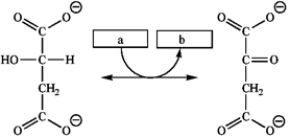 a b
a b (Multiple Choice)
4.9/5 (94)
(94) Match a term or structure from the list below to each of the following definitions or names.
Embden-Meyerhoff
Embden-Meyerhoff
-Pathways that break down larger biomolecules into smaller ones.
(Multiple Choice)
5.0/5 (85)
(85) The reaction of fructose 1,6-bisphosphate to give glyceraldehyde-3-phosphate and dihydroxyacetone phosphate is an example of
(Multiple Choice)
4.8/5 (81)
(81) Circle the carbon atoms in the molecule of glucose shown that enter the citric acid cycle as −CH3 groups. 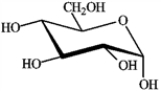
(Essay)
4.7/5 (89)
(89) Consider the glycolytic intermediate below to answer the following questions.  a)What is the name of the glycolytic intermediate?
a. 1-phosphoglycerate
b. glyceraldehyde-3-phosphate
c. dihydroxyacetone phosphate
d. 1,3-bisphosphoglycerate
b)
Draw the structure of the product of the reaction of this intermediate with ADP.
a)What is the name of the glycolytic intermediate?
a. 1-phosphoglycerate
b. glyceraldehyde-3-phosphate
c. dihydroxyacetone phosphate
d. 1,3-bisphosphoglycerate
b)
Draw the structure of the product of the reaction of this intermediate with ADP. (Essay)
4.9/5 (66)
(66) Consider the structure of amylopectin below to answer the following questions. 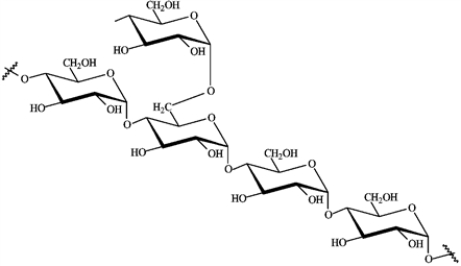 a)Circle the glycosidic links that are hydrolyzed in the small intestine.
b)What is the final product of complete hydrolysis of amylpectin?
a)Circle the glycosidic links that are hydrolyzed in the small intestine.
b)What is the final product of complete hydrolysis of amylpectin? (Essay)
4.8/5 (86)
(86) Match a term or structure from the list below to each of the following definitions or names.
Embden-Meyerhoff
Embden-Meyerhoff
-The product of the citric acid cycle, which is a reactant in the first step.
(Multiple Choice)
4.9/5 (88)
(88) In humans, what aspect(s) are the mechanism of glycosidase hydrolysis of starch by inversion and retention of stereochemistry similar?
(Multiple Choice)
4.8/5 (72)
(72) The citric acid cycle is considered to be the central metabolic pathway for all the following reasons, except:
(Multiple Choice)
4.7/5 (83)
(83) Which group of small molecules best fit the boxes associated with the reaction shown? 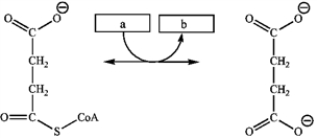 a b
a b (Multiple Choice)
4.9/5 (74)
(74) Which group of small molecules best fit the boxes associated with the reaction shown? 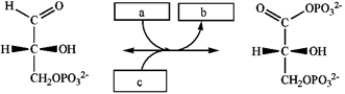 a b c
a b c (Multiple Choice)
4.7/5 (75)
(75) The following reactions all occur during oxidative decarboxylation of pyruvate, except:
(Multiple Choice)
4.7/5 (84)
(84) Consider the following reaction. 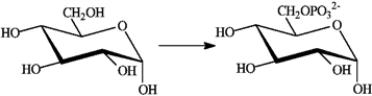 Which of the following describes this reaction?
 (Multiple Choice)
4.9/5 (88)
(88) In the reaction catalyzed by aldolase, the substrate is bound to the enzyme
(Multiple Choice)
4.8/5 (82)
(82) Consider the reaction below to answer the following question(s). 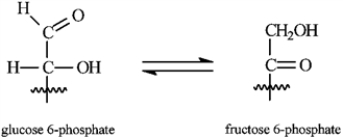 -Refer to instructions. This reaction proceeds through a common enol structure. Draw the structure of the glucose/fructose enol.
 (Essay)
4.8/5 (85)
(85) 
Filters
- Essay(0)
- Multiple Choice(0)
- Short Answer(0)
- True False(0)
- Matching(0)