



 Chat with AI
Exam 24: Biomolecules: Nucleic Acids and Their Metabolism

Exam 1: Structure and Bonding29 Questions
Exam 2: Polar Covalent Bonds; Acids and Bases41 Questions
Exam 3: Organic Compounds: Alkanes and Their Stereochemistry32 Questions
Exam 4: Organic Compounds: Cycloalkanes and Their Stereochemistry29 Questions
Exam 5: Stereochemistry at Tetrahedral Centers40 Questions
Exam 6: An Overview of Organic Reactions39 Questions
Exam 7: Alkenes and Alkynes36 Questions
Exam 8: Reactions of Alkenes and Alkynes38 Questions
Exam 9: Aromatic Compounds37 Questions
Exam 10: Structure Determination: Mass Spectrometry, Infrared Spectroscopy, and Ultraviolet Spectroscopy42 Questions
Exam 10: Structure Determination: Mass Spectrometry, Infrared Spectroscopy, and Ultraviolet Spectroscopy43 Questions
Exam 11: Structure Determination: Nuclear Magnetic Resonance Spectroscopy41 Questions
Exam 12: Organohalides: Nucleophilic Substitutions and Eliminations43 Questions
Exam 13: Alcohols, Phenols, and Thiols; Ethers and Sulfides38 Questions
Exam 14: Aldehydes and Ketones: Nucleophilic Addition Reactions36 Questions
Exam 15: Carboxylic Acids and Nitriles36 Questions
Exam 16: Carboxylic Acid Derivatives: Nucleophilic Acyl Substitution Reactions46 Questions
Exam 17: Carbonyl Alpha-Substitution and Condensation Reactions46 Questions
Exam 18: Amines and Heterocycles36 Questions
Exam 19: Biomolecules: Amino Acids, Peptides, and Proteins52 Questions
Exam 20: Amino Acid Metabolism32 Questions
Exam 21: Biomolecules: Carbohydrates49 Questions
Exam 22: Carbohydrate Metabolism45 Questions
Exam 23: Biomolecules: Lipids and Their Metabolism42 Questions
Exam 24: Biomolecules: Nucleic Acids and Their Metabolism34 Questions
Exam 26: Orbitals and Organic Chemistry: Pericyclic Reactionse44 Questions
Exam 27: Synthetic Polymerse35 Questions
Select questions type


Match each of the following terms to a structure from the list below. There is only one correct structure for each term and structures may be used more than once.
-2'-deoxyadenosine 5'-phosphate
(Multiple Choice)
4.9/5  (86)
(86) The bond between the nitrogenous base and the sugar in a nucleoside is a glycosidic bond. Which type of reagent should cleave this bond?
(Multiple Choice)
4.8/5 (77)
(77) What mRNA sequence is complementary to the following DNA base sequence?
(5') TAAGGCGATA (3')
(Essay)
4.9/5 (80)
(80) Match each of the following terms to a structure from the list below. There is only one correct structure for each term and structures may be used more than once.
-RNA base sequence with guanine at the 3' end.
(Multiple Choice)
4.9/5 (75)
(75) Which reagent is used to accelerate coupling reactions in both laboratory peptide synthesis and laboratory DNA synthesis?
(Multiple Choice)
5.0/5 (86)
(86) What sequence of bases on the second strand of DNA is complementary to the following?
(5') GCATTA (3')
(Short Answer)
5.0/5 (80)
(80) What is the anticodon sequence in tRNA that corresponds the following segment of mRNA?
(5') CUU−AGC−UGG−CCC(3')
(Short Answer)
4.9/5 (82)
(82) Answer the following questions.
a)If the following segment of mRNA
(5') CUU−AGC−UGG−CCC (3')
was changed to
(5') CUU−AGC−UGG−CCU (3')
how would the synthesized protein change?
b)If the following segment of mRNA
(5') CUU−AGC−UGG−CCC (3')
was changed to
(5') CUU−AGC−UGA−CCU (3')
how would the synthesized protein change?
(Essay)
4.8/5 (72)
(72) Describe, in general terms, the steps involved in the automated synthesis of the DNA sequence GCT.
(Essay)
4.8/5 (73)
(73) 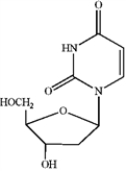 B
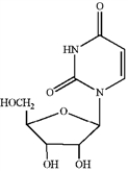 C
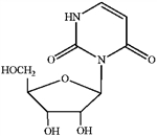 D
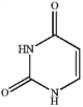
Match each of the following terms to a structure from the list below. There is only one correct structure for each term and structures may be used more than once.
-DNA base sequence with cytosine at the 3' end.
(Multiple Choice)
4.8/5 (75)
(75) 
Filters
- Essay(0)
- Multiple Choice(0)
- Short Answer(0)
- True False(0)
- Matching(0)