



 Chat with AI
Exam 12: Alkenes and Alkynes

Exam 1: Matter, Energy, and Measurement143 Questions
Exam 2: Atoms133 Questions
Exam 3: Chemical Bonds140 Questions
Exam 4: Chemical Reactions140 Questions
Exam 5: Gases, Liquids, and Solids132 Questions
Exam 6: Solutions and Colloids153 Questions
Exam 7: Reaction Rates and Chemical Equilibrium103 Questions
Exam 8: Acids and Bases197 Questions
Exam 9: Nuclear Chemistry155 Questions
Exam 10: Organic Chemistry70 Questions
Exam 11: Alkanes142 Questions
Exam 12: Alkenes and Alkynes123 Questions
Exam 13: Benzene and Its Derivatives60 Questions
Exam 14: Alcohols, Ethers, and Thiols122 Questions
Exam 15: Chirality: the Handedness of Molecules92 Questions
Exam 16: Amines89 Questions
Exam 17: Aldehydes and Ketones101 Questions
Exam 18: Carboxylic Acids115 Questions
Exam 19: Carboxylic Anhydrides, Esters, and Amides117 Questions
Exam 20: Carbohydrates103 Questions
Exam 21: Lipids132 Questions
Exam 22: Proteins128 Questions
Exam 23: Enzymes62 Questions
Exam 24: Chemical Communications: Neurotransmitters and Hormones89 Questions
Exam 25: Nucleotides, Nucleic Acids, and Heredity121 Questions
Exam 26: Gene Expression and Protein Synthesis129 Questions
Exam 27: Bioenergetics: How the Body Converts Food to Energy140 Questions
Exam 28: Specific Catabolic Pathways: Carbohydrate, Lipid, and Protein Metabolism104 Questions
Exam 29: Biosynthetic Pathways67 Questions
Exam 30: Nutrition73 Questions
Exam 31: Immunochemistry142 Questions
Exam 32: Body Fluids72 Questions
Select questions type


Which of the following is the characteristic feature of all alkynes?
(Multiple Choice)
4.9/5  (76)
(76) What type of alcohol is formed by the hydration of 2-methyl-1-pentene?
(Multiple Choice)
4.9/5 (61)
(61) Which class of compounds is not widespread in nature, and has little importance in biochemistry?
(Multiple Choice)
4.9/5 (86)
(86) What product is obtained by the hydrobromination of 2-methyl-1-pentene?
(Multiple Choice)
4.8/5 (79)
(79) In which of the following types of reactions is sulfuric acid used as a catalyst?
(Multiple Choice)
4.8/5 (77)
(77) Which of the following reactions involves the addition of different groups to the two ends of a double bond?
(Multiple Choice)
4.8/5 (86)
(86) Which of the following compounds, all of which have the molecular formula C6H12, does not have cis and trans isomers?
(Multiple Choice)
4.9/5 (83)
(83) The formation of polyethylene is an example of which of the following?
(Multiple Choice)
4.9/5 (80)
(80) Which of the following is true of the common names of low molecular weight alkenes and alkynes?
(Multiple Choice)
4.7/5 (74)
(74) What type of alcohol is formed by the hydration of 1-pentene?
(Multiple Choice)
4.9/5 (89)
(89) Four patterns can be noted for certain organic reactions;
Pattern 1: Add a proton.
Pattern 2: Take a proton away.
Pattern 3: Reaction between an electrophile and nucleophile to form a new covalent bond.
Pattern 4: Reaction of proton donor with a carbon to carbon double bond to from a new covalent bond.
-To which pattern does the following reaction belong? 
(Multiple Choice)
4.9/5 (71)
(71) 
Which of the following is the characteristic feature of all alkenes?
(Multiple Choice)
4.9/5 (70)
(70) What is the product of the reaction of the substance given below with hydrogen? 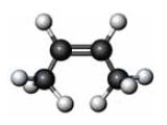
(Multiple Choice)
5.0/5 (84)
(84) Stereoisomers exist for which of the following molecules, all of which have the molecular formula C5H8?
(Multiple Choice)
4.8/5 (75)
(75) Which of the following monomers can be used to prepare the polymer given below? 
(Multiple Choice)
4.8/5 (75)
(75) 
Filters
- Essay(0)
- Multiple Choice(0)
- Short Answer(0)
- True False(0)
- Matching(0)