



 Chat with AI
Exam 18: Carboxylic Acids

Exam 1: Matter, Energy, and Measurement143 Questions
Exam 2: Atoms133 Questions
Exam 3: Chemical Bonds140 Questions
Exam 4: Chemical Reactions140 Questions
Exam 5: Gases, Liquids, and Solids132 Questions
Exam 6: Solutions and Colloids153 Questions
Exam 7: Reaction Rates and Chemical Equilibrium103 Questions
Exam 8: Acids and Bases197 Questions
Exam 9: Nuclear Chemistry155 Questions
Exam 10: Organic Chemistry70 Questions
Exam 11: Alkanes142 Questions
Exam 12: Alkenes and Alkynes123 Questions
Exam 13: Benzene and Its Derivatives60 Questions
Exam 14: Alcohols, Ethers, and Thiols122 Questions
Exam 15: Chirality: the Handedness of Molecules92 Questions
Exam 16: Amines89 Questions
Exam 17: Aldehydes and Ketones101 Questions
Exam 18: Carboxylic Acids115 Questions
Exam 19: Carboxylic Anhydrides, Esters, and Amides117 Questions
Exam 20: Carbohydrates103 Questions
Exam 21: Lipids132 Questions
Exam 22: Proteins128 Questions
Exam 23: Enzymes62 Questions
Exam 24: Chemical Communications: Neurotransmitters and Hormones89 Questions
Exam 25: Nucleotides, Nucleic Acids, and Heredity121 Questions
Exam 26: Gene Expression and Protein Synthesis129 Questions
Exam 27: Bioenergetics: How the Body Converts Food to Energy140 Questions
Exam 28: Specific Catabolic Pathways: Carbohydrate, Lipid, and Protein Metabolism104 Questions
Exam 29: Biosynthetic Pathways67 Questions
Exam 30: Nutrition73 Questions
Exam 31: Immunochemistry142 Questions
Exam 32: Body Fluids72 Questions
Select questions type


What is the product obtained when a carboxylic acid is reduced?
(Multiple Choice)
4.7/5  (73)
(73) Examine the following cut-away figure. 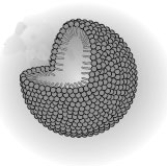 Which of the following correctly describes this structure?
 (Multiple Choice)
4.8/5 (98)
(98) Which of the intermediates shown below is generated during the following reaction? 
(Multiple Choice)
4.8/5 (76)
(76) When compared with the solubility in water of other neutral organic compounds of comparable molecular weight, which of the following is true of the solubility of carboxylic acid acids?
(Multiple Choice)
5.0/5 (73)
(73) Which of the following biologically important compounds is achiral?
(Multiple Choice)
4.8/5 (73)
(73) Consider a mixture of cinnamaldehyde and cinnamic acid that is subjected to the procedure shown in the flow diagram. 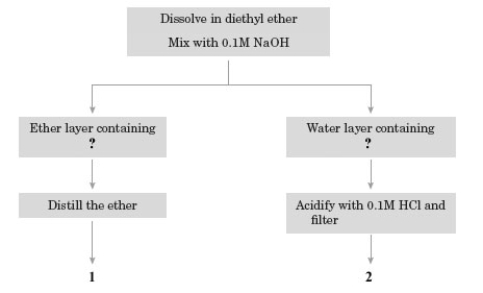 Which of the following describes the fate of the cinnamic acid.
 (Multiple Choice)
5.0/5 (80)
(80) Which of the following compounds contain a carboxylic acid functional group? 
(Multiple Choice)
4.9/5 (90)
(90) During decarboxylation, which final step occurs after carbon dioxide has been lost?
(Multiple Choice)
4.9/5 (81)
(81) Which of the following is true of the Fischer esterification reaction?
(Multiple Choice)
4.8/5 (74)
(74) What will be the organic product obtained from the following reaction? 
(Multiple Choice)
4.9/5 (83)
(83) Which of the products listed is formed when the β-ketoacid shown below is heated? 
(Multiple Choice)
5.0/5 (83)
(83) 
Carboxylic acids can form hydrogen bonds with which of the following classes of compounds?
(Multiple Choice)
4.9/5 (91)
(91) Which of the following acids has an aroma similar to that of goats?
(Multiple Choice)
4.8/5 (78)
(78) Which type reaction is used to obtain fatty acids from animal fats?
(Multiple Choice)
4.9/5 (67)
(67) When compared with the boiling points of other neutral organic compounds of comparable molecular weight, which of the following is true of the boiling points of carboxylic acids?
(Multiple Choice)
5.0/5 (74)
(74) Salicylic acid has the structure shown below. 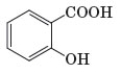 Which of the following characterizes the organic product of the reaction of this substance with KOH?
 (Multiple Choice)
4.8/5 (78)
(78) Consider the following reaction. (R, R', and R'' represent different hydrocarbon chains.) 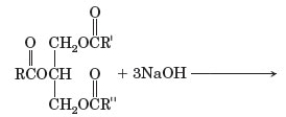 Which of the following correctly describes this reaction?
 (Multiple Choice)
4.7/5 (86)
(86) 
Filters
- Essay(0)
- Multiple Choice(0)
- Short Answer(0)
- True False(0)
- Matching(0)