



 Chat with AI
Exam 28: Specific Catabolic Pathways: Carbohydrate, Lipid, and Protein Metabolism

Exam 1: Matter, Energy, and Measurement143 Questions
Exam 2: Atoms133 Questions
Exam 3: Chemical Bonds140 Questions
Exam 4: Chemical Reactions140 Questions
Exam 5: Gases, Liquids, and Solids132 Questions
Exam 6: Solutions and Colloids153 Questions
Exam 7: Reaction Rates and Chemical Equilibrium103 Questions
Exam 8: Acids and Bases197 Questions
Exam 9: Nuclear Chemistry155 Questions
Exam 10: Organic Chemistry70 Questions
Exam 11: Alkanes142 Questions
Exam 12: Alkenes and Alkynes123 Questions
Exam 13: Benzene and Its Derivatives60 Questions
Exam 14: Alcohols, Ethers, and Thiols122 Questions
Exam 15: Chirality: the Handedness of Molecules92 Questions
Exam 16: Amines89 Questions
Exam 17: Aldehydes and Ketones101 Questions
Exam 18: Carboxylic Acids115 Questions
Exam 19: Carboxylic Anhydrides, Esters, and Amides117 Questions
Exam 20: Carbohydrates103 Questions
Exam 21: Lipids132 Questions
Exam 22: Proteins128 Questions
Exam 23: Enzymes62 Questions
Exam 24: Chemical Communications: Neurotransmitters and Hormones89 Questions
Exam 25: Nucleotides, Nucleic Acids, and Heredity121 Questions
Exam 26: Gene Expression and Protein Synthesis129 Questions
Exam 27: Bioenergetics: How the Body Converts Food to Energy140 Questions
Exam 28: Specific Catabolic Pathways: Carbohydrate, Lipid, and Protein Metabolism104 Questions
Exam 29: Biosynthetic Pathways67 Questions
Exam 30: Nutrition73 Questions
Exam 31: Immunochemistry142 Questions
Exam 32: Body Fluids72 Questions
Select questions type


In what form(s) is the fatty acid transported from the cytosol to the mitochondria?
(Multiple Choice)
4.8/5  (66)
(66) Ornithine, an amino acid which is not found in proteins, is most similar to which of the following amino acids, all of which are found in proteins?
(Multiple Choice)
4.8/5 (84)
(84) Which of the following is the energy production or consumption associated with the formation of one molecule of carbamoyl phosphate?
(Multiple Choice)
5.0/5 (66)
(66) What is the name for the process in which glycogen is converted to glucose?
(Multiple Choice)
4.8/5 (81)
(81) The conversion of pyruvate of acetyl coenzyme A is an example of which of the following?
(Multiple Choice)
4.8/5 (64)
(64) Which of the following is the oxidizing agent in the first oxidation step of β-oxidation of fatty acids?
(Multiple Choice)
4.7/5 (68)
(68) Which of the following is true if a diet provides an adequate supply of sugars?
(Multiple Choice)
4.8/5 (85)
(85) Which of the following is the product of the first step of glycolysis?
(Multiple Choice)
4.9/5 (89)
(89) Which of the following is true when comparing the β-oxidation of a naturally occurring unsaturated fatty acid to that of a saturated fatty acid?
(Multiple Choice)
5.0/5 (79)
(79) The first three steps of glycolysis are collectively known as which of the following?
(Multiple Choice)
5.0/5 (77)
(77) During the urea cycle some ATP is converted to ADP and some ATP is converted to AMP. Given that the conversion of ATP to AMP is thought of as equivalent to the consumption of 2 ATPs, what is the total ATP consumption of the urea cycle?
(Multiple Choice)
4.8/5 (86)
(86) Which of the following is true of those steps of glycolysis which yield pyruvate as the end product?
(Multiple Choice)
4.7/5 (65)
(65) The NADH + H+ produced during the catabolism of amino acids ultimately results in the production of how many molecules of ATP?
(Multiple Choice)
4.7/5 (95)
(95) The following fatty acid enters the β-oxidation spiral. 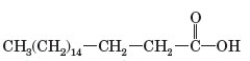 and the product shown below is produced.
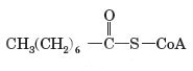 How many NAD+ are needed?
and the product shown below is produced. How many NAD+ are needed? (Multiple Choice)
4.8/5 (90)
(90) The final step of the urea cycle produces urea and which of the following?
(Multiple Choice)
4.9/5 (93)
(93) The conversion of glyceraldehyde 3-phosphate to 1,3-bisphosphoglycerate requires which of the following?
(Multiple Choice)
4.9/5 (89)
(89) 
Filters
- Essay(0)
- Multiple Choice(0)
- Short Answer(0)
- True False(0)
- Matching(0)