



 Chat with AI
Exam 24: Carbohydrate, Lipid, and Protein Metabolism

Exam 1: Matter and Measurement89 Questions
Exam 2: Atoms and the Periodic Table90 Questions
Exam 3: Ionic Compounds90 Questions
Exam 4: Covalent Compounds90 Questions
Exam 5: Chemical Reactions89 Questions
Exam 6: Energy Changes, Reaction Rates, and Equilibrium88 Questions
Exam 7: Gases, Liquids, and Solids79 Questions
Exam 8: Solutions90 Questions
Exam 9: Acids and Bases90 Questions
Exam 10: Nuclear Chemistry85 Questions
Exam 11: Introduction to Organic Molecules and Functional Groups103 Questions
Exam 12: Alkanes106 Questions
Exam 13: Unsaturated Hydrocarbons101 Questions
Exam 14: Organic Compounds That Contain Oxygen, Halogen, or Sulfur111 Questions
Exam 15: The Three-Dimensional Shape of Molecules100 Questions
Exam 16: Aldehydes and Ketones103 Questions
Exam 17: Carboxylic Acids, Esters, and Amides81 Questions
Exam 18: Amines and Neurotransmitters105 Questions
Exam 19: Lipids105 Questions
Exam 20: Carbohydrates92 Questions
Exam 21: Amino Acids, Proteins, and Enzymes88 Questions
Exam 22: Nucleic Acids and Protein Synthesis89 Questions
Exam 23: Digestion and the Conversion of Food Into Energy92 Questions
Exam 24: Carbohydrate, Lipid, and Protein Metabolism91 Questions
Select questions type


When energy demands are low, glucose is stored as the polymer _____ in the liver and muscles.
(Short Answer)
4.8/5  (81)
(81) Ketone bodies are produced in the kidneys, and since they are small molecules that can hydrogen bond with water, they are readily soluble in blood and urine.
(True/False)
4.9/5 (69)
(69) The rate of glycolysis decreases when the body's ATP concentration is high.
(True/False)
4.9/5 (76)
(76) The urea cycle is a multistep pathway that converts ammonium ions to urea, (NH2)2C=O, in the kidneys.
(True/False)
4.9/5 (79)
(79) Cortisol is an anti-inflammatory agent that also regulates carbohydrate metabolism. Cortisol contains a primary alcohol, a secondary alcohol, and a quaternary alcohol. 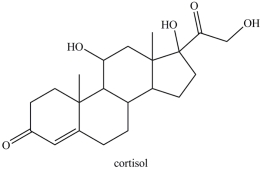
(True/False)
5.0/5 (79)
(79) In glycolysis, two three-carbon molecules of pyruvate (CH3COCO2-)are formed from each glucose molecule.
(True/False)
4.9/5 (78)
(78) A carboxylase enzyme catalyzes the removal of carbon dioxide from a substrate.
(True/False)
4.8/5 (78)
(78) When acetyl CoA levels exceed the capacity of the citric acid cycle, acetyl CoA is converted to ketone bodies.
(True/False)
4.7/5 (89)
(89) Which compound is necessary for the oxidative deamination of the glutamate formed by transamination?
(Multiple Choice)
4.9/5 (78)
(78) Cortisol is an anti-inflammatory agent that also regulates carbohydrate metabolism. Cortisol contains a primary alcohol, a secondary alcohol, and a quaternary alcohol. 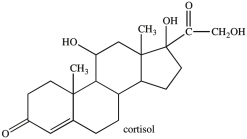
(True/False)
4.9/5 (88)
(88) How much ATP results from the transformation of two (2)molecules of acetyl CoA to four (4)molecules of CO2?
(Multiple Choice)
4.8/5 (62)
(62) Six of the steps of gluconeogenesis use the same enzymes as used in glycolysis.
(True/False)
4.8/5 (76)
(76) 
Glycolysis begins with the phosphorylation of glucose to form glucose 6-phosphate.
(True/False)
4.7/5 (89)
(89) Glycolysis occurs when the body has depleted its supplies of glucose and stored glycogen, and occurs during sustained physical exercise and fasting.
(True/False)
4.8/5 (81)
(81) 
Filters
- Essay(0)
- Multiple Choice(0)
- Short Answer(0)
- True False(0)
- Matching(0)