



 Chat with AI
Exam 11: Introduction to Organic Molecules and Functional Groups

Exam 1: Matter and Measurement89 Questions
Exam 2: Atoms and the Periodic Table90 Questions
Exam 3: Ionic Compounds90 Questions
Exam 4: Covalent Compounds90 Questions
Exam 5: Chemical Reactions89 Questions
Exam 6: Energy Changes, Reaction Rates, and Equilibrium88 Questions
Exam 7: Gases, Liquids, and Solids79 Questions
Exam 8: Solutions90 Questions
Exam 9: Acids and Bases90 Questions
Exam 10: Nuclear Chemistry85 Questions
Exam 11: Introduction to Organic Molecules and Functional Groups103 Questions
Exam 12: Alkanes106 Questions
Exam 13: Unsaturated Hydrocarbons101 Questions
Exam 14: Organic Compounds That Contain Oxygen, Halogen, or Sulfur111 Questions
Exam 15: The Three-Dimensional Shape of Molecules100 Questions
Exam 16: Aldehydes and Ketones103 Questions
Exam 17: Carboxylic Acids, Esters, and Amides81 Questions
Exam 18: Amines and Neurotransmitters105 Questions
Exam 19: Lipids105 Questions
Exam 20: Carbohydrates92 Questions
Exam 21: Amino Acids, Proteins, and Enzymes88 Questions
Exam 22: Nucleic Acids and Protein Synthesis89 Questions
Exam 23: Digestion and the Conversion of Food Into Energy92 Questions
Exam 24: Carbohydrate, Lipid, and Protein Metabolism91 Questions
Select questions type


The net dipole in CH3CHO is shown as indicated below. 

Free
(True/False)
4.7/5  (79)
(79) Correct Answer: Verified
True
In most polar bonds found in organic compounds between carbon and heteroatoms, the carbon atom has a partial _____ charge.
Free
(Short Answer)
5.0/5 (82)
(82) Correct Answer:Verified
Verifiedpositive
Which formula represents an inorganic compound?
Free
(Multiple Choice)
4.8/5 (82)
(82) Correct Answer:Verified
VerifiedD
Which element is not a common heteroatom in organic compounds?
(Multiple Choice)
4.9/5 (96)
(96) The functional group of which type of compound contains a carbonyl group?
(Multiple Choice)
4.9/5 (80)
(80) The compound whose skeletal structure is shown below is used medicinally to treat fibromyalgia pain. Which statement is NOT a valid interpretation of its skeletal structure? 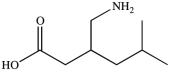
(Multiple Choice)
4.8/5 (87)
(87) How many lone pairs of electrons are present but not shown in the molecule below? 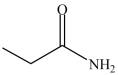
(Multiple Choice)
4.7/5 (87)
(87) The molecule below contains alkyne and carbonyl functional groups. 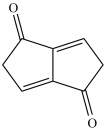
(True/False)
4.8/5 (83)
(83) Organic compounds exist as discrete molecules with much weaker intermolecular forces than those seen in ionic compounds.
(True/False)
4.8/5 (62)
(62) Three of the four structures below represent unstable organic compounds that are not likely to exist because they violate the octet rule. Which one of the four structures represents a stable organic compound that is likely to exist?
(Multiple Choice)
4.9/5 (73)
(73) Three of the four structures below represent unstable organic compounds that are not likely to exist because they violate the octet rule. Which one of the four structures represents a stable organic compound that is likely to exist?
(Multiple Choice)
4.9/5 (93)
(93) In order to complete the structure shown below, six H atoms and four lone pairs need to be added. 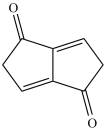
(True/False)
5.0/5 (73)
(73) The molecule with the condensed formula (CH3)2CHCH2CHO can be represented as the skeletal structure below. 
(True/False)
4.9/5 (80)
(80) 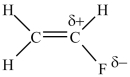
The two structures shown below represent the same compound.
CH3CH2CH2CH2CO2CH3 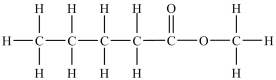
(True/False)
4.9/5 (83)
(83) Which represents a condensed structure for a four carbon hydrocarbon?
(Multiple Choice)
4.8/5 (84)
(84) Which bonding pattern is NOT typical of carbon atoms in organic compounds?
(Multiple Choice)
5.0/5 (93)
(93) 
Filters
- Essay(0)
- Multiple Choice(0)
- Short Answer(0)
- True False(0)
- Matching(0)