



 Chat with AI
Exam 11: Introduction to Organic Molecules and Functional Groups

Exam 1: Matter and Measurement89 Questions
Exam 2: Atoms and the Periodic Table90 Questions
Exam 3: Ionic Compounds90 Questions
Exam 4: Covalent Compounds90 Questions
Exam 5: Chemical Reactions89 Questions
Exam 6: Energy Changes, Reaction Rates, and Equilibrium88 Questions
Exam 7: Gases, Liquids, and Solids79 Questions
Exam 8: Solutions90 Questions
Exam 9: Acids and Bases90 Questions
Exam 10: Nuclear Chemistry85 Questions
Exam 11: Introduction to Organic Molecules and Functional Groups103 Questions
Exam 12: Alkanes106 Questions
Exam 13: Unsaturated Hydrocarbons101 Questions
Exam 14: Organic Compounds That Contain Oxygen, Halogen, or Sulfur111 Questions
Exam 15: The Three-Dimensional Shape of Molecules100 Questions
Exam 16: Aldehydes and Ketones103 Questions
Exam 17: Carboxylic Acids, Esters, and Amides81 Questions
Exam 18: Amines and Neurotransmitters105 Questions
Exam 19: Lipids105 Questions
Exam 20: Carbohydrates92 Questions
Exam 21: Amino Acids, Proteins, and Enzymes88 Questions
Exam 22: Nucleic Acids and Protein Synthesis89 Questions
Exam 23: Digestion and the Conversion of Food Into Energy92 Questions
Exam 24: Carbohydrate, Lipid, and Protein Metabolism91 Questions
Select questions type


A covalent bond in which the electrons are not shared equally between the two atoms is referred to as a _____ bond.
(Short Answer)
4.9/5  (83)
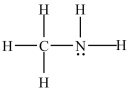
(83) In the molecule below, the shape around the carbon atom is tetrahedral and the shape around the nitrogen atom is trigonal planar. 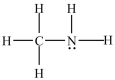
(True/False)
4.8/5 (68)
(68) What is the condensed formula for the molecule shown below? 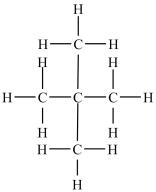
(Multiple Choice)
5.0/5 (68)
(68) What is the most common multiple bond between carbon and a heteroatom?
(Multiple Choice)
4.8/5 (78)
(78) In order to complete the structure below, _____ H atom(s)and _____ lone pair(s)of electrons must be added. 
(Short Answer)
5.0/5 (86)
(86) The condensed structure and skeletal structure shown below represent the same compound. 
(True/False)
4.7/5 (73)
(73) Bupropion is used as an antidepressant. The carbonyl group present in buproprion is part of the functional group of a _____. 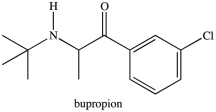
(Short Answer)
4.9/5 (78)
(78) 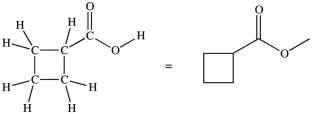
Which compounds would be expected to have similar chemical reactivity? 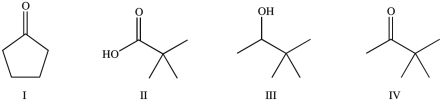
(Multiple Choice)
4.8/5 (85)
(85) The functional group of which type of compound does not contain a carbonyl group?
(Multiple Choice)
4.9/5 (75)
(75) Many organic compounds contain the carbonyl group as part of their functional group. A carbonyl group has the general structure indicated below. 
(True/False)
4.9/5 (75)
(75) In organic compounds, any atom that is not carbon or hydrogen is called a/an _____.
(Short Answer)
4.9/5 (78)
(78) Which compounds would be expected to have similar chemical reactivity? 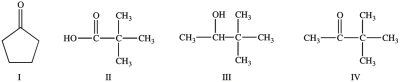
(Multiple Choice)
5.0/5 (81)
(81) Each C-C-C bond angle in a benzene ring (structure shown)is _____ °. 
(Short Answer)
4.9/5 (79)
(79) 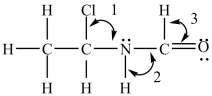
Bupropion (structure shown)is used as an antidepressant. The carbonyl group present in buproprion is part of the functional group of a _____. 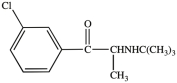
(Short Answer)
5.0/5 (74)
(74) The compound whose condensed structure is (CH3)3CCH2OH can be represented as a skeletal structure as which of the following?
(Multiple Choice)
4.8/5 (85)
(85) 
Filters
- Essay(0)
- Multiple Choice(0)
- Short Answer(0)
- True False(0)
- Matching(0)