



 Chat with AI
Exam 13: Unsaturated Hydrocarbons

Exam 1: Matter and Measurement89 Questions
Exam 2: Atoms and the Periodic Table90 Questions
Exam 3: Ionic Compounds90 Questions
Exam 4: Covalent Compounds90 Questions
Exam 5: Chemical Reactions89 Questions
Exam 6: Energy Changes, Reaction Rates, and Equilibrium88 Questions
Exam 7: Gases, Liquids, and Solids79 Questions
Exam 8: Solutions90 Questions
Exam 9: Acids and Bases90 Questions
Exam 10: Nuclear Chemistry85 Questions
Exam 11: Introduction to Organic Molecules and Functional Groups103 Questions
Exam 12: Alkanes106 Questions
Exam 13: Unsaturated Hydrocarbons101 Questions
Exam 14: Organic Compounds That Contain Oxygen, Halogen, or Sulfur111 Questions
Exam 15: The Three-Dimensional Shape of Molecules100 Questions
Exam 16: Aldehydes and Ketones103 Questions
Exam 17: Carboxylic Acids, Esters, and Amides81 Questions
Exam 18: Amines and Neurotransmitters105 Questions
Exam 19: Lipids105 Questions
Exam 20: Carbohydrates92 Questions
Exam 21: Amino Acids, Proteins, and Enzymes88 Questions
Exam 22: Nucleic Acids and Protein Synthesis89 Questions
Exam 23: Digestion and the Conversion of Food Into Energy92 Questions
Exam 24: Carbohydrate, Lipid, and Protein Metabolism91 Questions
Select questions type


What is the IUPAC name of this compound? 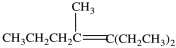

Free
(Multiple Choice)
4.8/5  (72)
(72) Correct Answer: Verified
D
What product results when benzene undergoes the chlorination reaction below? 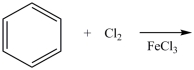
Free
(Multiple Choice)
4.7/5 (96)
(96) Correct Answer:Verified
VerifiedD
Fats are solids at room temperature and are generally formed from fatty acids having a large number of double bonds in their carbon chains.
Free
(True/False)
4.8/5 (68)
(68) Correct Answer:Verified
VerifiedFalse
What product results when 1-heptene undergoes the halogenation reaction shown? 
(Multiple Choice)
4.9/5 (78)
(78) What configuration of a double bond is more common in naturally occurring fatty acids?
(Multiple Choice)
4.8/5 (92)
(92) Essential fatty acids cannot be synthesized by the human body and therefore must be obtained in the diet.
(True/False)
5.0/5 (77)
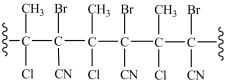
(77) 

An organic compound is classified as aromatic if it is cyclic and has a fragrant odor.
(True/False)
4.9/5 (90)
(90) 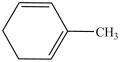

 ?
When 4, 4-dimethyl-2-pentene adds H2 in the presence of a metal catalyst, the product is 4, 4-dimethylpentane.
(True/False)
4.8/5 (74)
(74) When an alkene undergoes an addition reaction, new atoms replace the hydrogen atoms on the carbons that are part of the double bond.
(True/False)
4.9/5 (70)
(70) Resonance structures are Lewis structures with the same arrangement of _____ but a different arrangement of _____.
(Short Answer)
4.8/5 (89)
(89) Cis and trans isomers are constitutional isomers that differ in the location of a C=C bond.
(True/False)
4.8/5 (78)
(78) A student incorrectly names a compound as 4, 6-diethyl-5-heptene. The correct IUPAC name of this compound is _____.
(Short Answer)
4.8/5 (88)
(88) 
Filters
- Essay(0)
- Multiple Choice(0)
- Short Answer(0)
- True False(0)
- Matching(0)