



 Chat with AI
Exam 24: Carbohydrate, Lipid, and Protein Metabolism

Exam 1: Matter and Measurement89 Questions
Exam 2: Atoms and the Periodic Table90 Questions
Exam 3: Ionic Compounds90 Questions
Exam 4: Covalent Compounds90 Questions
Exam 5: Chemical Reactions89 Questions
Exam 6: Energy Changes, Reaction Rates, and Equilibrium88 Questions
Exam 7: Gases, Liquids, and Solids79 Questions
Exam 8: Solutions90 Questions
Exam 9: Acids and Bases90 Questions
Exam 10: Nuclear Chemistry85 Questions
Exam 11: Introduction to Organic Molecules and Functional Groups103 Questions
Exam 12: Alkanes106 Questions
Exam 13: Unsaturated Hydrocarbons101 Questions
Exam 14: Organic Compounds That Contain Oxygen, Halogen, or Sulfur111 Questions
Exam 15: The Three-Dimensional Shape of Molecules100 Questions
Exam 16: Aldehydes and Ketones103 Questions
Exam 17: Carboxylic Acids, Esters, and Amides81 Questions
Exam 18: Amines and Neurotransmitters105 Questions
Exam 19: Lipids105 Questions
Exam 20: Carbohydrates92 Questions
Exam 21: Amino Acids, Proteins, and Enzymes88 Questions
Exam 22: Nucleic Acids and Protein Synthesis89 Questions
Exam 23: Digestion and the Conversion of Food Into Energy92 Questions
Exam 24: Carbohydrate, Lipid, and Protein Metabolism91 Questions
Select questions type


Fermentation is the aerobic conversion of glucose to ethanol and CO2.

Free
(True/False)
4.9/5  (96)
(96) Correct Answer: Verified
False
Which process requires the coenzyme NADH?
Free
(Multiple Choice)
4.8/5 (81)
(81) Correct Answer:Verified
VerifiedC
A glucogenic amino acid may also be a ketogenic amino acid.
Free
(True/False)
4.9/5 (69)
(69) Correct Answer:Verified
VerifiedTrue
Transamination removes the amino group from an amino acid, leaving a carbon skeleton that contains only carbon, hydrogen, and oxygen atoms.
(True/False)
4.9/5 (73)
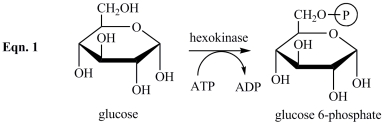
(73) Glucosamine, shown below, is a competitive inhibitor of the enzyme hexokinase, which catalyzes the phosphorylation of glucose in the first step of glycolysis (Eqn. 1 below). Which statement best describes the inhibition by glucosamine? 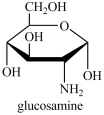
(Multiple Choice)
4.8/5 (79)
(79) Individuals with galactosemia lack one of the enzymes necessary for converting galactose to glucose 6-phosphate.
(True/False)
4.9/5 (80)
(80) -Oxidation of a fatty acid requires how many steps to cleave a two carbon acetyl CoA unit from the starting acyl CoA?
(Multiple Choice)
4.8/5 (83)
(83) A kinase enzyme catalyzes the transfer of a phosphate group from one substrate to another.
(True/False)
4.9/5 (80)
(80) Step [9] in glycolysis, shown below, involves the dehydration of 2-phosphoglycerate. What is the structure of the dehydration product? 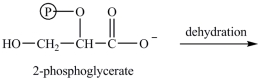
(Multiple Choice)
4.8/5 (87)
(87) What metabolic intermediate is formed from the carbon skeleton of the amino acid asparagine?
(Multiple Choice)
4.8/5 (78)
(78) Transamination is the transfer of an amino group from a(n)_____to a(n)_____, usually -ketoglutarate.
(Essay)
4.9/5 (81)
(81) The breakdown of amino acids forms NH4+, which enters the urea cycle to form urea, and a carbon skeleton that is metabolized to either pyruvate, acetyl CoA, or an intermediate in the citric acid cycle.
(True/False)
4.8/5 (73)
(73) When oxygen is plentiful, pyruvate is converted to acetyl CoA, which can enter the citric acid cycle.
(True/False)
4.8/5 (77)
(77) The glycerol formed from triacylglycerol hydrolysis is converted in two steps to dihydroxyacetone phosphate.
(True/False)
4.8/5 (74)
(74) _____ and _____ are obtained by the hydrolysis of the disaccharide sucrose, which is found in sugar beets and sugarcane.
(Short Answer)
4.8/5 (82)
(82) 
Filters
- Essay(0)
- Multiple Choice(0)
- Short Answer(0)
- True False(0)
- Matching(0)