



 Chat with AI
Exam 5: Chemical Reactions

Exam 1: Matter and Measurement89 Questions
Exam 2: Atoms and the Periodic Table90 Questions
Exam 3: Ionic Compounds90 Questions
Exam 4: Covalent Compounds90 Questions
Exam 5: Chemical Reactions89 Questions
Exam 6: Energy Changes, Reaction Rates, and Equilibrium88 Questions
Exam 7: Gases, Liquids, and Solids79 Questions
Exam 8: Solutions90 Questions
Exam 9: Acids and Bases90 Questions
Exam 10: Nuclear Chemistry85 Questions
Exam 11: Introduction to Organic Molecules and Functional Groups103 Questions
Exam 12: Alkanes106 Questions
Exam 13: Unsaturated Hydrocarbons101 Questions
Exam 14: Organic Compounds That Contain Oxygen, Halogen, or Sulfur111 Questions
Exam 15: The Three-Dimensional Shape of Molecules100 Questions
Exam 16: Aldehydes and Ketones103 Questions
Exam 17: Carboxylic Acids, Esters, and Amides81 Questions
Exam 18: Amines and Neurotransmitters105 Questions
Exam 19: Lipids105 Questions
Exam 20: Carbohydrates92 Questions
Exam 21: Amino Acids, Proteins, and Enzymes88 Questions
Exam 22: Nucleic Acids and Protein Synthesis89 Questions
Exam 23: Digestion and the Conversion of Food Into Energy92 Questions
Exam 24: Carbohydrate, Lipid, and Protein Metabolism91 Questions
Select questions type


Assume that the mixture of substances in Figure 1 undergoes a chemical reaction. Which diagram represents a product mixture that is consistent with the Law of Conservation of Mass? 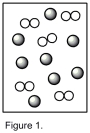
(Multiple Choice)
4.8/5  (86)
(86) The balanced reaction: 4 NO2 + O2 + 2 H2O 4 HNO3 states that four moles of nitrogen dioxide react with each mole of oxygen.
(True/False)
4.8/5 (74)
(74) Potassium metal (K)reacts violently when added to water according to the balanced equation: 2 K(s)+ 2 H2O(l) 2 KOH(aq)+ H2(g). How many moles of H2O are needed to react completely with 7.54 mol of K?
(Multiple Choice)
4.8/5 (68)
(68) In the reaction: Ni2+(aq)+ Mg(s) Ni(s)+ Mg2+(aq), two electrons are transferred from Ni2 to Mg.
(True/False)
4.7/5 (79)
(79) In the balanced redox reaction: 2 C2H6(g)+ 7 O2(g) 4 CO2(g)+ 6 H2O(g), which species is reduced?
(Multiple Choice)
4.8/5 (97)
(97) Consider the oxidation of sodium metal to sodium oxide described by the balanced equation: 4 Na + O2 2 Na2O. What is the theoretical yield of Na2O in grams from 9.0 mol of O2?
(Multiple Choice)
5.0/5 (87)
(87) Aluminum metal and oxygen gas are obtained when aluminum oxide is heated at high temperature. The reactant(s)in this chemical reaction is(are)_____.
(Short Answer)
4.8/5 (76)
(76) Identify the species that is oxidized and the species that is reduced in the reaction: 2 I- + Cl2 2 Cl- + I2
(Multiple Choice)
4.8/5 (71)
(71) The electric current generated in batteries used for portable electronic devices and pacemakers results from redox reactions.
(True/False)
4.9/5 (79)
(79) To multiply two numbers in scientific notation, multiply the coefficients together and multiply the exponents in the powers of 10.
(True/False)
4.9/5 (85)
(85) Aspartic acid is an amino acid used to synthesize proteins. What is the molar mass of aspartic acid shown below? 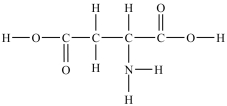
(Multiple Choice)
4.8/5 (79)
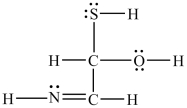
(79) 
A student runs the reaction: LiOH + CO2 LiHCO3. The reaction consumes 45.0 g LiOH and produces 72.8 g of LiHCO3. Which of the statements concerning this reaction is true?
(Multiple Choice)
4.8/5 (84)
(84) Consider the reaction: 2 Al(OH)3 + 3 H2SO4 Al2(SO4)3 + 6 H2O. How many grams of Al2(SO4)3 are generated when 152 g of H2SO4 reacts?
(Multiple Choice)
4.8/5 (74)
(74) A 100-g sample of the compound below contains less than 6.02 × 10²³ molecules. 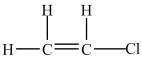
(True/False)
5.0/5 (75)
(75) In calculating the percent yield, both the actual yield and theoretical yield must be in units of grams.
(True/False)
4.9/5 (89)
(89) The balanced reaction: 4 NO2 + O2 + 2 H2O 4 HNO3 states that four grams of nitrogen dioxide reacts with each gram of oxygen.
(True/False)
4.8/5 (82)
(82) 
Filters
- Essay(0)
- Multiple Choice(0)
- Short Answer(0)
- True False(0)
- Matching(0)