



 Chat with AI
Exam 5: Chemical Reactions

Exam 1: Matter and Measurement89 Questions
Exam 2: Atoms and the Periodic Table90 Questions
Exam 3: Ionic Compounds90 Questions
Exam 4: Covalent Compounds90 Questions
Exam 5: Chemical Reactions89 Questions
Exam 6: Energy Changes, Reaction Rates, and Equilibrium88 Questions
Exam 7: Gases, Liquids, and Solids79 Questions
Exam 8: Solutions90 Questions
Exam 9: Acids and Bases90 Questions
Exam 10: Nuclear Chemistry85 Questions
Exam 11: Introduction to Organic Molecules and Functional Groups103 Questions
Exam 12: Alkanes106 Questions
Exam 13: Unsaturated Hydrocarbons101 Questions
Exam 14: Organic Compounds That Contain Oxygen, Halogen, or Sulfur111 Questions
Exam 15: The Three-Dimensional Shape of Molecules100 Questions
Exam 16: Aldehydes and Ketones103 Questions
Exam 17: Carboxylic Acids, Esters, and Amides81 Questions
Exam 18: Amines and Neurotransmitters105 Questions
Exam 19: Lipids105 Questions
Exam 20: Carbohydrates92 Questions
Exam 21: Amino Acids, Proteins, and Enzymes88 Questions
Exam 22: Nucleic Acids and Protein Synthesis89 Questions
Exam 23: Digestion and the Conversion of Food Into Energy92 Questions
Exam 24: Carbohydrate, Lipid, and Protein Metabolism91 Questions
Select questions type


A 100-g sample of the compound below contains greater than one mole of molecules. 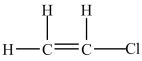
(True/False)
4.8/5  (91)
(91) If a synthesis has four steps and each step has a 75% yield (0.75 written as a decimal), what is the overall percent yield?
(Multiple Choice)
4.9/5 (78)
(78) The molar mass of CaCO3 is greater than the molar mass of Ca(NO3)2.
(True/False)
4.8/5 (79)
(79) In the reaction: Ni2+(aq)+ Mg(s) Ni(s)+ Mg2+(aq), the species that undergoes reduction is Mg(s).
(True/False)
4.9/5 (76)
(76) A balanced chemical equation tells the number of _____ of each reactant that combine and the number of _____ of each product formed.
(Multiple Choice)
4.7/5 (85)
(85) The subscripts in chemical formulas are changed in order to balance a chemical equation.
(True/False)
4.8/5 (74)
(74) Tin (II)fluoride can be made by the following reaction: Sn(s)+ 2 HF(g) SnF2(s)+ H2(g). What is the maximum amount of SnF2 that can be produced when 0.480 moles of Sn are mixed with 0.720 moles of HF?
(Multiple Choice)
4.8/5 (74)
(74) One mole of oxygen molecules contains more atoms than one mole of lead atoms.
(True/False)
4.9/5 (92)
(92) In a two-step synthesis where the first reaction has a 55% yield and the second reaction has a 24% yield, the overall percent yield of the reaction is _____% yield.
(Short Answer)
4.9/5 (83)
(83) How many moles of carbon dioxide are in 211 g of carbon dioxide?
(Multiple Choice)
4.8/5 (79)
(79) How many moles of chloroethylene (C2H3Cl)contain 5.47 × 1026 molecules?
(Multiple Choice)
4.9/5 (78)
(78) In a redox reaction, the _____ agent is the substance that gets oxidized.
(Short Answer)
4.7/5 (76)
(76) The balanced reaction: 4 Fe(s)+ 3 O2(g) 2 Fe2O3(s)is an oxidation-reduction reaction.
(True/False)
4.7/5 (88)
(88) The actual yield is the amount of product expected from a given amount of reactant based on the coefficients in the balanced chemical equation.
(True/False)
4.9/5 (93)
(93) The reaction: Mg(s)+ 2 HBr(aq) MgBr2(s)+ H2(g)is an oxidation-reduction reaction.
(True/False)
4.8/5 (87)
(87) In the reaction: Ni2+(aq)+ Mg(s) Ni(s)+ Mg2+(aq), the oxidizing agent is Ni2+(aq).
(True/False)
4.9/5 (78)
(78) 
Filters
- Essay(0)
- Multiple Choice(0)
- Short Answer(0)
- True False(0)
- Matching(0)