



 Chat with AI
Exam 23: The World at War, 1937-1945

Exam 1: Colliding Worlds, 1491-160084 Questions
Exam 2: American Experiments, 1521-170086 Questions
Exam 3: The British Atlantic World, 1607-175080 Questions
Exam 4: Growth, Diversity, and Conflict, 1720-176380 Questions
Exam 5: The Problem of Empire, 1754-177687 Questions
Exam 6: Making War and Republican Governments, 1776-178981 Questions
Exam 7: Hammering Out a Federal Republic, 1787-182088 Questions
Exam 8: Economic Transformations, 1800-184886 Questions
Exam 9: A Democratic Revolution, 1800-184884 Questions
Exam 10: Religion, Reform, and Culture, 1820-184888 Questions
Exam 11: Imperial Ambitions, 1820-184878 Questions
Exam 12: Sectional Conflict and Crisis, 1844-186081 Questions
Exam 13: Bloody Ground: the Civil War, 1861-186582 Questions
Exam 14: Reconstruction, 1865-187786 Questions
Exam 15: Conquering a Continent, 1860-189083 Questions
Exam 16: Industrial America: Corporations and Conflicts, 1877-191085 Questions
Exam 17: Making Modern American Culture, 1880-191785 Questions
Exam 18: Civilizations Inferno: the Rise and Reform of Industrial Cities, 1880-191784 Questions
Exam 19: Whose Government Politics, Populists, and Progressives, 1880-191784 Questions
Exam 20: An Emerging World Power, 1890-191883 Questions
Exam 21: Unsettled Prosperity: From War to Depression, 1919-193289 Questions
Exam 22: Managing the Great Depression, Forging the New Deal, 1929-193893 Questions
Exam 23: The World at War, 1937-194588 Questions
Exam 24: Cold War America, 1945-196385 Questions
Exam 25: Triumph of the Middle Class, 1945-196383 Questions
Exam 26: Walking Into Freedom Land: the Civil Rights Movement, 1941-197389 Questions
Exam 27: Uncivil Wars:liberal Crisis and Conservative Rebirth, 1961-197290 Questions
Exam 28: The Search for Order in an Era of Limits, 1973-198086 Questions
Exam 29: Conservative America in the Ascent, 1980-199185 Questions
Exam 30: Confronting Global and National Dilemmas, 1989 to the Present88 Questions
Select questions type


What prevented the United States from relaxing its immigration standards in order to grant asylum to a larger number of Jewish refugees in the late 1930s and early 1940s?
(Multiple Choice)
4.9/5  (77)
(77) Which of the following nations was not overrun by Germany in June 1940?
(Multiple Choice)
5.0/5 (84)
(84) Evaluate the relative contributions of the Russians and the Americans to the Allied victory.What were the tensions among the Allies over military strategy and postwar territorial issues?
(Essay)
4.7/5 (83)
(83) Which of the following statements describes the forced relocation and incarceration of Japanese Americans during World War II?
(Multiple Choice)
4.9/5 (75)
(75) Which of the following caused increased racial tensions and an outbreak of race riots in more than a hundred cities in 1943?
(Multiple Choice)
4.7/5 (77)
(77) What was the principal reason that Harry Truman and his American advisors decided to use the atomic bomb against Japan in the summer of 1945?
(Multiple Choice)
4.8/5 (72)
(72) Which of the following states experienced the largest share of wartime migration in the 1940s?
(Multiple Choice)
4.9/5 (71)
(71) How did the geographic and demographic migrations that occurred in the United States as a result of World War II change the political landscape of the nation leading into the postwar period?
(Essay)
4.8/5 (82)
(82) Which of the following was the United States's initial response to world problems in the 1930s?
(Multiple Choice)
4.9/5 (76)
(76) Franklin Roosevelt responded to A.Philip Randolph's plan for a March on Washington by
(Multiple Choice)
4.8/5 (75)
(75) What did President Roosevelt call "a date that will live in infamy"?
(Multiple Choice)
4.8/5 (93)
(93) The events depicted in the photograph below were the result most directly of 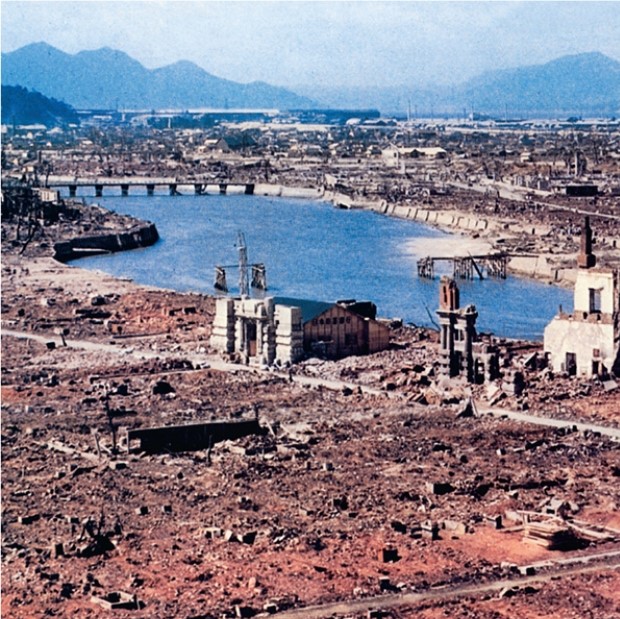
(Multiple Choice)
4.9/5 (92)
(92) Why did Franklin Roosevelt issue Executive Order 9066 in order to detain most Japanese Americans temporarily during the war?
(Essay)
4.8/5 (85)
(85) 
Filters
- Essay(0)
- Multiple Choice(0)
- Short Answer(0)
- True False(0)
- Matching(0)