



 Chat with AI
Exam 6: An Introduction to Macroeconomics

Exam 1: Limits, Alternatives, and Choices212 Questions
Exam 2: The Market System and the Circular Flow141 Questions
Exam 3: Demand, Supply, and Market Equilibrium202 Questions
Exam 4: Market Failures: Public Goods and Externalities155 Questions
Exam 5: Governments Role and Government Failure148 Questions
Exam 6: An Introduction to Macroeconomics123 Questions
Exam 7: Measuring Domestic Output and National Income157 Questions
Exam 8: Economic Growth114 Questions
Exam 9: Business Cycles, Unemployment, and Inflation143 Questions
Exam 10: Basic Macroeconomic Relationships142 Questions
Exam 11: The Aggregate Expenditures Model143 Questions
Exam 12: Aggregate Demand and Aggregate Supply152 Questions
Exam 13: Fiscal Policy, Deficits, and Debt164 Questions
Exam 14: Money, Banking, and Financial Institutions130 Questions
Exam 15: Money Creation127 Questions
Exam 16: Interest Rates and Monetary Policy174 Questions
Exam 17: Financial Economics136 Questions
Exam 18: Extending the Analysis of Aggregate Supply135 Questions
Exam 19: Current Issues in Macro Theory and Policy134 Questions
Exam 20: International Trade151 Questions
Exam 21: The Balance of Payments, Exchange Rates, and Trade Deficits152 Questions
Exam 22: The Economics of Developing Countries135 Questions
Select questions type


The amount of investment is ultimately limited by the amount of:
(Multiple Choice)
5.0/5  (77)
(77) Sticky prices could be the result of firms being afraid of price wars.
(True/False)
4.9/5 (83)
(83) Inflation is troublesome to consumers because of the following effects, except:
(Multiple Choice)
4.9/5 (90)
(90) Explanations about what caused the Great Recession differ sharply among economists. The so-called Minsky Explanation involves the following factors, except:
(Multiple Choice)
4.7/5 (82)
(82) Which among the following countries had the highest GDP per person in 2011?
(Multiple Choice)
4.8/5 (78)
(78) If nominal GDP is rising faster than real GDP, then inflation must be occurring.
(True/False)
4.9/5 (75)
(75) Suppose that prices are sticky in the short-run. Which of the following best describes the economy's response to a positive demand shock?
(Multiple Choice)
4.7/5 (80)
(80) 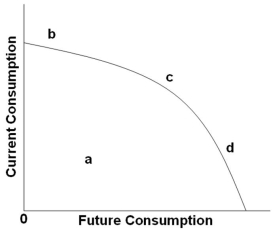 Which of the following best represents the effect of an increase in investment?
 (Multiple Choice)
4.8/5 (84)
(84) When prices are inflexible, the economy will respond to demand shocks through short run changes in output and unemployment.
(True/False)
4.8/5 (80)
(80) Which of the following is not an adjustment made when comparing standards of living across countries?
(Multiple Choice)
4.9/5 (74)
(74) 
Filters
- Essay(0)
- Multiple Choice(0)
- Short Answer(0)
- True False(0)
- Matching(0)