



 Chat with AI
Exam 25: The Chemistry of Metabolism

Exam 1: Remembering General Chemistry: Electronic Structure and Bonding81 Questions
Exam 2: Acids and Bases: Central to Understanding Organic Chemistry37 Questions
Exam 3: An Introduction to Organic Compounds123 Questions
Exam 4: Isomers: the Arrangement of Atoms in Space111 Questions
Exam 5: Alkenes Thermodynamics and Kinetics76 Questions
Exam 6: Reactions of Alkenes93 Questions
Exam 7: Reactions of Alkynes Introduction to Multistep Synthesis119 Questions
Exam 8: Electron Delocalization, Resonance, and Aromaticity More About Molecular Orbital Theory166 Questions
Exam 9: Substitution Reactions of Alkyl Halides118 Questions
Exam 10: Elimination Reactions of Alkyl Halides Competition Between Substitution and Elimination94 Questions
Exam 11: Reactions of Alcohols, Ethers, Epoxides, and Sulfur-Containing Compounds100 Questions
Exam 12: Organometallic Compounds57 Questions
Exam 13: Reactions of Alkanes, Radicals130 Questions
Exam 14: Mass Spectrometry, Infrared Spectroscopy, and Uvvis Spectroscopy127 Questions
Exam 15: Nmr Spectroscopy110 Questions
Exam 16: Reactions of Carboxylic Acids and Carboxylic Acid Derivatives128 Questions
Exam 17: Reactions of Aldehydes and Ketones116 Questions
Exam 18: Reactions at the Alpha Carbon of Carbonyl Compounds113 Questions
Exam 19: Reactions of Benzene and Substituted Benzenes155 Questions
Exam 20: More About Amines Heterocylic Compounds115 Questions
Exam 21: Carbohydrates100 Questions
Exam 22: Amino Acids, Peptides, and Proteins105 Questions
Exam 23: Catalysis85 Questions
Exam 24: The Organic Mechanisms of the Coenzymes92 Questions
Exam 25: The Chemistry of Metabolism94 Questions
Exam 26: Nucleosides, Nucleotides, and Nucleic Acids85 Questions
Exam 27: Synthetic Polymers106 Questions
Exam 28: Pericyclic Reactions92 Questions
Select questions type


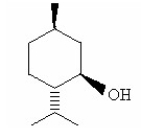
Fumarate is an intermediate in the citric acid cycle. Draw its structure.
(Essay)
4.8/5  (67)
(67) 
A terpene is believed to have one of the structures below. Based on the isoprene rule, which structure is more likely. Explain your reasoning. 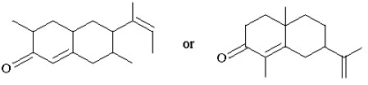
(Essay)
4.9/5 (95)
(95) Most of the energy provided by chemical nutrients is provided in what stage of catabolism?
(Short Answer)
4.9/5 (88)
(88) In glycolysis, what type of reaction converts the 6-carbon intermediate into two 3-carbon intermediates?
(Multiple Choice)
4.9/5 (85)
(85) What carbon of the ribose residue in ATP is phosphorylated?
(Multiple Choice)
4.9/5 (61)
(61) What compounds are formed when a carboxylate is phosphorylated by the attack at the a-phosphorus of ATP?
(Short Answer)
4.8/5 (71)
(71) Of the following compounds, which are generated in any step of the glycolytic conversion of glucose to pyruvate: ATP, ADP, NAD+, NADH, FAD, FADH2, acetyl-CoA.
(Short Answer)
4.8/5 (69)
(69) How many citric acid cycles would be needed to produce nine molecules of FADH2?
(Multiple Choice)
4.7/5 (81)
(81) 
How many molecules of ATP are formed by the citric acid cycle from one molecule of acetyl-CoA?
(Short Answer)
4.8/5 (91)
(91) What chemical interactions allow certain enzymes to catalyze the hydrolysis of ATP?
(Essay)
4.9/5 (87)
(87) Acetyl-CoA enters the citric acid cycle by reacting with ________ to form ________.
(Short Answer)
4.8/5 (72)
(72) The first reaction in the b-oxidation pathway produces ________.
(Multiple Choice)
4.9/5 (79)
(79) In the citric acid cycle, each molecule of acetyl-CoA is converted into two molecules of what?
(Multiple Choice)
5.0/5 (74)
(74) 
Filters
- Essay(0)
- Multiple Choice(0)
- Short Answer(0)
- True False(0)
- Matching(0)