



 Chat with AI
Exam 1: Remembering General Chemistry: Electronic Structure and Bonding

Exam 1: Remembering General Chemistry: Electronic Structure and Bonding81 Questions
Exam 2: Acids and Bases: Central to Understanding Organic Chemistry37 Questions
Exam 3: An Introduction to Organic Compounds123 Questions
Exam 4: Isomers: the Arrangement of Atoms in Space111 Questions
Exam 5: Alkenes Thermodynamics and Kinetics76 Questions
Exam 6: Reactions of Alkenes93 Questions
Exam 7: Reactions of Alkynes Introduction to Multistep Synthesis119 Questions
Exam 8: Electron Delocalization, Resonance, and Aromaticity More About Molecular Orbital Theory166 Questions
Exam 9: Substitution Reactions of Alkyl Halides118 Questions
Exam 10: Elimination Reactions of Alkyl Halides Competition Between Substitution and Elimination94 Questions
Exam 11: Reactions of Alcohols, Ethers, Epoxides, and Sulfur-Containing Compounds100 Questions
Exam 12: Organometallic Compounds57 Questions
Exam 13: Reactions of Alkanes, Radicals130 Questions
Exam 14: Mass Spectrometry, Infrared Spectroscopy, and Uvvis Spectroscopy127 Questions
Exam 15: Nmr Spectroscopy110 Questions
Exam 16: Reactions of Carboxylic Acids and Carboxylic Acid Derivatives128 Questions
Exam 17: Reactions of Aldehydes and Ketones116 Questions
Exam 18: Reactions at the Alpha Carbon of Carbonyl Compounds113 Questions
Exam 19: Reactions of Benzene and Substituted Benzenes155 Questions
Exam 20: More About Amines Heterocylic Compounds115 Questions
Exam 21: Carbohydrates100 Questions
Exam 22: Amino Acids, Peptides, and Proteins105 Questions
Exam 23: Catalysis85 Questions
Exam 24: The Organic Mechanisms of the Coenzymes92 Questions
Exam 25: The Chemistry of Metabolism94 Questions
Exam 26: Nucleosides, Nucleotides, and Nucleic Acids85 Questions
Exam 27: Synthetic Polymers106 Questions
Exam 28: Pericyclic Reactions92 Questions
Select questions type


Which of the following statements correctly describes the third electron shell that surrounds the nucleus of an atom?

Free
(Multiple Choice)
4.9/5  (78)
(78) Correct Answer: Verified
B
Draw the Kekulé structure and show the direction of the dipole moment for CH2Cl2.
Free
(Essay)
4.7/5 (83)
(83) Correct Answer:Verified
Verified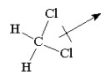
Ar, K+, Cl- are isoelectronic elements (elements with the same number of electrons). What orbital does the last electron occupy?
Free
(Short Answer)
4.8/5 (84)
(84) Correct Answer:Verified
Verified3p orbital
What kind of molecular orbital (σ, σ*, π, or π*)results when the two atomic orbitals shown below interact in the manner indicated? 
(Short Answer)
4.8/5 (63)
(63) Triethylamine [(CH3CH2)3N] is a molecule in which the nitrogen atom is ________ hybridized and the CNC bond angle is ________.
(Multiple Choice)
4.9/5 (79)
(79) Using the symbol δ+and δ-, show the direction of the polarity in the indicated bond. 
(Essay)
4.9/5 (73)
(73) The N-H single bond in methyl amine (CH3NH2)is a ________ bond formed by the overlap of a(n)________ orbital on N and a(n)________ orbital on H.
(Multiple Choice)
4.8/5 (77)
(77) Atoms with the same number of protons but different numbers of neutrons are called ________.
(Short Answer)
4.8/5 (69)
(69) How many sp2 hybridized carbons are present in allene (H2C=C=CH2)?
(Multiple Choice)
4.8/5 (85)
(85) 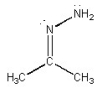
Which of the following molecules does not exhibit a net dipole moment of zero?
(Multiple Choice)
4.9/5 (82)
(82) The hydrogen-halogen bond becomes ________ and ________ as the size (atomic weight)of the halogen increases.
(Multiple Choice)
4.8/5 (72)
(72) Consider the interaction of two hydrogen 1s atomic orbitals of the same phase. Which of the statements below is an incorrect description of this interaction?
(Multiple Choice)
4.9/5 (78)
(78) What are the formal charges on nitrogen and the starred oxygen atom in the following molecule? 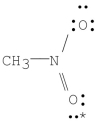
(Multiple Choice)
5.0/5 (76)
(76) 
Filters
- Essay(0)
- Multiple Choice(0)
- Short Answer(0)
- True False(0)
- Matching(0)