



 Chat with AI
Exam 15: Nmr Spectroscopy

Exam 1: Remembering General Chemistry: Electronic Structure and Bonding81 Questions
Exam 2: Acids and Bases: Central to Understanding Organic Chemistry37 Questions
Exam 3: An Introduction to Organic Compounds123 Questions
Exam 4: Isomers: the Arrangement of Atoms in Space111 Questions
Exam 5: Alkenes Thermodynamics and Kinetics76 Questions
Exam 6: Reactions of Alkenes93 Questions
Exam 7: Reactions of Alkynes Introduction to Multistep Synthesis119 Questions
Exam 8: Electron Delocalization, Resonance, and Aromaticity More About Molecular Orbital Theory166 Questions
Exam 9: Substitution Reactions of Alkyl Halides118 Questions
Exam 10: Elimination Reactions of Alkyl Halides Competition Between Substitution and Elimination94 Questions
Exam 11: Reactions of Alcohols, Ethers, Epoxides, and Sulfur-Containing Compounds100 Questions
Exam 12: Organometallic Compounds57 Questions
Exam 13: Reactions of Alkanes, Radicals130 Questions
Exam 14: Mass Spectrometry, Infrared Spectroscopy, and Uvvis Spectroscopy127 Questions
Exam 15: Nmr Spectroscopy110 Questions
Exam 16: Reactions of Carboxylic Acids and Carboxylic Acid Derivatives128 Questions
Exam 17: Reactions of Aldehydes and Ketones116 Questions
Exam 18: Reactions at the Alpha Carbon of Carbonyl Compounds113 Questions
Exam 19: Reactions of Benzene and Substituted Benzenes155 Questions
Exam 20: More About Amines Heterocylic Compounds115 Questions
Exam 21: Carbohydrates100 Questions
Exam 22: Amino Acids, Peptides, and Proteins105 Questions
Exam 23: Catalysis85 Questions
Exam 24: The Organic Mechanisms of the Coenzymes92 Questions
Exam 25: The Chemistry of Metabolism94 Questions
Exam 26: Nucleosides, Nucleotides, and Nucleic Acids85 Questions
Exam 27: Synthetic Polymers106 Questions
Exam 28: Pericyclic Reactions92 Questions
Select questions type


How many signals will be observable in the DEPT 13C NMR spectrum of naphthalene (shown below)? 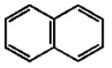
(Multiple Choice)
4.7/5  (70)
(70) Deduce the identity of the following compound from the 1H NMR spectral data given.
C7H12O4 : δ 1.1 (6H, triplet), 3.4 (2H, singlet), 4.2 (4H, quartet)(ppm)
(Essay)
4.8/5 (72)
(72) Deduce the structure from the data given: C8H10O; 13C NMR δ (coupling): 140 (s), 128 (d), 126 (d), 122 (d), 60 (t), 15 (q).
(Short Answer)
4.8/5 (84)
(84) Which of the following protons gives an NMR signal with the lowest chemical shift value (farthest upfield)? F-CH2CH2CH2CH2CH2-Br
1 2 3 4 5
(Multiple Choice)
4.9/5 (84)
(84) Deduce the structure from the data given: C7H16O; 1H NMR δ (integration, coupling): 0.9 (9H, s), 1.5 (2H, t), 3.5 (3H, s), 3.8 (2H, t).
(Essay)
4.9/5 (73)
(73) How many distinct carbon signals are expected in the proton-decoupled 13C NMR spectrum of the compound below? 
(Short Answer)
4.9/5 (85)
(85) A compound gave a signal at 203 ppm in the 13C NMR spectrum. How would it be possible to tell if the compound is an aldehyde or a ketone in a proton-coupled 13C NMR spectrum?
(Essay)
4.8/5 (86)
(86) Can alkenes and aromatics be easily distinguished from each other in an 13C NMR spectrum?
(Essay)
4.8/5 (85)
(85) If the frequency for flipping a 1H nucleus at an applied field of 1.4092 Tesla is 60 MHz, what would be the applied magnetic field if the frequency is 360 MHz?
(Multiple Choice)
4.9/5 (87)
(87) What is the ratio of the protons in the following compound? 
(Multiple Choice)
4.9/5 (71)
(71) 
Filters
- Essay(0)
- Multiple Choice(0)
- Short Answer(0)
- True False(0)
- Matching(0)