



 Chat with AI
Exam 15: Nmr Spectroscopy

Exam 1: Remembering General Chemistry: Electronic Structure and Bonding81 Questions
Exam 2: Acids and Bases: Central to Understanding Organic Chemistry37 Questions
Exam 3: An Introduction to Organic Compounds123 Questions
Exam 4: Isomers: the Arrangement of Atoms in Space111 Questions
Exam 5: Alkenes Thermodynamics and Kinetics76 Questions
Exam 6: Reactions of Alkenes93 Questions
Exam 7: Reactions of Alkynes Introduction to Multistep Synthesis119 Questions
Exam 8: Electron Delocalization, Resonance, and Aromaticity More About Molecular Orbital Theory166 Questions
Exam 9: Substitution Reactions of Alkyl Halides118 Questions
Exam 10: Elimination Reactions of Alkyl Halides Competition Between Substitution and Elimination94 Questions
Exam 11: Reactions of Alcohols, Ethers, Epoxides, and Sulfur-Containing Compounds100 Questions
Exam 12: Organometallic Compounds57 Questions
Exam 13: Reactions of Alkanes, Radicals130 Questions
Exam 14: Mass Spectrometry, Infrared Spectroscopy, and Uvvis Spectroscopy127 Questions
Exam 15: Nmr Spectroscopy110 Questions
Exam 16: Reactions of Carboxylic Acids and Carboxylic Acid Derivatives128 Questions
Exam 17: Reactions of Aldehydes and Ketones116 Questions
Exam 18: Reactions at the Alpha Carbon of Carbonyl Compounds113 Questions
Exam 19: Reactions of Benzene and Substituted Benzenes155 Questions
Exam 20: More About Amines Heterocylic Compounds115 Questions
Exam 21: Carbohydrates100 Questions
Exam 22: Amino Acids, Peptides, and Proteins105 Questions
Exam 23: Catalysis85 Questions
Exam 24: The Organic Mechanisms of the Coenzymes92 Questions
Exam 25: The Chemistry of Metabolism94 Questions
Exam 26: Nucleosides, Nucleotides, and Nucleic Acids85 Questions
Exam 27: Synthetic Polymers106 Questions
Exam 28: Pericyclic Reactions92 Questions
Select questions type


Give the structure of a compound that has a formula of C8H10O2 and has signals in the 13C NMR spectrum at 54.8 ppm (CH3), 63.3 ppm (CH2), 113.6 ppm (CH), 128.3 ppm (CH), 134.11 ppm (C), and 158.6 ppm (C).
(Multiple Choice)
4.8/5  (74)
(74) Deduce the identity of the following compound from the spectral data given.
C9H10O2: 13C NMR, δ 18.06 (quartet), 45.40 (doublet), 127.32 (doublet), 127.55 (doublet), 128.61 (doublet), 139.70 (singlet), 180.98 (singlet); IR, broad 3500-2800, 1708 cm-1
(Short Answer)
4.8/5 (68)
(68) Which of the following protons gives an NMR signal with the highest chemical shift value (farthest downfield)? (CH3)2CH-O-CH2CH2CH3
1 2 3 4 5
(Multiple Choice)
4.8/5 (73)
(73) Provide the structure that is consistent with the data below.
C7H14O2
IR (cm-1): 2950, 1750
1H NMR (d): 2.3 (2H, q), 1.0 (3H, t), 0.9 (9H, s)
13C NMR (d): 185 (s), 78 (s), 29 (t), 14 (q), 12 (q)
(Essay)
5.0/5 (84)
(84) What multiplicities are observed in the spin coupled 13C NMR spectrum of 2,3-dimethyl-2-butene?
(Short Answer)
4.9/5 (85)
(85) Provide the structure that is consistent with the data below.
C5H8Cl2
IR (cm-1): 2950
1H NMR (d): 1.4 (4H, t), 1.2 (4H, t)
13C NMR (d): 62 (s), 26 (t), 23 (t)
(Essay)
4.9/5 (78)
(78) Give the structure of a compound that has a formula of C4H7ClO2 and has a triplet (3H, 1.1 ppm), quintet (2H, 1.2 ppm), triplet (1H, 4.4 ppm), and singlet (1H, 11.6 ppm)in the 1H NMR spectrum.
(Multiple Choice)
4.9/5 (83)
(83) How many signals would you expect to see in the 1H NMR spectrum of the following compound? 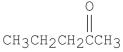
(Multiple Choice)
4.8/5 (75)
(75) Give the structure for the compound that has a formula of C10H12O and the following 1H NMR and 13C NMR spectra. Label the hydrogens and the carbons.
1H NMR: 1.2 ppm (t, 3H); 2.3 ppm (s, 3H); 2.6 ppm (q, 2H), 7.2 ppm (d, 2H), and 7.8 ppm (d, 2H).
13C NMR: 7.0 ppm (CH3); 20.9 ppm (CH3); 32.0 ppm (CH2); 128.0 (CH), 129.1 ppm (CH), 134.0 ppm (C); 141.0 ppm(C); and 198.1 ppm (C).
(Essay)
4.8/5 (66)
(66) Deduce the identity of the following compound from the 1H NMR data given.
C4H7BrO: δ 2.2 (3H, singlet), 3.5 (2H, triplet), 4.5 (2H, triplet)
(Essay)
4.8/5 (78)
(78) Provide the structure that is consistent with the data below.
C5H10O
IR (cm-1): 2950
1H NMR (d): 3.5 (4H, s), 0.9 (6H, s)
13C NMR (d): 64 (t), 41 (s), 12 (q)
(Essay)
4.9/5 (84)
(84) How many signals would you expect to see in the 1H NMR spectrum of the following compound? CH3CH2CH2CH3
(Multiple Choice)
4.8/5 (87)
(87) Deduce the identity of the compound from the data provided. C5H8O4: IR (cm-1): 2800-3300 (broad), 2950, 1740
13C NMR (δ, splitting): 17.3 (q), 44.3 (s), 210.5 (s)
(Multiple Choice)
5.0/5 (70)
(70) Determine the number of signals for 4-methyl-1-propylbenzene in the 1H NMR spectrum.
(Multiple Choice)
4.8/5 (93)
(93) Provide the structure that is consistent with the data below.
C5H10O2
IR (cm-1): 2950, 1720
1H NMR (δ): 3.6 (s, 3H), 2.5 (septet, 1H), 0.9 (d, 6H)
13C NMR (δ): 190 (s), 55 (q), 40 (d), 16 (q)
(Essay)
4.9/5 (79)
(79) ________ is commonly used as an internal reference in NMR spectroscopy; its signal is assigned  in 1H and 13C NMR spectroscopy.
 (Essay)
4.8/5 (68)
(68) Deduce the identity of the compound from the data provided.
C10H14O: IR (cm-1): 3200-3500 (broad), 3050, 2950, 1610
1H NMR(δ): 1.0 (s, 6H), 2.0 (s, 3H), 2.8 (broad s, 1H),
7.3 (d, 2H), 7.6 (d, 2H)
(Essay)
4.9/5 (73)
(73) Provide the structure that is consistent with the data below.
C5H10O2
IR (cm-1): 3300-2800 (v. broad), 2950, 1710
1H NMR (δ): 12.0 (broad s, 1H), 0.9 (s, 9H)
13C NMR (δ): 220 (s), 45 (s), 12 (q)
(Essay)
4.9/5 (71)
(71) What splitting pattern is observed in the proton NMR spectrum for the indicated hydrogens? 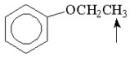
(Multiple Choice)
5.0/5 (86)
(86) 
Filters
- Essay(0)
- Multiple Choice(0)
- Short Answer(0)
- True False(0)
- Matching(0)