



 Chat with AI
Exam 8: Invasive Blood Gas Analysis and Monitoring

Exam 1: Fetal Lung Development6 Questions
Exam 2: Fetal Gas Exchange and Circulation7 Questions
Exam 3: Antenatal Assessment and High Risk Delivery24 Questions
Exam 4: Exam and Assessment of the Neonatal and Pediatric Patient33 Questions
Exam 5: Pulmonary Function Testing and Bedside Pulmonary Mechanics18 Questions
Exam 6: Radiographic Assessment19 Questions
Exam 7: Bronchoscopy20 Questions
Exam 8: Invasive Blood Gas Analysis and Monitoring21 Questions
Exam 9: Noninvasive Monitoring in Neonatal and Pediatric Care18 Questions
Exam 10: Oxygen Administration17 Questions
Exam 11: Aerosols and Administration of Medication22 Questions
Exam 12: Airway Clearance Techniques and Lung Volume Expansion20 Questions
Exam 13: Airway Management25 Questions
Exam 14: Surfactant Replacement14 Questions
Exam 15: Non-Invasive Mechanical Ventilation and Continuous Positive Pressure of the Neonate19 Questions
Exam 16: Noninvasive Mechanical Ventilation of the Child21 Questions
Exam 17: Mechanical Ventilation of the Neonate and Pediatric Patient28 Questions
Exam 18: Administration of Gas Mixtures24 Questions
Exam 19: Extracorporeal Life Support25 Questions
Exam 20: Pharmacology20 Questions
Exam 21: Thoracic Organ Transplantation19 Questions
Exam 22: Neonatal Complications and Pulmonary Disorders26 Questions
Exam 23: Congenital and Surgical Disorders That Affect Respiratory Care20 Questions
Exam 24: Congenital Cardiac Defects24 Questions
Exam 25: Sudden Infant Death Syndrome Sleep Disorders16 Questions
Exam 26: Pediatric Airway Disorders and Pulmonary Infections24 Questions
Exam 27: Asthma22 Questions
Exam 28: Cystic Fibrosis18 Questions
Exam 29: Acute Respiratory Distress Syndrome19 Questions
Exam 30: Shock, Sepsis and Anaphylaxis21 Questions
Exam 31: Pediatric Trauma53 Questions
Exam 32: Disorders of the Pleura14 Questions
Exam 33: Neurologic and Neuromuscular Disorders15 Questions
Exam 34: Transport of Infants and Children14 Questions
Exam 35: Home Care16 Questions
Exam 36: Quality and Safety11 Questions
Select questions type


In addition to applying direct pressure to the puncture site immediately after the arterial puncture procedure,what can the therapist do to minimize the risk of hematoma formation in a patient who requires frequent radial arterial punctures?

Free
(Multiple Choice)
4.8/5  (76)
(76) Correct Answer: Verified
C
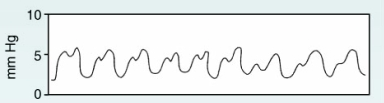
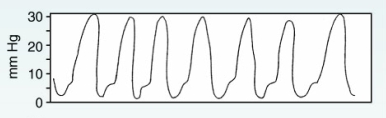
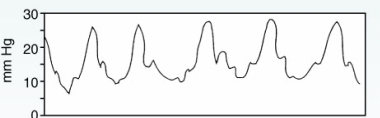
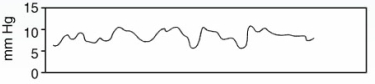
Which of the following pulmonary artery catheter waveforms represents the catheter's normal location?
A.
 B.
 C.
 D.
B.
C.
D.
Free
(Multiple Choice)
4.9/5 (78)
(78) Correct Answer:Verified
VerifiedC
A 3-kg neonate has lost 30% of his circulating blood volume.Approximately how much fluid should be infused to compensate for this loss?
Free
(Multiple Choice)
4.8/5 (68)
(68) Correct Answer:Verified
VerifiedC
Which of the following factors would adversely affect the correlation between arterial puncture measurements and those from a capillary sample?
(Multiple Choice)
4.7/5 (77)
(77) Which of the following factors influence the central venous pressure (CVP)measurement?
I.Bicuspid valve function
II.Right ventricular pressure
III.Intravascular volume
IV.Systemic venous return
(Multiple Choice)
4.8/5 (78)
(78) A patient has a systolic blood pressure of 100 mm Hg and a diastolic pressure of 75 mm Hg.What is this patient's mean arterial pressure?
(Multiple Choice)
4.9/5 (79)
(79) On the basis of the position of the three-way stopcock shown here,identify which of the following activities related to arterial line blood sampling is occurring.
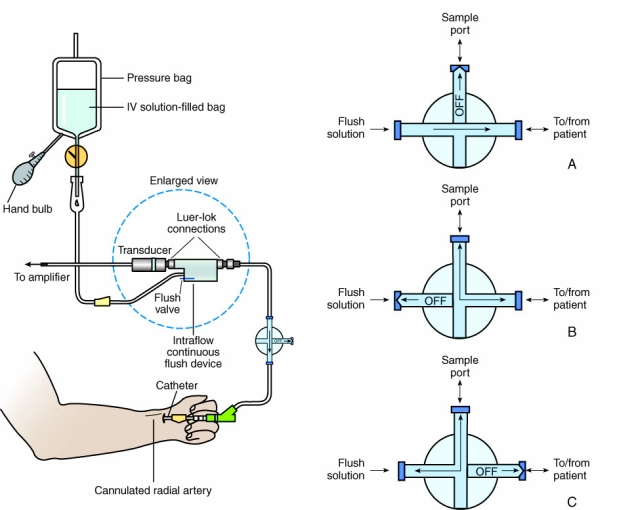
(Multiple Choice)
4.9/5 (85)
(85) Calculate a patient's total arterial oxygen content given the following data:
•Arterial oxygen tension (PaO₂),100 mm Hg
•Arterial carbon dioxide tension (PacO₂),45 mm Hg
•Arterial oxygen saturation (SaO₂),97.5%
•Hemoglobin concentration ([Hb]),15 g/dL
•Cardiac output,4.5 L/minute
•Stroke volume,55 mL/beat
(Multiple Choice)
4.7/5 (78)
(78) Which of the following conditions can cause methemoglobinemia?
(Multiple Choice)
4.8/5 (81)
(81) A respiratory therapist has been ordered to obtain a blood gas sample from a nonintubated premature baby.After selecting the best site to obtain the sample,what should the RT suggest to ameliorate the pain associated with the procedure?
(Multiple Choice)
4.7/5 (89)
(89) Which of the following arteries is considered the optimal puncture site for obtaining arterial blood samples from neonatal and pediatric patients?
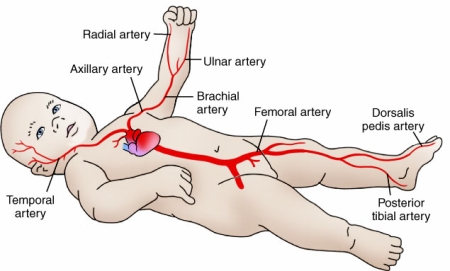
(Multiple Choice)
4.9/5 (76)
(76) If a blood gas sample is not obtained from an arterial stick in a premature baby without central access,which of the following sites should be considered because this blood vessel is larger than the radial artery at this age?
(Multiple Choice)
4.7/5 (78)
(78) On the basis of the following waveform,in which of the following anatomic locations is the distal tip of the pulmonary artery catheter located?
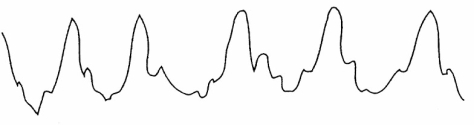
(Multiple Choice)
4.7/5 (76)
(76) In addition to the dorsalis pedis,which of the following arteries is involved when the modified Allen's test is performed using a foot as the potential arterial puncture site?
(Multiple Choice)
4.9/5 (67)
(67) The neonatal intensive care unit (NICU)respiratory therapy supervisor is observing a therapist obtain an arterial blood sample from an infant's radial artery and notices that the therapist has the bevel of the needle pointed upward,entering the patient's skin at a 45-degree angle and in a direction against the arterial flow.What should the supervisor do at this time?
(Multiple Choice)
4.8/5 (84)
(84) Which of the following is one of the most common arrhythmias observed as a complication from the insertion of a pulmonary artery catheter?
(Multiple Choice)
4.8/5 (83)
(83) On the basis of the following waveform,in which of the following anatomic locations is the distal tip of the pulmonary artery catheter located?
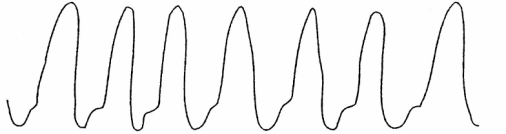
(Multiple Choice)
4.9/5 (80)
(80) With an umbilical artery catheter (UAC)in the "low position," which of the following blood vessels should be avoided?
(Multiple Choice)
5.0/5 (84)
(84) A 12-hour-old infant is experiencing respiratory distress,and the neonatologist orders a heel stick to assess the infant's oxygenation status.What action should the therapist take at this time?
(Multiple Choice)
4.8/5 (80)
(80) On the basis of the following waveform,in which of the following anatomic locations is the distal tip of the pulmonary artery catheter located?

(Multiple Choice)
4.8/5 (81)
(81) 
Filters
- Essay(0)
- Multiple Choice(0)
- Short Answer(0)
- True False(0)
- Matching(0)