



 Chat with AI
Exam 14: Cardiovascular Diagnostic Procedures

Exam 1: Critical Care Nursing Practice20 Questions
Exam 2: Ethical Issues20 Questions
Exam 3: Legal Issues25 Questions
Exam 4: Genetics and Genomics in Critical Care20 Questions
Exam 5: Patient and Family Education25 Questions
Exam 6: Psychosocial and Spiritual Alterations and Management25 Questions
Exam 7: Sleep Alterations and Management25 Questions
Exam 8: Nutrition Alterations and Management30 Questions
Exam 9: Pain and Pain Management20 Questions
Exam 10: Sedation,Agitation,Delirium: Assessment and Management20 Questions
Exam 11: End-Of-Life Issues20 Questions
Exam 12: Cardiovascular Anatomy and Physiology25 Questions
Exam 13: Cardiovascular Clinical Assessment25 Questions
Exam 14: Cardiovascular Diagnostic Procedures75 Questions
Exam 15: Cardiovascular Disorders35 Questions
Exam 16: Cardiovascular Therapeutic Management35 Questions
Exam 17: Pulmonary Anatomy and Physiology40 Questions
Exam 18: Pulmonary Clinical Assessment25 Questions
Exam 19: Pulmonary Diagnostic Procedures30 Questions
Exam 20: Pulmonary Disorders25 Questions
Exam 21: Pulmonary Therapeutic Management30 Questions
Exam 22: Neurologic Anatomy and Physiology30 Questions
Exam 23: Neurologic Clinical Assessment and Diagnostic Procedures50 Questions
Exam 24: Neurologic Disorders and Therapeutic Management44 Questions
Exam 25: Kidney Anatomy and Physiology25 Questions
Exam 26: Kidney Clinical Assessment and Diagnostic Procedures20 Questions
Exam 27: Kidney Disorders and Therapeutic Management30 Questions
Exam 28: Gastrointestinal Anatomy and Physiology20 Questions
Exam 29: Gastrointestinal Clinical Assessment and Diagnostic Procedures25 Questions
Exam 30: Gastrointestinal Disorders and Therapeutic Management25 Questions
Exam 31: Endocrine Anatomy and Physiology25 Questions
Exam 32: Endocrine Clinical Assessment and Diagnostic Procedures30 Questions
Exam 33: Endocrine Disorders and Therapeutic Management60 Questions
Exam 34: Trauma30 Questions
Exam 35: Shock,sepsis,and Multiple Organ Dysfunction Syndrome30 Questions
Exam 36: Burns30 Questions
Exam 37: Organ Donation and Transplantation30 Questions
Exam 38: Hematologic Disorders and Oncologic Emergencies25 Questions
Exam 39: The Obstetric Patient30 Questions
Exam 40: The Pediatric Patient25 Questions
Exam 41: The Older Adult Patient25 Questions
Exam 42: The Perianesthesia Patient35 Questions
Select questions type


Which of the following criteria are representative of the patient in normal sinus rhythm?
(Multiple Choice)
4.9/5  (77)
(77) Which portion of the ECG is most valuable in diagnosing atrioventricular (AV)conduction disturbances?
(Multiple Choice)
4.8/5 (77)
(77) Pulsus paradoxus may be seen on intra-arterial blood pressure monitoring when
(Multiple Choice)
4.9/5 (91)
(91) A patient's arterial line waveform has become damped.The nurse should
(Multiple Choice)
4.7/5 (71)
(71) A patient with a potassium level of 2.8 mEq/L is given 60 mEq over a 12-hour period,and a repeat potassium level is obtained after the bolus.The current potassium level is 2.9 mEq/L.Which of the following should now be considered?
(Multiple Choice)
4.9/5 (72)
(72) A patient with a serum potassium level of 6.8 mEq/L may exhibit electrocardiographic changes of
(Multiple Choice)
4.9/5 (68)
(68) A patient returns from the cardiac catheterization laboratory after angioplasty and stent placement (ECG changes had indicated an inferior wall myocardial infarction in progress).Which lead would best monitor this patient?
(Multiple Choice)
4.8/5 (86)
(86) Which of the following is most often found in ventricular dysrhythmias?
(Multiple Choice)
5.0/5 (83)
(83) Which serum lipid value is a significant predictor of future acute MI in persons with established coronary artery atherosclerosis?
(Multiple Choice)
4.8/5 (75)
(75) The patient's admitting 12-lead ECG shows peaked P waves.Which of the following admitting diagnoses could be responsible for this finding?
(Multiple Choice)
4.8/5 (68)
(68) When comparing a portable chest radiograph taken in an intensive care unit bed with one taken with the patient upright in the radiology department,one significant difference is that the
(Multiple Choice)
4.9/5 (83)
(83) On returning from the cardiac catheterization laboratory,the patient asks if he can get up in the chair.The most appropriate response would be
(Multiple Choice)
4.9/5 (98)
(98) Zeroing the pressure transducer on hemodynamic monitoring equipment occurs when the displays reads
(Multiple Choice)
4.8/5 (87)
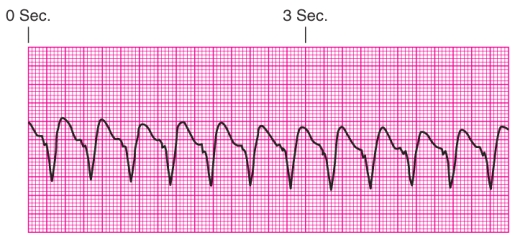
(87) 

Filters
- Essay(0)
- Multiple Choice(0)
- Short Answer(0)
- True False(0)
- Matching(0)