



 Chat with AI
Exam 14: Cardiovascular Diagnostic Procedures

Exam 1: Critical Care Nursing Practice20 Questions
Exam 2: Ethical Issues20 Questions
Exam 3: Legal Issues25 Questions
Exam 4: Genetics and Genomics in Critical Care20 Questions
Exam 5: Patient and Family Education25 Questions
Exam 6: Psychosocial and Spiritual Alterations and Management25 Questions
Exam 7: Sleep Alterations and Management25 Questions
Exam 8: Nutrition Alterations and Management30 Questions
Exam 9: Pain and Pain Management20 Questions
Exam 10: Sedation,Agitation,Delirium: Assessment and Management20 Questions
Exam 11: End-Of-Life Issues20 Questions
Exam 12: Cardiovascular Anatomy and Physiology25 Questions
Exam 13: Cardiovascular Clinical Assessment25 Questions
Exam 14: Cardiovascular Diagnostic Procedures75 Questions
Exam 15: Cardiovascular Disorders35 Questions
Exam 16: Cardiovascular Therapeutic Management35 Questions
Exam 17: Pulmonary Anatomy and Physiology40 Questions
Exam 18: Pulmonary Clinical Assessment25 Questions
Exam 19: Pulmonary Diagnostic Procedures30 Questions
Exam 20: Pulmonary Disorders25 Questions
Exam 21: Pulmonary Therapeutic Management30 Questions
Exam 22: Neurologic Anatomy and Physiology30 Questions
Exam 23: Neurologic Clinical Assessment and Diagnostic Procedures50 Questions
Exam 24: Neurologic Disorders and Therapeutic Management44 Questions
Exam 25: Kidney Anatomy and Physiology25 Questions
Exam 26: Kidney Clinical Assessment and Diagnostic Procedures20 Questions
Exam 27: Kidney Disorders and Therapeutic Management30 Questions
Exam 28: Gastrointestinal Anatomy and Physiology20 Questions
Exam 29: Gastrointestinal Clinical Assessment and Diagnostic Procedures25 Questions
Exam 30: Gastrointestinal Disorders and Therapeutic Management25 Questions
Exam 31: Endocrine Anatomy and Physiology25 Questions
Exam 32: Endocrine Clinical Assessment and Diagnostic Procedures30 Questions
Exam 33: Endocrine Disorders and Therapeutic Management60 Questions
Exam 34: Trauma30 Questions
Exam 35: Shock,sepsis,and Multiple Organ Dysfunction Syndrome30 Questions
Exam 36: Burns30 Questions
Exam 37: Organ Donation and Transplantation30 Questions
Exam 38: Hematologic Disorders and Oncologic Emergencies25 Questions
Exam 39: The Obstetric Patient30 Questions
Exam 40: The Pediatric Patient25 Questions
Exam 41: The Older Adult Patient25 Questions
Exam 42: The Perianesthesia Patient35 Questions
Select questions type


Which of the following has become the first-line hemodynamic assessment tool in the critical care unit?
(Multiple Choice)
4.8/5  (96)
(96) Which of the following expresses the correct order when working with an invasive pressure monitor?
(Multiple Choice)
4.9/5 (73)
(73) The rationale for giving the patient additional fluids after a cardiac catheterization is that
(Multiple Choice)
4.9/5 (78)
(78) A 52-year-old patient presents to the emergency department with reports of substernal chest pain.A history is taken; serum creatine kinase (CK)and lactate dehydrogenase (LDH)isoenzymes and serum lipid studies are ordered,as is a 12-lead ECG.Which of the following results is most significant in diagnosing an MI during the first 12 hours of chest pain?
(Multiple Choice)
4.8/5 (94)
(94) A patient asks why he had to take a deep breath when the radiology technician took his chest radiograph.Which of the following would be the best response?
(Multiple Choice)
4.9/5 (84)
(84) Which of the following is most indicative of decreased left ventricular preload?
(Multiple Choice)
4.7/5 (76)
(76) After an MI,a patient presents with an increasing frequency of PVCs.The patient's heart rate is 110 beats/min,and ECG indicates a sinus rhythm with up to five unifocal PVCs per minute.Which of the following should be done? The patient is alert and responsive and denies any chest pain or dyspnea.
(Multiple Choice)
4.9/5 (74)
(74) Which of the following cardiac enzymes is a highly specific biomarker for myocardial damage?
(Multiple Choice)
4.9/5 (90)
(90) The blood test used to standardize PT results among clinical laboratories worldwide is known as
(Multiple Choice)
4.8/5 (63)
(63) The patient's admitting 12-lead ECG shows wide,M-shaped P waves.Which of the following admitting diagnoses could be responsible for this finding?
(Multiple Choice)
4.8/5 (74)
(74) A physician orders removal of the central venous catheter (CVC)line.The patient has a diagnosis of heart failure with chronic obstructive pulmonary disease.The nurse would place the patient in what position for this procedure?
(Multiple Choice)
4.9/5 (81)
(81) 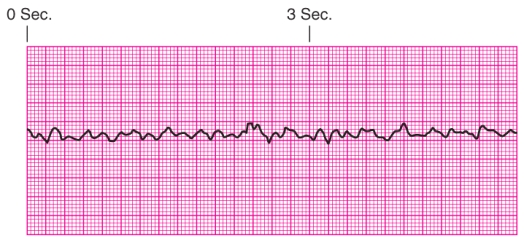
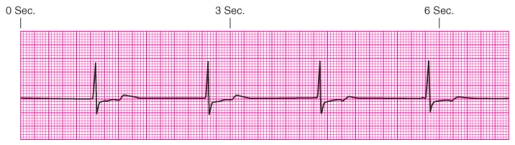
New-onset atrial fibrillation can be serious for which of the following reasons?
(Multiple Choice)
4.9/5 (85)
(85) A patient with heart failure may be at risk for hypomagnesemia as a result of
(Multiple Choice)
4.9/5 (77)
(77) Which of the following conditions can cause an artificial increase in the PAOP/PCWP?
(Multiple Choice)
4.7/5 (78)
(78) What is the initial intervention in a patient with sinus tachycardia with the following vital signs: HR,136 beats/min; BP,102/60 mm Hg; RR,24 breaths/min; T,99.2° F; SpO2,94% on oxygen 2 L/min by nasal cannula?
(Multiple Choice)
4.9/5 (92)
(92) 
Filters
- Essay(0)
- Multiple Choice(0)
- Short Answer(0)
- True False(0)
- Matching(0)