



 Chat with AI
Exam 16: Cardiovascular Therapeutic Management

Exam 1: Critical Care Nursing Practice20 Questions
Exam 2: Ethical Issues20 Questions
Exam 3: Legal Issues25 Questions
Exam 4: Genetics and Genomics in Critical Care20 Questions
Exam 5: Patient and Family Education25 Questions
Exam 6: Psychosocial and Spiritual Alterations and Management25 Questions
Exam 7: Sleep Alterations and Management25 Questions
Exam 8: Nutrition Alterations and Management30 Questions
Exam 9: Pain and Pain Management20 Questions
Exam 10: Sedation,Agitation,Delirium: Assessment and Management20 Questions
Exam 11: End-Of-Life Issues20 Questions
Exam 12: Cardiovascular Anatomy and Physiology25 Questions
Exam 13: Cardiovascular Clinical Assessment25 Questions
Exam 14: Cardiovascular Diagnostic Procedures75 Questions
Exam 15: Cardiovascular Disorders35 Questions
Exam 16: Cardiovascular Therapeutic Management35 Questions
Exam 17: Pulmonary Anatomy and Physiology40 Questions
Exam 18: Pulmonary Clinical Assessment25 Questions
Exam 19: Pulmonary Diagnostic Procedures30 Questions
Exam 20: Pulmonary Disorders25 Questions
Exam 21: Pulmonary Therapeutic Management30 Questions
Exam 22: Neurologic Anatomy and Physiology30 Questions
Exam 23: Neurologic Clinical Assessment and Diagnostic Procedures50 Questions
Exam 24: Neurologic Disorders and Therapeutic Management44 Questions
Exam 25: Kidney Anatomy and Physiology25 Questions
Exam 26: Kidney Clinical Assessment and Diagnostic Procedures20 Questions
Exam 27: Kidney Disorders and Therapeutic Management30 Questions
Exam 28: Gastrointestinal Anatomy and Physiology20 Questions
Exam 29: Gastrointestinal Clinical Assessment and Diagnostic Procedures25 Questions
Exam 30: Gastrointestinal Disorders and Therapeutic Management25 Questions
Exam 31: Endocrine Anatomy and Physiology25 Questions
Exam 32: Endocrine Clinical Assessment and Diagnostic Procedures30 Questions
Exam 33: Endocrine Disorders and Therapeutic Management60 Questions
Exam 34: Trauma30 Questions
Exam 35: Shock,sepsis,and Multiple Organ Dysfunction Syndrome30 Questions
Exam 36: Burns30 Questions
Exam 37: Organ Donation and Transplantation30 Questions
Exam 38: Hematologic Disorders and Oncologic Emergencies25 Questions
Exam 39: The Obstetric Patient30 Questions
Exam 40: The Pediatric Patient25 Questions
Exam 41: The Older Adult Patient25 Questions
Exam 42: The Perianesthesia Patient35 Questions
Select questions type


The possibility of microshock when handling a temporary pacemaker can be minimized by

Free
(Multiple Choice)
4.9/5  (80)
(80) Correct Answer: Verified
B
Which of the following would indicate successful reperfusion after administration of a fibrinolytic agent?
Free
(Multiple Choice)
4.9/5 (81)
(81) Correct Answer:Verified
VerifiedB,C,D
The predominant form of percutaneous coronary intervention (PCI)is
Free
(Multiple Choice)
4.9/5 (84)
(84) Correct Answer:Verified
VerifiedB
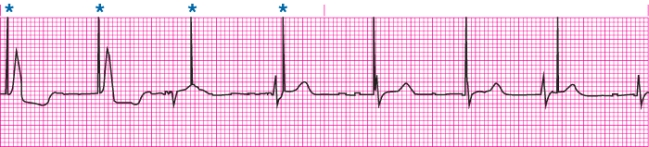
When an intra-aortic balloon is in place,it is essential for the nurse to frequently assess
(Multiple Choice)
4.8/5 (94)
(94) Vasopressors are used cautiously with critical care patients because they can cause
(Multiple Choice)
4.8/5 (80)
(80) A patient suddenly develops a wide QRS complex tachycardia.The patient's heart rate is 220 beats/min and regular; blood pressure is 96/40 mm Hg; and respiratory rate is 22 breaths/min,and the patient is awake without complaint except for palpitations.Which of the following interventions would be best to try first?
(Multiple Choice)
4.7/5 (77)
(77) Which of the following mechanisms is responsible for the augmentation of coronary arterial blood flow and increased myocardial oxygen supply seen with the intra-aortic balloon pump?
(Multiple Choice)
4.9/5 (91)
(91) Adenosine (Adenocard)is an antidysrhythmic agent given primarily to
(Multiple Choice)
4.7/5 (76)
(76) In analyzing the ECG strip,the nurse notices a spike before each QRS complex.The patient's heart rate is 70 beats/min.This phenomenon is reflective of
(Multiple Choice)
4.8/5 (84)
(84) The rationale for administration of a fibrinolytic agent is
(Multiple Choice)
4.8/5 (85)
(85) A patient is admitted with left-sided heart failure and a blood pressure of 220/118 mm Hg.Which of the following drugs will be most effective in decreasing the blood pressure and reducing afterload?
(Multiple Choice)
4.7/5 (78)
(78) Which anticoagulant(s)enhances activity of antithrombin III and does not require aPTT or ACT monitoring?
(Multiple Choice)
4.8/5 (83)
(83) Nursing interventions after angioplasty would include which of the following?
(Multiple Choice)
4.7/5 (83)
(83) A nurse is providing care to a patient on fibrinolytic therapy.Which of the following statements from the patient warrants further assessment and intervention by the critical care nurse?
(Multiple Choice)
4.8/5 (74)
(74) The patient is 12 hours postoperative for a CABG.The patient's vital signs include: T 103° F,HR 112,RR 22,BP 134/78 mm Hg,and O2 sat 94% on 3L/NC.The nurse suspects that the patient has developed
(Multiple Choice)
4.7/5 (71)
(71) Which of the following statements regarding beta-blockers is correct?
(Multiple Choice)
4.9/5 (73)
(73) A pacemaker is connected to an external temporary pulse generator.The sensitivity control
(Multiple Choice)
4.8/5 (84)
(84) The mechanism of dilation with percutaneous transluminal coronary angioplasty (PTCA)is
(Multiple Choice)
4.9/5 (80)
(80) 
Filters
- Essay(0)
- Multiple Choice(0)
- Short Answer(0)
- True False(0)
- Matching(0)