



 Chat with AI
Exam 11: Cranium, Facial Bones, and Paranasal Sinuses

Exam 1: Terminology, Positioning, and Imaging Principles199 Questions
Exam 2: Chest102 Questions
Exam 3: Abdomen92 Questions
Exam 4: Upper Limb107 Questions
Exam 5: Humerus and Shoulder Girdle80 Questions
Exam 6: Lower Limb110 Questions
Exam 7: Femur and Pelvic Girdle80 Questions
Exam 8: Cervical and Thoracic Spine84 Questions
Exam 9: Lumbar Spine, Sacrum, and Coccyx75 Questions
Exam 10: Bony Thoraxsternum and Ribs67 Questions
Exam 11: Cranium, Facial Bones, and Paranasal Sinuses181 Questions
Exam 12: Biliary Tract and Upper Gastrointestinal System127 Questions
Exam 13: Lower Gi System83 Questions
Exam 14: Urinary System and Venipuncture100 Questions
Exam 15: Trauma, Mobile, and Surgical Radiography108 Questions
Exam 16: Pediatric Radiography72 Questions
Exam 17: Angiography and Interventional Procedures72 Questions
Exam 18: Computed Tomography103 Questions
Exam 19: Special Radiographic Procedures69 Questions
Exam 20: Diagnostic and Therapeutic Modalities208 Questions
Select questions type


Which group of sinuses is shaded (screened) in the frontal and lateral views of the illustration below? 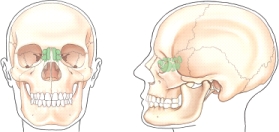
(Multiple Choice)
4.8/5  (68)
(68) The pituitary gland (hypophysis cerebri) is associated with and protected by the ____ bone.
(Multiple Choice)
4.7/5 (75)
(75) Which of the following terms describes the small irregular bones occasionally found in the sutures?
(Multiple Choice)
4.9/5 (66)
(66) Which plane or perspective is most often produced for a CT scan of the sinuses?
(Multiple Choice)
4.8/5 (88)
(88) Which sinus often produces an air/fluid level indicating a basilar skull fracture?
(Multiple Choice)
4.8/5 (82)
(82) 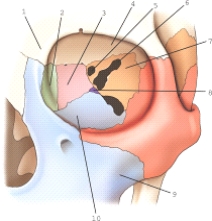
Which of the following technical factors do NOT apply to lateral nasal bone projections?
(Multiple Choice)
4.9/5 (87)
(87) 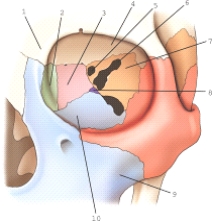
What is the angle between the midsagittal plane and the IR for a parieto-orbital oblique projection of the optic foramen?
(Multiple Choice)
4.9/5 (81)
(81) Which projection best demonstrates the floor of the orbits with minimal distortion?
(Multiple Choice)
4.9/5 (80)
(80) Where should the optic foramen be located with a well-positioned parieto-orbital oblique projection of the optic foramina?
(Multiple Choice)
4.7/5 (82)
(82) Match each radiographic appearance with the corresponding pathologic indication.(Use each selection only once.)
-Bone destruction with widened internal auditory canal
(Multiple Choice)
4.9/5 (86)
(86) Which positioning line must be used with a 30° caudad angle for an AP axial projection of zygomatic arches?
(Multiple Choice)
5.0/5 (83)
(83) Optic foramen studies are routinely taken as bilateral projections.
(True/False)
4.9/5 (78)
(78) A radiograph of an axiolateral oblique projection of the mandible reveals that the mandibular body is greatly foreshortened.Which of the following modifications is necessary to produce a more diagnostic image?
(Multiple Choice)
5.0/5 (78)
(78) The submentovertical projection requires that the infraorbital meatal line (IOML) is placed parallel to the image receptor.
(True/False)
4.8/5 (71)
(71) Which of the following structures are described as scroll-like projections found in the nasal cavity?
(Multiple Choice)
4.9/5 (72)
(72) 
Filters
- Essay(0)
- Multiple Choice(0)
- Short Answer(0)
- True False(0)
- Matching(0)