



 Chat with AI
Exam 11: Cranium, Facial Bones, and Paranasal Sinuses

Exam 1: Terminology, Positioning, and Imaging Principles199 Questions
Exam 2: Chest102 Questions
Exam 3: Abdomen92 Questions
Exam 4: Upper Limb107 Questions
Exam 5: Humerus and Shoulder Girdle80 Questions
Exam 6: Lower Limb110 Questions
Exam 7: Femur and Pelvic Girdle80 Questions
Exam 8: Cervical and Thoracic Spine84 Questions
Exam 9: Lumbar Spine, Sacrum, and Coccyx75 Questions
Exam 10: Bony Thoraxsternum and Ribs67 Questions
Exam 11: Cranium, Facial Bones, and Paranasal Sinuses181 Questions
Exam 12: Biliary Tract and Upper Gastrointestinal System127 Questions
Exam 13: Lower Gi System83 Questions
Exam 14: Urinary System and Venipuncture100 Questions
Exam 15: Trauma, Mobile, and Surgical Radiography108 Questions
Exam 16: Pediatric Radiography72 Questions
Exam 17: Angiography and Interventional Procedures72 Questions
Exam 18: Computed Tomography103 Questions
Exam 19: Special Radiographic Procedures69 Questions
Exam 20: Diagnostic and Therapeutic Modalities208 Questions
Select questions type


A radiograph of a lateral cranium reveals that the mentum of the mandible was cut off from the bottom of the radiograph.A 24 × 30-cm (10 × 12-inch) IR was used, and it was placed landscape.What must be altered if a repeat exposure is performed?
(Multiple Choice)
4.8/5  (83)
(83) The osseous labyrinth includes the cochlea, the vestibule, and the semicircular canals.
(True/False)
4.9/5 (83)
(83) A patient comes in with a clinical history of a possible pituitary adenoma.Because this is a rural hospital, CT and MRI are not available.Which radiographic projection or position would best demonstrate signs of bony erosion of the sella turcica because of the tumor?
(Multiple Choice)
4.8/5 (78)
(78) What is the difference, in degrees, between the infraorbitomeatal and orbitomeatal lines?
(Multiple Choice)
4.8/5 (72)
(72) Which sinuses are best demonstrated with the PA projection?
(Multiple Choice)
4.8/5 (83)
(83) Which of the following cranial bones does not articulate with the parietal bone?
(Multiple Choice)
4.8/5 (74)
(74) Which of the following structures of the inner ear is responsible for hearing?
(Multiple Choice)
4.9/5 (91)
(91) A patient comes to radiology with a history of a possible erosion of the superior orbital fissures.Which of the following projections would best demonstrate this structure?
(Multiple Choice)
5.0/5 (86)
(86) A radiograph of a lateral projection of the cranium reveals that the orbital roofs (plates) are not superimposed-one is slightly superior to the other.Which of the following positioning errors led to this radiographic outcome?
(Multiple Choice)
4.9/5 (67)
(67) Where does the CR exit for a modified parietoacanthial (modified Waters) projection of the facial bones?
(Multiple Choice)
4.9/5 (88)
(88) A radiograph of a PA Caldwell (15° caudad) projection for cranium reveals that the petrous ridges are projected into the lower one-third of the orbits.Which of the following modifications should be made during the repeat exposure to produce a more diagnostic image?
(Multiple Choice)
4.7/5 (85)
(85) Select the imaging modality that would best demonstrate the following pathologies.
-Paget's disease
(Multiple Choice)
4.9/5 (78)
(78) 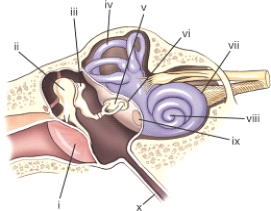
What is the classification of the joint found between the teeth and maxilla?
(Multiple Choice)
4.9/5 (82)
(82) How much skull rotation, from a lateral position, is recommended to best demonstrate the body of the mandible for an axiolateral/axiolateral oblique projection?
(Multiple Choice)
4.8/5 (82)
(82) A radiograph of a parietoacanthial (Waters) projection for sinuses reveals that the petrous pyramids are projected over the maxillary sinuses.What positioning error is present on this radiograph?
(Multiple Choice)
4.8/5 (78)
(78) To which aspect of the ear does the eustachian tube attach?
(Multiple Choice)
4.8/5 (82)
(82) How much difference is there between the OML and IOML positioning lines?
(Multiple Choice)
4.9/5 (92)
(92) 
Filters
- Essay(0)
- Multiple Choice(0)
- Short Answer(0)
- True False(0)
- Matching(0)