



 Chat with AI
Exam 9: Lumbar Spine, Sacrum, and Coccyx

Exam 1: Terminology, Positioning, and Imaging Principles199 Questions
Exam 2: Chest102 Questions
Exam 3: Abdomen92 Questions
Exam 4: Upper Limb107 Questions
Exam 5: Humerus and Shoulder Girdle80 Questions
Exam 6: Lower Limb110 Questions
Exam 7: Femur and Pelvic Girdle80 Questions
Exam 8: Cervical and Thoracic Spine84 Questions
Exam 9: Lumbar Spine, Sacrum, and Coccyx75 Questions
Exam 10: Bony Thoraxsternum and Ribs67 Questions
Exam 11: Cranium, Facial Bones, and Paranasal Sinuses181 Questions
Exam 12: Biliary Tract and Upper Gastrointestinal System127 Questions
Exam 13: Lower Gi System83 Questions
Exam 14: Urinary System and Venipuncture100 Questions
Exam 15: Trauma, Mobile, and Surgical Radiography108 Questions
Exam 16: Pediatric Radiography72 Questions
Exam 17: Angiography and Interventional Procedures72 Questions
Exam 18: Computed Tomography103 Questions
Exam 19: Special Radiographic Procedures69 Questions
Exam 20: Diagnostic and Therapeutic Modalities208 Questions
Select questions type


The radiographic appearance on an oblique lumbar spine in which the neck of the Scottie dog appears broken suggests the presence of:

Free
(Multiple Choice)
4.9/5  (92)
(92) Correct Answer: Verified
D
A radiograph of an AP axial sacrum reveals that it is foreshortened and the sacral foramina are not clearly seen.The patient was in an AP supine position, and the technologist angled the CR 5° to 7° cephalad.What specific positioning error is present on this radiograph?
Free
(Multiple Choice)
4.7/5 (77)
(77) Correct Answer:Verified
VerifiedC
The "nose" of the Scottie dog represents the spinous process of a lumbar vertebra.
Free
(True/False)
4.9/5 (83)
(83) Correct Answer:Verified
VerifiedFalse
A radiograph of an AP axial L5-S1 projection reveals that the joint space is not open.The following factors were used on this female patient: 80 kV, 40-inch (102-cm) SID, grid, 35° caudad angle, and CR centered to the ASIS.Which of the following factors needs to be modified to produce a more diagnostic image?
(Multiple Choice)
4.7/5 (81)
(81) The second projection for the Ferguson method of the scoliosis series requires that the concave side of the curve be built up 3 to 4 inches (8 to 10 cm) by placing blocks beneath the patient's foot.
(True/False)
4.8/5 (75)
(75) If the waist is supported properly, an average-size patient does not require any CR angulation for the lateral lumbar spine projection.
(True/False)
4.9/5 (82)
(82) Which labeled structure in the figure is the superior articular process? 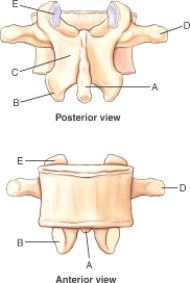
(Multiple Choice)
4.9/5 (85)
(85) A radiograph of a left posterior oblique (LPO) projection of the lumbar spine reveals that the downside pedicle is projected too far posterior on the vertebral body.What specific positioning error is present on this radiograph?
(Multiple Choice)
4.9/5 (81)
(81) Why should the hips and knees be flexed for an anteroposterior (AP) projection of the lumbar spine?
(Multiple Choice)
4.8/5 (83)
(83) What is the joint classification of the zygapophyseal joints?
(Multiple Choice)
4.8/5 (94)
(94) Bone densitometry produces very little skin dose to the patient.
(True/False)
4.8/5 (81)
(81) The average degree of rotation required to demonstrate the L3-4 zygapophyseal joints is:
(Multiple Choice)
4.9/5 (81)
(81) Which of the following is a condition of unknown cause in which calcification of bony ridges between vertebrae occurs, creating a lack of mobility with a "bamboo" appearance?
(Multiple Choice)
5.0/5 (78)
(78) What CR angle should be used for a lateral sacrum/coccyx projection?
(Multiple Choice)
4.8/5 (86)
(86) Which of the following fractures is due to a hyperflexion force injury?
(Multiple Choice)
4.8/5 (75)
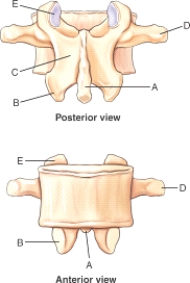
(75) 
The AP and lateral projections for a pediatric scoliosis study should include the entire lumbar and thoracic spine.
(True/False)
4.8/5 (77)
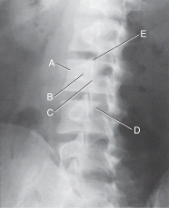
(77) 
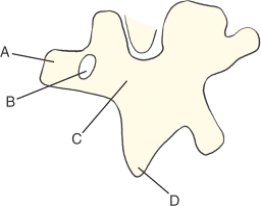
The zygapophyseal joints of the upper lumbar vertebrae are ____ in relationship to the midsagittal plane.
(Multiple Choice)
4.8/5 (85)
(85) 
Filters
- Essay(0)
- Multiple Choice(0)
- Short Answer(0)
- True False(0)
- Matching(0)