



 Chat with AI
Exam 11: Cranium, Facial Bones, and Paranasal Sinuses

Exam 1: Terminology, Positioning, and Imaging Principles199 Questions
Exam 2: Chest102 Questions
Exam 3: Abdomen92 Questions
Exam 4: Upper Limb107 Questions
Exam 5: Humerus and Shoulder Girdle80 Questions
Exam 6: Lower Limb110 Questions
Exam 7: Femur and Pelvic Girdle80 Questions
Exam 8: Cervical and Thoracic Spine84 Questions
Exam 9: Lumbar Spine, Sacrum, and Coccyx75 Questions
Exam 10: Bony Thoraxsternum and Ribs67 Questions
Exam 11: Cranium, Facial Bones, and Paranasal Sinuses181 Questions
Exam 12: Biliary Tract and Upper Gastrointestinal System127 Questions
Exam 13: Lower Gi System83 Questions
Exam 14: Urinary System and Venipuncture100 Questions
Exam 15: Trauma, Mobile, and Surgical Radiography108 Questions
Exam 16: Pediatric Radiography72 Questions
Exam 17: Angiography and Interventional Procedures72 Questions
Exam 18: Computed Tomography103 Questions
Exam 19: Special Radiographic Procedures69 Questions
Exam 20: Diagnostic and Therapeutic Modalities208 Questions
Select questions type


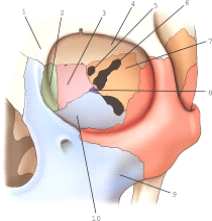

A radiograph of a submentovertex projection of the cranium reveals that the mandibular mentum are projected into the ethmoid sinuses.What must be altered during the repeat exposure to produce a more diagnostic radiograph?
(Multiple Choice)
4.8/5  (76)
(76) A radiograph of a parieto-orbital oblique projection for the optic foramen reveals that the optic foramen is projected into the maxillary sinus.Which of the following modifications is necessary to produce a more diagnostic image?
(Multiple Choice)
4.8/5 (90)
(90) A radiograph of a PA projection of the sinuses reveals that the petrous ridges are projected over the ethmoid sinuses.Which of the following modifications will eliminate this superimposition while not compromising diagnostic quality of the study?
(Multiple Choice)
5.0/5 (93)
(93) Which positioning line should be perpendicular to the plane of the IR for the AP axial (Towne) projection with a 37° caudad CR angle?
(Multiple Choice)
4.8/5 (81)
(81) 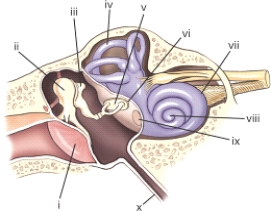
Select the imaging modality that would best demonstrate the following pathologies.
-Craniosynostosis (premature suture closing in neonate skull)
(Multiple Choice)
4.9/5 (91)
(91) Which aspect of the mandible is best demonstrated with an AP axial projection?
(Multiple Choice)
4.7/5 (82)
(82) The lateral projection for the nasal bones is generally a unilateral projection.(Both right and left lateral projections are usually not required.)
(True/False)
4.8/5 (95)
(95) The widest portion of the cranium is found at the level of the:
(Multiple Choice)
4.9/5 (87)
(87) Match each radiographic appearance with the corresponding pathologic indication.(Use each selection only once.)
-Bone destruction most commonly involving middle ear
(Multiple Choice)
5.0/5 (69)
(69) Which of the following sutures separates the parietal from the occipital bone?
(Multiple Choice)
4.8/5 (88)
(88) Which of the fontanels is the last to close at about 18 months of age?
(Multiple Choice)
4.9/5 (77)
(77) What CR angle is required for the AP axial projection for the temporomandibular joints (TMJs) with the IOML perpendicular to the image receptor?
(Multiple Choice)
4.8/5 (80)
(80) A PA axial projection with a 25° caudad angle of the cranium reveals that the petrous ridges are at the level of the superior orbital margins.Which of the following modifications are required to correct this error?
(Multiple Choice)
4.9/5 (71)
(71) 
Filters
- Essay(0)
- Multiple Choice(0)
- Short Answer(0)
- True False(0)
- Matching(0)