



 Chat with AI
Exam 7: Enzyme Kinetics and Inhibition

Exam 1: The Chemical Basis of Life16 Questions
Exam 2: Aqueous Chemistry31 Questions
Exam 3: Nucleic Acid Structure and Function17 Questions
Exam 4: Protein Structure26 Questions
Exam 5: Protein Function26 Questions
Exam 6: How Enzymes Work29 Questions
Exam 7: Enzyme Kinetics and Inhibition21 Questions
Exam 8: Lipids and Membranes19 Questions
Exam 9: Membrane Transport27 Questions
Exam 10: Signaling16 Questions
Exam 11: Carbohydrates22 Questions
Exam 12: Metabolism and Bioenergetics40 Questions
Exam 13: Glucose Metabolism31 Questions
Exam 14: The Citric Acid Cycle17 Questions
Exam 15: Oxidative Phosphorylation20 Questions
Exam 16: Photosynthesis18 Questions
Exam 17: Lipid Metabolism13 Questions
Exam 18: Nitrogen Metabolism21 Questions
Exam 19: Regulation of Mammalian Fuel Metabolism21 Questions
Exam 20: DNA Replication and Repair16 Questions
Exam 21: Transcription and RNA21 Questions
Exam 22: Protein Synthesis20 Questions
Select questions type


If a Lineweaver-Burk plot was made for an enzyme-catalyzed reaction, both with and without a noncompetitive inhibitor present, what difference would be seen?

Free
(Multiple Choice)
4.8/5  (84)
(84) Correct Answer: Verified
D
How are the kinetics of an enzyme-catalyzed reaction affected by a mixed inhibitor?
Free
(Multiple Choice)
4.8/5 (81)
(81) Correct Answer:Verified
VerifiedA
Which of the following is true regarding transition state analogs?
Free
(Multiple Choice)
4.9/5 (78)
(78) Correct Answer:Verified
VerifiedE
For a reaction A + B C, if [B] is much larger than [A] so that [B] essentially remains constant over the course of the reaction, the kinetics will be _____.
(Multiple Choice)
4.8/5 (73)
(73) In a bisubstrate reaction, reactant A binds, followed by reactant B which then get converted to products C and D. An experiment showed that B cannot bind without A having bound first. What mechanism is indicated by this data?
(Multiple Choice)
4.7/5 (76)
(76) 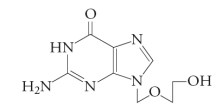
Which of the following must be true for an enzymatic reaction obeying the Michaelis-Menten equation to reach 3/4 of its maximum velocity?
(Multiple Choice)
4.9/5 (77)
(77) Find kcat for a reaction in which Vmax is 4 × 10⁻⁴ mol•min-1 and the reaction mixture contains one microgram of enzyme (the molecular weight of the enzyme is 200,000
(Multiple Choice)
4.8/5 (71)
(71) How are the kinetics of an enzyme-catalyzed reaction affected by a competitive inhibitor?
(Multiple Choice)
4.8/5 (90)
(90) Which of the following types of enzyme-catalyzed reactions follows non-Michaelis-Menten kinetics?
(Multiple Choice)
4.9/5 (77)
(77) When is KM considered to be the same as the dissociation constant for the ES complex i.e., KM [E] [S] / [ES].
(Multiple Choice)
5.0/5 (70)
(70) How is an enzyme-catalyzed reaction affected by the addition of more enzyme?
(Multiple Choice)
4.9/5 (67)
(67) If a Lineweaver-Burk plot was made for an enzyme-catalyzed reaction, both with and without a competitive inhibitor present, what difference would be seen?
(Multiple Choice)
4.9/5 (73)
(73) In a bisubstrate reaction, reactant A binds and is then converted to product C. Next, reactant B binds and is then converted to product D. An experiment showed that B cannot bind without C being released first. What mechanism is indicated by this data?
(Multiple Choice)
4.8/5 (75)
(75) Which of the following properly expresses the Michaelis-Menten equation?
(Multiple Choice)
4.9/5 (81)
(81) Find the initial velocity for an enzymatic reaction when Vmax = 6.5 × 10⁻⁵ mol•sec-1, [S] = 3.0 × 10⁻³ M, KM = 4.5 × 10⁻³ M, and the enzyme concentration at time zero is 1.5 × 10⁻² M.
(Multiple Choice)
4.7/5 (99)
(99) How are the kinetics of an enzyme-catalyzed reaction affected by a purely noncompetitive inhibitor?
(Multiple Choice)
4.8/5 (78)
(78) What type of inhibition explains why even at very high substrate concentrations, enzyme activity will decrease as time increases?
(Multiple Choice)
4.9/5 (70)
(70) What percentage of Vmax is obtained when the substrate is present at ¼ of the KM?
`
(Multiple Choice)
4.9/5 (81)
(81) 
Filters
- Essay(0)
- Multiple Choice(0)
- Short Answer(0)
- True False(0)
- Matching(0)