



 Chat with AI
Exam 4: General Safety Practices

Exam 1: Heat and Pressure45 Questions
Exam 2: Matter and Energy32 Questions
Exam 3: Refrigeration and Refrigerants38 Questions
Exam 4: General Safety Practices31 Questions
Exam 5: Tools and Equipment30 Questions
Exam 6: Fasteners32 Questions
Exam 7: Tubing and Piping45 Questions
Exam 8: Leak Detection, System Evacuation and System Clean-Up33 Questions
Exam 9: Refrigerant and Oil Chemistry and Managementrecovery, Recycling, Reclaiming, and Retrofitting39 Questions
Exam 10: System Charging27 Questions
Exam 11: Calibrating Instruments34 Questions
Exam 12: Basic Electricity and Magnetism46 Questions
Exam 13: Introduction to Automatic Controls30 Questions
Exam 14: Automatic Control Components and Applications34 Questions
Exam 15: Troubleshooting Basic Controls33 Questions
Exam 16: Advanced Automatic Controlsdirect Digital Controls Ddc and Pneumatics35 Questions
Exam 17: Types of Electric Motors36 Questions
Exam 18: Application of Motors33 Questions
Exam 19: Motor Controls31 Questions
Exam 20: Troubleshooting Electric Motors30 Questions
Exam 21: Evaporators and the Refrigeration System37 Questions
Exam 22: Condensers35 Questions
Exam 23: Compressors35 Questions
Exam 24: Expansion Devices29 Questions
Exam 25: Special Refrigeration System Components35 Questions
Exam 26: Application of Refrigeration Systems34 Questions
Exam 27: Commercial Ice Machines35 Questions
Exam 28: Special Refrigeration Applications27 Questions
Exam 29: Troubleshooting and Typical Operating Conditions for Commercial Refrigeration34 Questions
Exam 30: Electric Heat29 Questions
Exam 31: Gas Heat27 Questions
Exam 32: Oil Heat35 Questions
Exam 33: Hydronic Heat35 Questions
Exam 34: Indoor Air Quality35 Questions
Exam 35: Comfort and Psychrometrics35 Questions
Exam 36: Refrigeration Applied to Air Conditioning31 Questions
Exam 37: Air Distribution and Balance35 Questions
Exam 38: Installation32 Questions
Exam 39: Residential Energy Auditing35 Questions
Exam 40: Typical Operating Conditions25 Questions
Exam 41: Troubleshooting28 Questions
Exam 42: Heat Gain and Heat Loss in Buildings35 Questions
Exam 43: Air Source Heat Pumps35 Questions
Exam 44: Geothermal Heat Pumps31 Questions
Exam 45: Domestic Refrigerators and Freezers35 Questions
Exam 46: Room Air Conditioners34 Questions
Exam 47: High-Pressure, Low-Pressure, and Absorption Chilled-Water Systems35 Questions
Exam 48: Cooling Towers and Pumps30 Questions
Exam 49: Operation, Maintenance, and Troubleshooting of Chilled-Water Air Conditioning Systems28 Questions
Exam 50: Commercial Rooftop, Packaged, Variable Refrigerant Flow, and Variable Air Volume Systems35 Questions
Select questions type


Refrigerants from a refrigeration system that has a burned out motor-compressor assembly can be dangerous because it could contain a high concentration of ____________________.
(Short Answer)
4.7/5  (94)
(94) Oil must never be used around a(n) ____________________ cylinder.
(Short Answer)
4.8/5 (68)
(68) 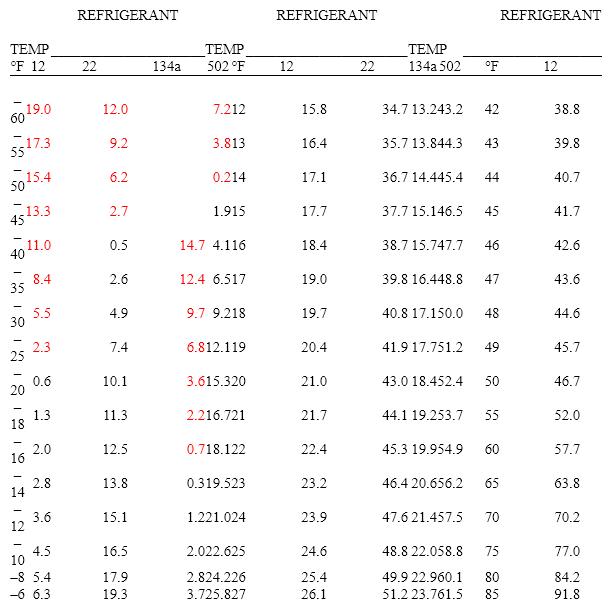 -A cylinder with 1,500 sq. in. of internal surface contains R-22 and is in a service truck body at 120°F. What is the total outward force of the refrigerant against the inner wall of the cylinder in tons of pressure?
 (Multiple Choice)
4.8/5 (92)
(92) When transferring refrigerants from a cylinder to a refrigeration system or any other container, you should always wear ____.
(Multiple Choice)
4.9/5 (84)
(84) In electrical circuits, the _____ wire protects the operator.
(Multiple Choice)
4.9/5 (94)
(94) Why should a ground fault interrupter be used with portable electric tools?
(Essay)
4.8/5 (78)
(78) When turning off the electrical power at a disconnect panel to work on an electrical circuit, what should you do to ensure that no one will turn the power on until you have finished and are ready?
(Essay)
4.9/5 (70)
(70) What safety precaution is required before starting an electric motor?
(Essay)
4.8/5 (82)
(82) Fires that involve electrical equipment are classified as Type _____ fires.
(Multiple Choice)
4.8/5 (80)
(80) Aluminum ladders are safe to use around electrical equipment as long as they have insulation pads on the bottom of the rungs.
(True/False)
4.7/5 (88)
(88) Fire extinguishers that can be used on any type of fire, A, B, or C generally contain a _____ to extinguish the fire.
(Multiple Choice)
4.9/5 (82)
(82) 
Filters
- Essay(0)
- Multiple Choice(0)
- Short Answer(0)
- True False(0)
- Matching(0)