



 Chat with AI
Exam 4: Reactions in Aqueous Solutions

Exam 1: Chemistry: the Central Science133 Questions
Exam 2: Atoms, Molecules, and Ions124 Questions
Exam 3: Stoichiometry: Ratios of Combination137 Questions
Exam 4: Reactions in Aqueous Solutions146 Questions
Exam 5: Thermochemistry141 Questions
Exam 6: Quantum Theory and the Electronic Structure of Atoms135 Questions
Exam 7: Electron Configuration and the Periodic Table120 Questions
Exam 8: Chemical Bonding I: Basic Concepts102 Questions
Exam 9: Chemical Bonding II: Molecular Geometry and Bonding Theories139 Questions
Exam 10: Gases137 Questions
Exam 11: Intermolecular Forces and the Physical Properties of Liquids and Solids137 Questions
Exam 12: Modern Materials108 Questions
Exam 13: Physical Properties of Solutions151 Questions
Exam 14: Chemical Kinetics132 Questions
Exam 15: Chemical Equilibrium146 Questions
Exam 16: Acids and Bases137 Questions
Exam 17: Acid-Base Equilibria and Solubility Equilibria133 Questions
Exam 18: Entropy, Free Energy, and Equilibrium107 Questions
Exam 19: Electrochemistry122 Questions
Exam 20: Nuclear Chemistry127 Questions
Exam 21: Environmental Chemistry135 Questions
Exam 22: Coordination Chemistry132 Questions
Exam 23: Metallurgy and the Chemistry of Metals152 Questions
Exam 24: Nonmetallic Elements and Their Compounds117 Questions
Exam 25: Organic Chemistry121 Questions
Select questions type


Which balanced chemical equation could represent the following result of a precipitation reaction? 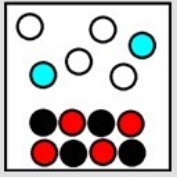
(Multiple Choice)
4.8/5  (91)
(91) Which salt is formed in the neutralization reaction of hydrochloric acid with calcium hydroxide?
(Multiple Choice)
4.9/5 (81)
(81) A 250-mL sample of 0.0328 M HCl is partially neutralized by the addition of 100. mL of 0.0245 M NaOH. Find the concentration of hydrochloric acid in the resulting solution.
(Multiple Choice)
4.7/5 (86)
(86) Which of these chemical equations describes a precipitation reaction?
(Multiple Choice)
4.8/5 (83)
(83) Given the following information, write a short activity series for the metals copper, silver, lead, and zinc.
Expt. #1: copper + silver nitrate
Observation: The copper is becoming coated with a substance.
Expt. #2: lead + copper(II) nitrate
Observation: The lead is turning black and crumbling.
Expt. #3: zinc + lead(II) nitrate
Observation: The solid zinc falls apart.
(Essay)
4.8/5 (89)
(89) Which is a correct description of the following reaction? H2SO4 + Cd(OH)2 → 2H2O + CdSO4
(Multiple Choice)
4.9/5 (84)
(84) During a titration, it is found that 53.5 mL of a solution of NaOH is needed to neutralize a solution that contains 1.86 g of HCl. What is the concentration of the NaOH solution?
(Multiple Choice)
4.8/5 (89)
(89) Which one of the following substances is the strongest electrolyte?
(Multiple Choice)
4.7/5 (94)
(94) Based on the solubility rules, which one of these compounds is soluble in water?
(Multiple Choice)
4.8/5 (87)
(87) Identify the major ions present in an aqueous HNO3 solution.
(Multiple Choice)
4.8/5 (72)
(72) ________ is a concentration unit that is defined as the number of moles of solute per liters of solution.
(Short Answer)
4.9/5 (82)
(82) Which of these equations does not represent an oxidation-reduction reaction?
(Multiple Choice)
4.8/5 (69)
(69) A(n) ________ ________ has two or more ionizable hydrogen atoms.
(Short Answer)
4.8/5 (69)
(69) What is the molarity of 250 mL of a solution containing 5.9 g of sodium chloride?
(Short Answer)
5.0/5 (94)
(94) Vinegar is a solution of acetic acid, HC2H3O2, dissolved in water. A 5.54-g sample of vinegar was neutralized by 30.10 mL of 0.100 M NaOH. What is the percent by weight of acetic acid in the vinegar?
(Multiple Choice)
4.8/5 (83)
(83) 
Filters
- Essay(0)
- Multiple Choice(0)
- Short Answer(0)
- True False(0)
- Matching(0)