



 Chat with AI
Exam 23: Metallurgy and the Chemistry of Metals

Exam 1: Chemistry: the Central Science133 Questions
Exam 2: Atoms, Molecules, and Ions124 Questions
Exam 3: Stoichiometry: Ratios of Combination137 Questions
Exam 4: Reactions in Aqueous Solutions146 Questions
Exam 5: Thermochemistry141 Questions
Exam 6: Quantum Theory and the Electronic Structure of Atoms135 Questions
Exam 7: Electron Configuration and the Periodic Table120 Questions
Exam 8: Chemical Bonding I: Basic Concepts102 Questions
Exam 9: Chemical Bonding II: Molecular Geometry and Bonding Theories139 Questions
Exam 10: Gases137 Questions
Exam 11: Intermolecular Forces and the Physical Properties of Liquids and Solids137 Questions
Exam 12: Modern Materials108 Questions
Exam 13: Physical Properties of Solutions151 Questions
Exam 14: Chemical Kinetics132 Questions
Exam 15: Chemical Equilibrium146 Questions
Exam 16: Acids and Bases137 Questions
Exam 17: Acid-Base Equilibria and Solubility Equilibria133 Questions
Exam 18: Entropy, Free Energy, and Equilibrium107 Questions
Exam 19: Electrochemistry122 Questions
Exam 20: Nuclear Chemistry127 Questions
Exam 21: Environmental Chemistry135 Questions
Exam 22: Coordination Chemistry132 Questions
Exam 23: Metallurgy and the Chemistry of Metals152 Questions
Exam 24: Nonmetallic Elements and Their Compounds117 Questions
Exam 25: Organic Chemistry121 Questions
Select questions type


Which has resonance structures?

Free
(Multiple Choice)
4.8/5  (104)
(104) Correct Answer: Verified
B
What is the classification of the carbon that has an arrow pointing at it in the structure drawn below? 
Free
(Multiple Choice)
4.9/5 (96)
(96) Correct Answer:Verified
VerifiedE
A Kekulé structure is similar to a Lewis structure except that, in a Kekulé structure,
(Multiple Choice)
4.8/5 (81)
(81) 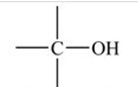 b.
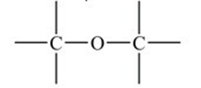 c.
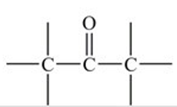 d.
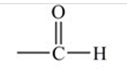 e.
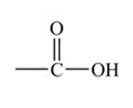 f.
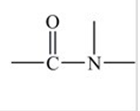
In which type of isomerism is there restricted rotation around a bond?
(Multiple Choice)
4.8/5 (87)
(87) 
In one sentence, what is the general requirement for a molecule to be optically active?
(Essay)
4.7/5 (68)
(68) What is the classification of the carbon that has an arrow pointing at it in the structure drawn below? 
(Multiple Choice)
4.9/5 (76)
(76) ________ and ________ are two polysaccharides (polymers) of glucose with slightly different linkages (alpha and beta).
(Short Answer)
4.7/5 (81)
(81) 
The three molecular units found in nucleotides are ________, ________, and ________-________ ________.
(Short Answer)
4.8/5 (81)
(81) What is the identity of the functional group circled below? 
(Multiple Choice)
4.9/5 (82)
(82) The two molecules represented below are examples of ________. 
(Multiple Choice)
4.8/5 (72)
(72) Which of the following is the product resulting from addition of HCl to CH3-CH=CH2?
(Multiple Choice)
5.0/5 (92)
(92) 
Filters
- Essay(0)
- Multiple Choice(0)
- Short Answer(0)
- True False(0)
- Matching(0)