



 Chat with AI
Exam 57: Emergency Preparedness

Exam 1: Introduction to Medical Assisting75 Questions
Exam 2: Healthcare and the Healthcare Team80 Questions
Exam 3: Professionalism and Success75 Questions
Exam 4: Interpersonal Communication97 Questions
Exam 5: Legal and Ethical Issues84 Questions
Exam 6: Basic Safety and Infection Control94 Questions
Exam 7: Patient Reception83 Questions
Exam 8: Office Equipment and Supplies156 Questions
Exam 9: Examination and Treatment Areas97 Questions
Exam 10: Written and Electronic Documents84 Questions
Exam 11: Medical Records and Documentation75 Questions
Exam 12: Electronic Health Records71 Questions
Exam 13: Telephone Techniques89 Questions
Exam 14: Patient Education75 Questions
Exam 15: Managing Medical Records74 Questions
Exam 16: Schedule Management80 Questions
Exam 17: Insurance and Billing80 Questions
Exam 18: Diagnostic Coding75 Questions
Exam 19: Procedure Coding75 Questions
Exam 20: Patient Billing and Collection75 Questions
Exam 21: Financial Management Key77 Questions
Exam 22: Organization of the Body145 Questions
Exam 23: The Integumentary System113 Questions
Exam 24: The Skeletal System161 Questions
Exam 25: The Muscular System100 Questions
Exam 26: The Cardiovascular System89 Questions
Exam 27: The Blood74 Questions
Exam 28: The Lymphatic and Immune Systems78 Questions
Exam 29: The Respiratory System91 Questions
Exam 30: The Nervous System140 Questions
Exam 31: The Urinary System88 Questions
Exam 32: The Reproductive System121 Questions
Exam 33: The Digestive System118 Questions
Exam 34: The Endocrine System80 Questions
Exam 35: Special Senses95 Questions
Exam 36: Patient Interview and History93 Questions
Exam 37: Vital Signs and Measurements90 Questions
Exam 38: Assisting With a General Physical Examination75 Questions
Exam 39: Assisting in Reproductive and Urinary Specialties75 Questions
Exam 40: Assisting in Pediatrics75 Questions
Exam 41: Assisting in Geriatrics75 Questions
Exam 42: Assisting in Other Medical Specialties75 Questions
Exam 43: Assisting With Eye and Ear Care75 Questions
Exam 44: Assisting With Minor Surgery111 Questions
Exam 45: Orientation to the Lab81 Questions
Exam 46: Electrocardiography and Pulmonary Function Testing94 Questions
Exam 47: Microbiology and Disease123 Questions
Exam 48: Processing and Testing Urine and Stool Specimens91 Questions
Exam 49: Collecting, Processing, and Testing Blood Specimens75 Questions
Exam 50: Diagnostic Imaging80 Questions
Exam 51: Principles of Pharmacology99 Questions
Exam 52: Dosage Calculation75 Questions
Exam 53: Medication Administration75 Questions
Exam 54: Physical Therapy and Rehabilitation78 Questions
Exam 55: Nutrition and Health88 Questions
Exam 56: Practice Management76 Questions
Exam 57: Emergency Preparedness109 Questions
Exam 58: Preparing for the World of Work75 Questions
Select questions type


If not contraindicated, which of the following would you include in the care of a patient in shock?

Free
(Multiple Choice)
4.9/5  (89)
(89) Correct Answer: Verified
A
What type of wound is pictured here? 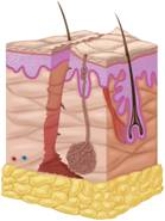
Free
(Multiple Choice)
4.8/5 (68)
(68) Correct Answer:Verified
VerifiedA
Mr. Coral called the office because he was vomiting blood. The medical term for this is ________.
Free
(Short Answer)
4.8/5 (79)
(79) Correct Answer:Verified
Verifiedhematemesis
Which of the following is an acute infection caused by Staphylococcus aureus?
(Multiple Choice)
4.9/5 (80)
(80) In which position should you place a patient before you begin cardiopulmonary resuscitation?
(Multiple Choice)
4.9/5 (84)
(84) When communicating with non-English-speaking patients during an emergency, you can use ________ throughout the process to help them understand you.
(Short Answer)
4.8/5 (77)
(77) The first priority in caring for a patient with a severe head injury is to ____.
(Multiple Choice)
4.9/5 (71)
(71) Which of the following is the appropriate care for a spider bite?
(Multiple Choice)
5.0/5 (88)
(88) Which of the following results from insufficient blood volume in the circulatory system?
(Multiple Choice)
4.9/5 (84)
(84) The condition in which the body's fluid intake is not sufficient to meet its fluid needs because of vomiting, excessive heat and sweating, diarrhea, or lack of food or fluid intake is called ________.
(Short Answer)
4.9/5 (72)
(72) Which of the following is the first priority when caring for multiple injuries?
(Multiple Choice)
4.8/5 (89)
(89) As part of your patient education about first aid, you should inform patients about the ________ laws, which help protect people who respond, in good faith, to medical emergencies but have no medical training.
(Short Answer)
4.8/5 (86)
(86) The immediate care that is given to someone who is injured or suddenly becomes ill, before complete medical care can be obtained, is known as ________.
(Short Answer)
4.8/5 (85)
(85) A (n) ________ is a jarring injury to the brain and is the most common type of head injury.
(Short Answer)
4.8/5 (75)
(75) The most common cause of cardiac arrest, during which the heart's rhythm becomes chaotic and the heart does not pump blood, is called ________ (VF).
(Short Answer)
4.8/5 (62)
(62) Which of the following steps would you include if a patient has ingested poison but is alert and not having convulsions?
(Multiple Choice)
4.7/5 (98)
(98) When educating the parents of small children, teach them how to ________ their home for children of various ages.
(Short Answer)
4.9/5 (79)
(79) 
Filters
- Essay(0)
- Multiple Choice(0)
- Short Answer(0)
- True False(0)
- Matching(0)