



 Chat with AI
Exam 13: Nuclear Magnetic Resonance Spectroscopy

Exam 1: Introduction and Review127 Questions
Exam 2: Structure and Properties of Organic Molecules129 Questions
Exam 3: Structure and Stereochemistry of Alkanes129 Questions
Exam 4: The Study of Chemical Reactions128 Questions
Exam 5: Stereochemistry128 Questions
Exam 6: Alkyl Halides: Nucleophilic Substitution and Elimination132 Questions
Exam 7: Structure and Synthesis of Alkenes128 Questions
Exam 8: Reactions of Alkenes132 Questions
Exam 9: Alkynes124 Questions
Exam 10: Structure and Synthesis of Alcohols132 Questions
Exam 11: Reactions of Alcohols124 Questions
Exam 12: Infrared Spectroscopy and Mass Spectrometry120 Questions
Exam 13: Nuclear Magnetic Resonance Spectroscopy130 Questions
Exam 14: Ethers, Epoxides, and Thioethers127 Questions
Exam 15: Conjugated Systems, Orbital Symmetry, and Ultraviolet Spectroscopy130 Questions
Exam 16: Aromatic Compounds128 Questions
Exam 17: Reactions of Aromatic Compounds129 Questions
Exam 18: Ketones and Aldehydes132 Questions
Exam 19: Amines129 Questions
Exam 20: Carboxylic Acids125 Questions
Exam 21: Carboxylic Acid Derivatives128 Questions
Exam 22: Condensations and Alpha Substitutions of Carboxyl Compounds125 Questions
Exam 23: Carbohydrates and Nucleic Acids125 Questions
Exam 24: Amino Acids, Peptides, and Proteins127 Questions
Exam 25: Lipids127 Questions
Exam 26: Synthetic Polymers128 Questions
Select questions type


Compound I has a molecular formula of C7H16. In 13C NMR, compound I gave 3 peaks and in 1H NMR it also gave 3 peaks, a doublet, a triplet and a multiplet. Provide a structure for compound I.
(Essay)
4.7/5  (73)
(73) On a 90 MHz spectrometer, calculate the frequency at which a proton absorbs if it appears at 4.20 ppm.
(Short Answer)
4.9/5 (76)
(76) Why is carbon-carbon splitting typically not seen in 13C NMR spectra?
(Essay)
4.9/5 (88)
(88) How might the proton spectrum of ultrapure dimethylamine, (CH3)2NH, differ from the spectrum of this compound to which D2O has been added?
(Essay)
4.9/5 (71)
(71) Provide a structure that is consistent with the data below.
C7H14O2
IR (cm-1): 2950, 1740
1H NMR ( d): 2.3 (2H, q), 1.0 (3H, t), 0.9 (9H, s)
13C NMR (d ): 185 (s), 78 (s), 29 (t), 14 (q), 12 (q)
(Essay)
4.9/5 (82)
(82) Describe the number of signals and their splitting in the 1H NMR spectrum of (CH3)2CHOCH3.
(Multiple Choice)
4.8/5 (88)
(88) The energy difference between the allowed spin states for an 1H nucleus is ________ the strength of the external magnetic field in which it is placed.
(Multiple Choice)
4.8/5 (72)
(72) How many peaks appear in the proton spin decoupled 13C NMR spectrum of the compound below? 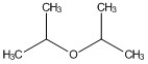
(Short Answer)
4.9/5 (92)
(92) How many peaks appear in the proton spin decoupled 13C NMR spectrum of the compound below? 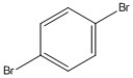
(Short Answer)
4.8/5 (74)
(74) 
Filters
- Essay(0)
- Multiple Choice(0)
- Short Answer(0)
- True False(0)
- Matching(0)