



 Chat with AI
Exam 6: Alkyl Halides: Nucleophilic Substitution and Elimination

Exam 1: Introduction and Review127 Questions
Exam 2: Structure and Properties of Organic Molecules129 Questions
Exam 3: Structure and Stereochemistry of Alkanes129 Questions
Exam 4: The Study of Chemical Reactions128 Questions
Exam 5: Stereochemistry128 Questions
Exam 6: Alkyl Halides: Nucleophilic Substitution and Elimination132 Questions
Exam 7: Structure and Synthesis of Alkenes128 Questions
Exam 8: Reactions of Alkenes132 Questions
Exam 9: Alkynes124 Questions
Exam 10: Structure and Synthesis of Alcohols132 Questions
Exam 11: Reactions of Alcohols124 Questions
Exam 12: Infrared Spectroscopy and Mass Spectrometry120 Questions
Exam 13: Nuclear Magnetic Resonance Spectroscopy130 Questions
Exam 14: Ethers, Epoxides, and Thioethers127 Questions
Exam 15: Conjugated Systems, Orbital Symmetry, and Ultraviolet Spectroscopy130 Questions
Exam 16: Aromatic Compounds128 Questions
Exam 17: Reactions of Aromatic Compounds129 Questions
Exam 18: Ketones and Aldehydes132 Questions
Exam 19: Amines129 Questions
Exam 20: Carboxylic Acids125 Questions
Exam 21: Carboxylic Acid Derivatives128 Questions
Exam 22: Condensations and Alpha Substitutions of Carboxyl Compounds125 Questions
Exam 23: Carbohydrates and Nucleic Acids125 Questions
Exam 24: Amino Acids, Peptides, and Proteins127 Questions
Exam 25: Lipids127 Questions
Exam 26: Synthetic Polymers128 Questions
Select questions type


Arrange the following substrates in order of their increasing SN2 reactivity with NaCN:
bromoethane, 1-chloro-3,3-dimethylpentane, 1-chloro-2,2-dimethylpentane, and 2-bromo-2-methylpentane.

Free
(Essay)
4.9/5  (71)
(71) Correct Answer: Verified
2-bromo-2-methylpentane < 1-chloro-2,2-dimethylpentane < 1-chloro-3,3-dimethylpentane < bromoethane
Which is more nucleophilic, t-butoxide or ethoxide? Explain.
Free
(Essay)
4.9/5 (73)
(73) Correct Answer:Verified
VerifiedEthoxide is the better nucleophile. The steric bulk of t-butoxide decreases its effectiveness as a nucleophile.
Provide the structure of isopropyl iodide.
Free
(Short Answer)
4.7/5 (86)
(86) Correct Answer:Verified
Verified(CH3)2CHI
Which of the following alkyl chlorides will undergo SN2 reaction most readily?
(Multiple Choice)
4.9/5 (77)
(77) The following structure is a proteasome inhibitor that may find application in treating cervical cancer (J. Med. Chem. , 449). The halides in this structure may be classified as ________ and ________. 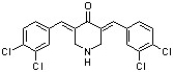
(Multiple Choice)
4.9/5 (77)
(77) Which of the compounds below undergoes solvolysis in aqueous ethanol most rapidly?
(Multiple Choice)
4.7/5 (65)
(65) Draw the highest energy transition state in the solvolysis of (CH3)3CI in CH3OH.
(Essay)
4.8/5 (81)
(81) Do all primary alkyl iodides undergo SN2 reactions with sodium cyanide in DMSO at identical rates? Explain.
(Essay)
4.9/5 (66)
(66) Predict the structure of the expected product for the following reaction. 
(Essay)
4.7/5 (88)
(88) Which diastereomer of 1-bromo-4-t-butylcyclohexane, the cis or the trans, undergoes elimination more rapidly when treated with sodium ethoxide? Explain your answer.
(Essay)
4.9/5 (77)
(77) When 2,2-dimethylbutane is subjected to free-radical chlorination, ________ distinct monochlorinated products are possible and ________ of these contain asymmetric carbon atoms.
(Multiple Choice)
4.8/5 (77)
(77) Rank the following molecules in order of increasing relative rate of SN1 solvolysis with methanol and heat (slowest to fastest reacting). 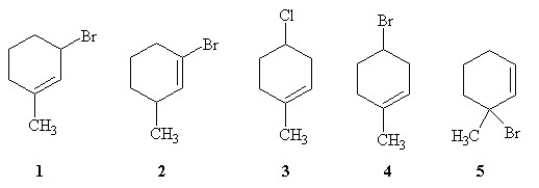
(Multiple Choice)
4.9/5 (66)
(66) Predict the two most likely mechanisms which occur when 2-iodohexane is heated in ethanol.
(Multiple Choice)
4.9/5 (74)
(74) Show how the following reaction might be constructed using an SN2 reaction by drawing structures for the starting materials. 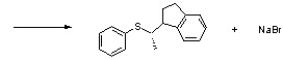
(Essay)
4.9/5 (80)
(80) The major product which results when 2-chloro-2-methylpentane is heated in ethanol is an ether. From which mechanistic pathway does this ether arise?
(Multiple Choice)
4.8/5 (81)
(81) In which of the following mechanisms (SN1, SN2, E1, E2) are alkenes the major reaction products?
(Multiple Choice)
4.8/5 (76)
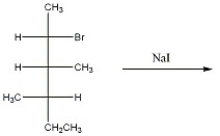
(76) 

Filters
- Essay(0)
- Multiple Choice(0)
- Short Answer(0)
- True False(0)
- Matching(0)