



 Chat with AI
Exam 20: Carboxylic Acids

Exam 1: Introduction and Review127 Questions
Exam 2: Structure and Properties of Organic Molecules129 Questions
Exam 3: Structure and Stereochemistry of Alkanes129 Questions
Exam 4: The Study of Chemical Reactions128 Questions
Exam 5: Stereochemistry128 Questions
Exam 6: Alkyl Halides: Nucleophilic Substitution and Elimination132 Questions
Exam 7: Structure and Synthesis of Alkenes128 Questions
Exam 8: Reactions of Alkenes132 Questions
Exam 9: Alkynes124 Questions
Exam 10: Structure and Synthesis of Alcohols132 Questions
Exam 11: Reactions of Alcohols124 Questions
Exam 12: Infrared Spectroscopy and Mass Spectrometry120 Questions
Exam 13: Nuclear Magnetic Resonance Spectroscopy130 Questions
Exam 14: Ethers, Epoxides, and Thioethers127 Questions
Exam 15: Conjugated Systems, Orbital Symmetry, and Ultraviolet Spectroscopy130 Questions
Exam 16: Aromatic Compounds128 Questions
Exam 17: Reactions of Aromatic Compounds129 Questions
Exam 18: Ketones and Aldehydes132 Questions
Exam 19: Amines129 Questions
Exam 20: Carboxylic Acids125 Questions
Exam 21: Carboxylic Acid Derivatives128 Questions
Exam 22: Condensations and Alpha Substitutions of Carboxyl Compounds125 Questions
Exam 23: Carbohydrates and Nucleic Acids125 Questions
Exam 24: Amino Acids, Peptides, and Proteins127 Questions
Exam 25: Lipids127 Questions
Exam 26: Synthetic Polymers128 Questions
Select questions type


Provide a detailed, stepwise mechanism to show how PhCHO is formed by the reaction of PhCOCl with LiAlH [O(CH3)3]3.

Free
(Essay)
4.8/5  (74)
(74) Correct Answer: Verified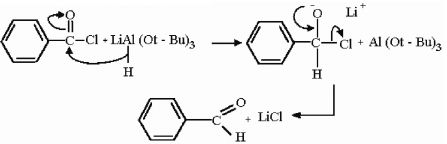
An acid which could not be prepared from an organic halide by carboxylation of the Grignard reagent is:
Free
(Multiple Choice)
4.8/5 (72)
(72) Correct Answer:Verified
VerifiedD
Provide the major organic product of the following reaction sequence. 
Free
(Essay)
4.8/5 (75)
(75) Correct Answer:Verified
Verified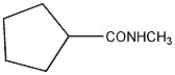
An unknown compound is insoluble in water but dissolves in sodium bicarbonate with a release of carbon dioxide bubbles. The compound is almost certainly:
(Multiple Choice)
4.9/5 (86)
(86) 

Deduce a reasonable structure for the compound which exhibits the following spectroscopic data.
C5H9ClO2: IR: 2700-3400 cm-1 (broad), 1710 cm-1; 1H NMR: - 1.40 (6H, singlet), 3.60 (2H, singlet), 10.1 (1H, singlet) ppm.
(Essay)
4.7/5 (71)
(71) Which of the following conditions will drive the equilibrium of the Fischer esterification towards ester formation?
(Multiple Choice)
4.9/5 (84)
(84) Carboxylic acids can be made from Grignards by treating the Grignard reagents with:
(Multiple Choice)
4.8/5 (67)
(67) 



What salt results from the reaction of benzoic acid with potassium hydroxide?
(Short Answer)
4.9/5 (74)
(74) What are the products of the reaction of benzoic acid with thionyl chloride?
(Essay)
5.0/5 (90)
(90) After completing the synthesis of 3-methylpentanoic acid, which of the following treatments will neutralize the mineral acids and facilitate the distribution of the organic acid from the organic layer to the aqueous extraction layer?
(Multiple Choice)
4.8/5 (75)
(75) What compound is produced when cyclohexene is treated with concentrated KMnO4?
(Multiple Choice)
4.8/5 (91)
(91) Suggest a sequence of synthetic steps through which phenylacetic acid can be prepared from toluene and in which Grignard chemistry is employed.
(Essay)
4.9/5 (66)
(66) Beta-keto acids are unusually unstable and will lose the carboxylate group under certain conditions where both a general acid and base are involved. During this process, CO2 is lost and the original beta-keto acid is converted into a ketone. For the following reaction, show a stepwise mechanism, with electron pushing arrows, in the formation of the products. Make special note of any resonance stabilized intermediates in this reaction. 
(Essay)
4.9/5 (85)
(85) 
Filters
- Essay(0)
- Multiple Choice(0)
- Short Answer(0)
- True False(0)
- Matching(0)