



 Chat with AI
Exam 19: Carboxylic Anhydrides, Esters, and Amides

Exam 1: Matter, Energy, and Measurement143 Questions
Exam 2: Atoms133 Questions
Exam 3: Chemical Bonds140 Questions
Exam 4: Chemical Reactions140 Questions
Exam 5: Gases, Liquids, and Solids132 Questions
Exam 6: Solutions and Colloids153 Questions
Exam 7: Reaction Rates and Chemical Equilibrium103 Questions
Exam 8: Acids and Bases197 Questions
Exam 9: Nuclear Chemistry155 Questions
Exam 10: Organic Chemistry70 Questions
Exam 11: Alkanes142 Questions
Exam 12: Alkenes and Alkynes123 Questions
Exam 13: Benzene and Its Derivatives60 Questions
Exam 14: Alcohols, Ethers, and Thiols122 Questions
Exam 15: Chirality: the Handedness of Molecules92 Questions
Exam 16: Amines89 Questions
Exam 17: Aldehydes and Ketones101 Questions
Exam 18: Carboxylic Acids115 Questions
Exam 19: Carboxylic Anhydrides, Esters, and Amides117 Questions
Exam 20: Carbohydrates103 Questions
Exam 21: Lipids132 Questions
Exam 22: Proteins128 Questions
Exam 23: Enzymes62 Questions
Exam 24: Chemical Communications: Neurotransmitters and Hormones89 Questions
Exam 25: Nucleotides, Nucleic Acids, and Heredity121 Questions
Exam 26: Gene Expression and Protein Synthesis129 Questions
Exam 27: Bioenergetics: How the Body Converts Food to Energy140 Questions
Exam 28: Specific Catabolic Pathways: Carbohydrate, Lipid, and Protein Metabolism104 Questions
Exam 29: Biosynthetic Pathways67 Questions
Exam 30: Nutrition73 Questions
Exam 31: Immunochemistry142 Questions
Exam 32: Body Fluids72 Questions
Select questions type


Consider the following compound. 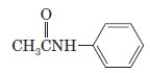 Which of the following correctly describes the reaction of this substance with water in the presence of either an acid or a base?
 (Multiple Choice)
4.8/5  (77)
(77) Methyl acetate is isomeric with which of the following compounds?
(Multiple Choice)
4.9/5 (77)
(77) Which of the following statements best describes the natural pyrethrins?
(Multiple Choice)
4.9/5 (80)
(80) Examine the following ball-and-stick model. Atoms other than carbon and hydrogen are indicated by the element symbol. 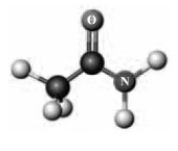 Which of the following will react with the substance?
 (Multiple Choice)
4.8/5 (92)
(92) Which of the following pairs of reactants is best suited for the synthesis of aspirin?
(Multiple Choice)
4.8/5 (79)
(79) Examine the following ball-and-stick model. Atoms other than carbon and hydrogen are indicated by the element symbol. 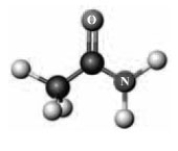 To which functional group class does this substance belong?
 (Multiple Choice)
4.9/5 (86)
(86) Ethyl ethanoate is isomeric with which of the following esters?
(Multiple Choice)
4.9/5 (80)
(80) At room temperature, which combination of reactants is commonly used to synthesize amides?
(Multiple Choice)
4.9/5 (72)
(72) 
Which of the following represents the overall transformation when a carboxylic acid is converted to an ester?
(Multiple Choice)
4.9/5 (75)
(75) What is the IUPAC name for the following compound of the following compound? 
(Multiple Choice)
4.8/5 (80)
(80) Which of the following is true when comparing the hydrolysis of esters in acidic solution with the hydrolysis of esters in basic solution?
(Multiple Choice)
4.8/5 (75)
(75) Nylon-66 is formed by the reaction between which of the following?
(Multiple Choice)
4.9/5 (86)
(86) Which of the following represents the overall transformation when a carboxylic acid is converted to an amide?
(Multiple Choice)
4.9/5 (97)
(97) What is the minimum number of oxygen atoms present in an ester?
(Multiple Choice)
4.9/5 (87)
(87) Which of the following pairs of reagents is now used industrially to synthesize PET poly(ethylene terephthalate)?
(Multiple Choice)
4.9/5 (80)
(80) Which of the following is produced by the acid-catalyzed hydrolysis of ethyl formate, also known as ethyl methanoate?
(Multiple Choice)
4.8/5 (74)
(74) Which of the following are produced when acetic anhydride reacts with methanol?
(Multiple Choice)
4.8/5 (70)
(70) 
Filters
- Essay(0)
- Multiple Choice(0)
- Short Answer(0)
- True False(0)
- Matching(0)