



 Chat with AI
Exam 11: Carbonyl Alpha-Substitution Reactions and Condensation Reactions

Exam 1: Structure and Bonding:acids and Bases40 Questions
Exam 2: Alkanes: The Nature of Organic Compounds47 Questions
Exam 3: Alkenes and Alkynes: the Nature of Organic Reactions37 Questions
Exam 4: Reactions of Alkenes and Alkynes44 Questions
Exam 5: Aromatic Compounds51 Questions
Exam 6: Sterechemistry at Tetrahedral Centers35 Questions
Exam 7: Organohalides: Nucleophilic Substitutions and Eliminations49 Questions
Exam 8: Alcohols, Phenols, Ethers, and Their Sulfur Analogs39 Questions
Exam 9: Aldehydes and Ketones: Nucleophilic Addition Reactions32 Questions
Exam 10: Carboxylic Acids and Derivatives: Nucleophilic Acyl Substitution Reactions66 Questions
Exam 11: Carbonyl Alpha-Substitution Reactions and Condensation Reactions37 Questions
Exam 12: Amines31 Questions
Exam 13: Structure Determination64 Questions
Exam 14: Biomolecules: Carbohydrates41 Questions
Exam 15: Biomolecules: Amino Acids, Peptides, and Proteins43 Questions
Exam 16: Biomolecules: Lipids and Nucleic Acids37 Questions
Exam 17: The Organic Chemistry of Metabolic Pathways35 Questions
Select questions type


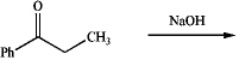

Instructions: Consider the reaction below to answer the following question(s). Refer to instructions. Write the complete stepwise mechanism for the reaction above. Show all intermediate structures and all electron flow with arrows.
 (Essay)
4.8/5  (73)
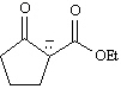
(73) 
Instructions: Draw the structure of the aldol self-condensation product of each compound for the following question(s). If a compound does not undergo aldol self-condensation, explain why it does not.
Draw and explain:

(Essay)
4.9/5 (65)
(65) Instructions: Consider the reaction below to answer the following question(s).
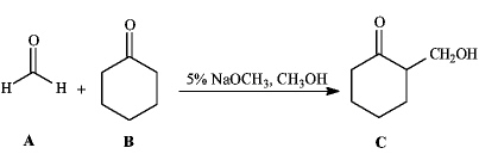 Refer to instructions. Which carbonyl compound functions as the electrophile in this reaction?
 (Short Answer)
4.8/5 (69)
(69) Which of the following does not possess an enol form? Explain your choice.
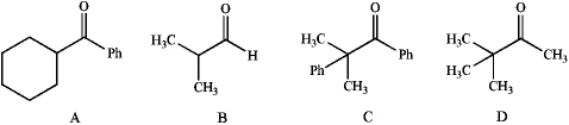
(Short Answer)
5.0/5 (85)
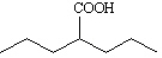
(85) How would you prepare each of the following compounds using a malonic ester synthesis? Show all intermediate structures and all reagents.
Prepare:
(Essay)
4.8/5 (69)
(69) Consider the reaction below to answer the following questions.

Correct Answer: Verified
Premises:
Responses:
(Matching)
5.0/5 (73)
(73) Instructions: Consider the structures below to answer the following question(s).
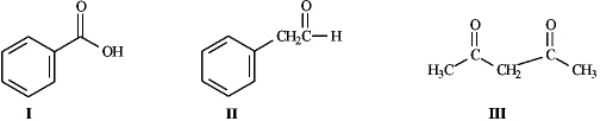 Refer to instructions. Rank the molecules above in order of increasing acidity (least acidic to most acidic).
 (Multiple Choice)
4.9/5 (85)
(85) Consider the reaction below to answer the following questions.
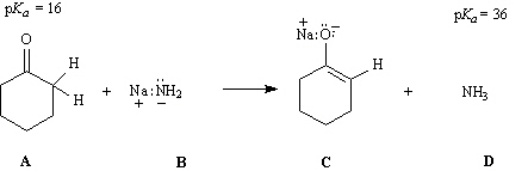 Refer to Instructions. On the structures provided above, draw arrows indicating elctron flow in the generation of the intermediate C.
 (Essay)
4.9/5 (77)
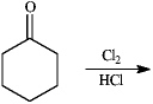
(77) Instructions: Give the major organic product(s) of each reaction or sequences of reactions for the following question(s). Show all relevant stereochemistry.
Give major product(s):
(Essay)
4.9/5 (77)
(77) How would you prepare 3-phenylpropanoic acid using a malonic ester synthesis?
(Essay)
4.8/5 (70)
(70) Consider the reaction below to answer the following questions.
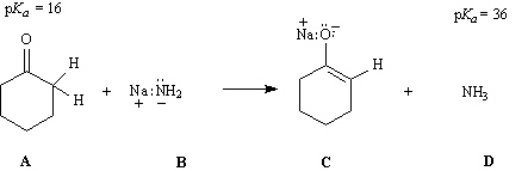 Refer to Instructions. The strongest base in the reaction is:
 (Short Answer)
5.0/5 (63)
(63) Which of the following is common to both tautomers and resonance forms of a compound?
(Multiple Choice)
4.9/5 (75)
(75) Instructions: Each of the following compounds in the following question(s) can be prepared by a mixed aldol condensation reaction.
a) Give the structures of the aldehyde and/or ketone precursors for each aldol condensation product and formulate the reaction.
b) Give the structure of the intermediate aldol product.
Refer to instructions. Use the following compound: 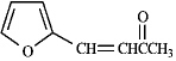
(Essay)
4.9/5 (92)
(92) Instructions: Refer to the compounds below to answer the following question(s). 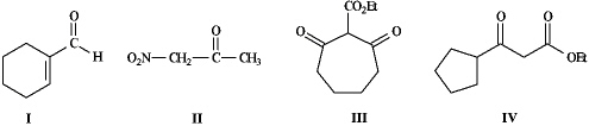 Refer to instructions. Choose the most acidic compound from Compounds I - IV. Explain your choice.
 (Essay)
4.9/5 (86)
(86) 
Filters
- Essay(0)
- Multiple Choice(0)
- Short Answer(0)
- True False(0)
- Matching(0)