



 Chat with AI
Exam 14: Biomolecules: Carbohydrates

Exam 1: Structure and Bonding:acids and Bases40 Questions
Exam 2: Alkanes: The Nature of Organic Compounds47 Questions
Exam 3: Alkenes and Alkynes: the Nature of Organic Reactions37 Questions
Exam 4: Reactions of Alkenes and Alkynes44 Questions
Exam 5: Aromatic Compounds51 Questions
Exam 6: Sterechemistry at Tetrahedral Centers35 Questions
Exam 7: Organohalides: Nucleophilic Substitutions and Eliminations49 Questions
Exam 8: Alcohols, Phenols, Ethers, and Their Sulfur Analogs39 Questions
Exam 9: Aldehydes and Ketones: Nucleophilic Addition Reactions32 Questions
Exam 10: Carboxylic Acids and Derivatives: Nucleophilic Acyl Substitution Reactions66 Questions
Exam 11: Carbonyl Alpha-Substitution Reactions and Condensation Reactions37 Questions
Exam 12: Amines31 Questions
Exam 13: Structure Determination64 Questions
Exam 14: Biomolecules: Carbohydrates41 Questions
Exam 15: Biomolecules: Amino Acids, Peptides, and Proteins43 Questions
Exam 16: Biomolecules: Lipids and Nucleic Acids37 Questions
Exam 17: The Organic Chemistry of Metabolic Pathways35 Questions
Select questions type


Instructions: Refer to the equilibrium below to answer the following question(s).  Refer to instructions. Which enantiomer of ribose is drawn, D or L, and is it the a or b anomer?
Free
(Short Answer)
4.9/5  (84)
(84) Correct Answer: Verified
D and b
Which of the following could not form a pyranose?
Free
(Multiple Choice)
4.8/5 (71)
(71) Correct Answer:Verified
VerifiedA
Instructions: Refer to the sugars below to answer the following question(s). Choose the sugar that best fits each description. There is only one correct answer for each question, but sugars may be used more than once. Indicate each answer by the corresponding letter.
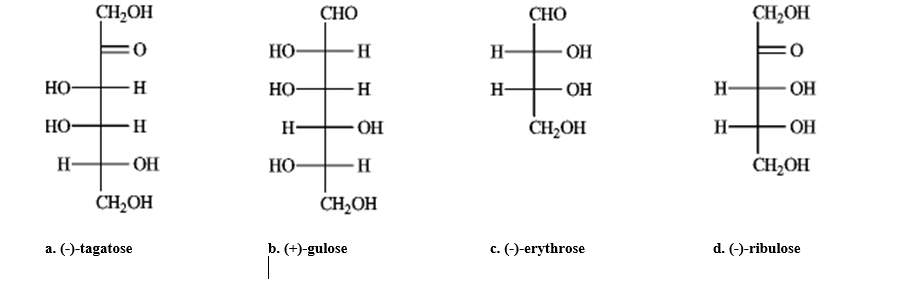 Refer to instructions. _____ oxidizes to an optically inactive aldaric acid.
Free
(Short Answer)
4.9/5 (83)
(83) Correct Answer:Verified
Verifiedc
Instructions: Draw structures for the products you would expect to obtain from reaction of b-D-galactopyranose with the listed reagents. Be sure to include all relevant stereochemistry.  b-D-galactopyranose
Draw:
b-D-galactopyranose
Draw: (Essay)
4.8/5 (76)
(76) Instructions: Refer to the monosaccharides below to answer the following question(s). Classify each sugar by type; for example, glucose is an aldohexose.
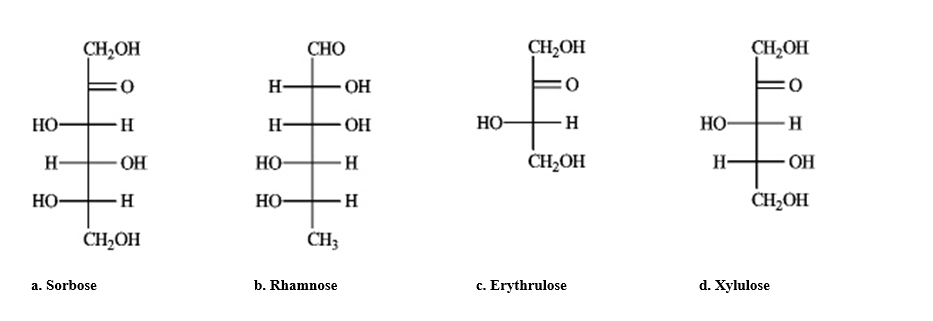 Refer to instructions. Sorbose is ____________________.
 (Short Answer)
4.9/5 (71)
(71) Refer to the carbohydrate below to answer the following questions. 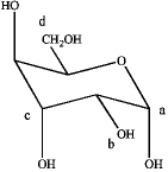 a) Which carbon in the carbohyيate is the anomenc carbon?
b) Doesthisrepresent an a or b-anomoer?
a) Which carbon in the carbohyيate is the anomenc carbon?
b) Doesthisrepresent an a or b-anomoer? (Essay)
4.9/5 (78)
(78) Instructions: Consider the reaction below to answer the following question(s). 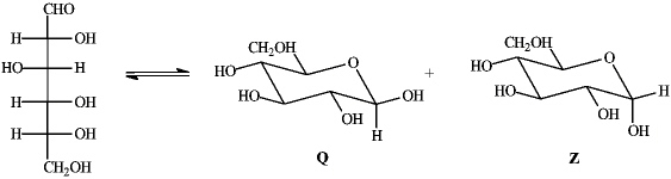 Refer to instructions. Compound Z is:
 (Multiple Choice)
4.8/5 (82)
(82) Using the following structure of D-talose as a guide, draw the structure for a-D-talopyranose. Label each ring substituent as axial or equatorial. 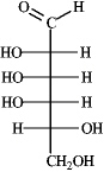
(Essay)
4.7/5 (84)
(84) Which reagent would be best suited for the transformation shown? 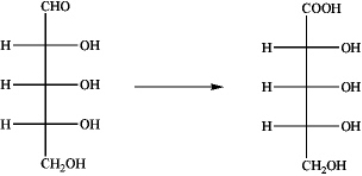
(Multiple Choice)
4.7/5 (71)
(71) Use the information below to answer the following questions. 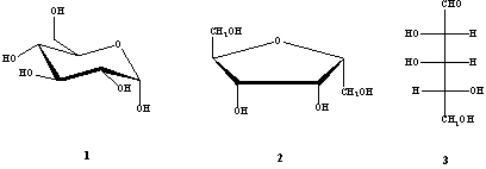 9) Which of the above represent an aldose?
a. only 1 and
b. only 1 mad 3
c. only 2 and 3
d. 1,2 and 3
b) Which of the above would not be oxidized by an aqueous solution of ?
a. only 1
b. only 2
c. only 3
d. all of these
9) Which of the above represent an aldose?
a. only 1 and
b. only 1 mad 3
c. only 2 and 3
d. 1,2 and 3
b) Which of the above would not be oxidized by an aqueous solution of ?
a. only 1
b. only 2
c. only 3
d. all of these (Essay)
4.9/5 (89)
(89) Instructions: Refer to the equilibrium below to answer the following question(s). 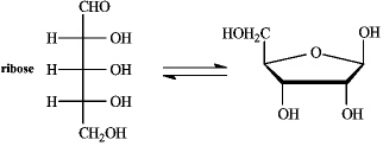 Refer to instructions. Classify ribose by carbonyl type and number of carbons.
 (Short Answer)
5.0/5 (85)
(85) Instructions: Draw structures for the products you would expect to obtain from reaction of b-D-galactopyranose with the listed reagents. Be sure to include all relevant stereochemistry.  b-D-galactopyranose
Draw:
b-D-galactopyranose
Draw: (Essay)
4.9/5 (74)
(74) 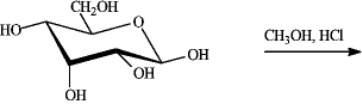
What is the relationship between D-erythrose and D-threose? 
(Multiple Choice)
4.7/5 (90)
(90) Instructions: Refer to the sugars below to answer the following question(s). Choose the sugar that best fits each description. There is only one correct answer for each question, but sugars may be used more than once. Indicate each answer by the corresponding letter.
Refer to instructions. _____ a ketose and _____ an aldose with two chirality centers
Refer to instructions. _____ a ketose and _____ an aldose with two chirality centers (Short Answer)
4.9/5 (79)
(79) Draw an aldopentose with S,S,R stereochemistries at its carbons 2 through 4.
(Essay)
4.8/5 (84)
(84) If the following compound undergoes oxidation in the presence of the appropriate enzyme, draw the structure of the likely product. 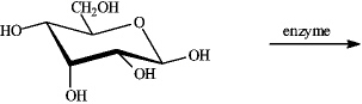
(Essay)
4.9/5 (81)
(81) 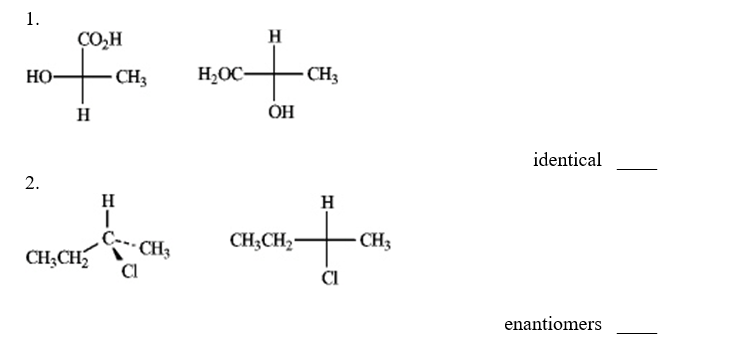
Describe the fundamental difference between the following classifications of carbohydrates.
a. monosaccharide, disaccharide, polysaccharide
b. simple sugar, complex sugar
c. ketose, aldose
d. furanose pyranose
(Essay)
4.8/5 (79)
(79) 
Filters
- Essay(0)
- Multiple Choice(0)
- Short Answer(0)
- True False(0)
- Matching(0)