



 Chat with AI
Exam 17: The Organic Chemistry of Metabolic Pathways

Exam 1: Structure and Bonding:acids and Bases40 Questions
Exam 2: Alkanes: The Nature of Organic Compounds47 Questions
Exam 3: Alkenes and Alkynes: the Nature of Organic Reactions37 Questions
Exam 4: Reactions of Alkenes and Alkynes44 Questions
Exam 5: Aromatic Compounds51 Questions
Exam 6: Sterechemistry at Tetrahedral Centers35 Questions
Exam 7: Organohalides: Nucleophilic Substitutions and Eliminations49 Questions
Exam 8: Alcohols, Phenols, Ethers, and Their Sulfur Analogs39 Questions
Exam 9: Aldehydes and Ketones: Nucleophilic Addition Reactions32 Questions
Exam 10: Carboxylic Acids and Derivatives: Nucleophilic Acyl Substitution Reactions66 Questions
Exam 11: Carbonyl Alpha-Substitution Reactions and Condensation Reactions37 Questions
Exam 12: Amines31 Questions
Exam 13: Structure Determination64 Questions
Exam 14: Biomolecules: Carbohydrates41 Questions
Exam 15: Biomolecules: Amino Acids, Peptides, and Proteins43 Questions
Exam 16: Biomolecules: Lipids and Nucleic Acids37 Questions
Exam 17: The Organic Chemistry of Metabolic Pathways35 Questions
Select questions type


Instructions: Consider the reaction below to answer the following question(s). 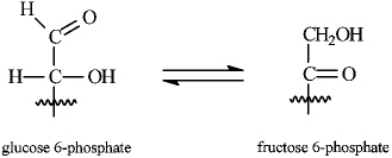 Refer to instructions. This reaction proceeds through a common enol structure. Draw the structure of the glucose/fructose enol.
Free
(Essay)
4.9/5  (89)
(89) Correct Answer: Verified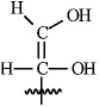
Which enzyme catalyzes the reaction shown? 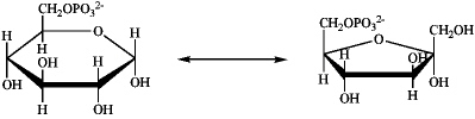
Free
(Multiple Choice)
4.7/5 (85)
(85) Correct Answer:Verified
VerifiedB
Match a term or structure from the list below to each of the following definitions or names

Correct Answer:Verified
VerifiedPremises:
Responses:


Free
(Matching)
4.7/5 (83)
(83) Correct Answer:Verified
VerifiedA coenzyme frequently encountered in transamination reactions is
(Multiple Choice)
4.9/5 (80)
(80) Draw the product of the following reaction, which is involved in the catabolism of triacylglycerols. 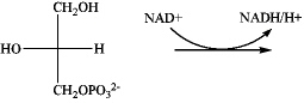
(Essay)
4.9/5 (86)
(86) Which group of small molecules best fit the boxes associated with the reaction shown?  a b
a b (Multiple Choice)
4.9/5 (77)
(77) Consider the reaction below to answer the following questions. 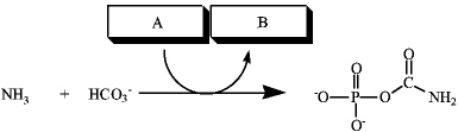 a) Which group of small molecules best fit the boxes associated with the reaction?
A B a. 2 ATP 2+ b. ATP AMP + c. ATP ADP d. NADPH
b) This reaction is part of:
a. the citric acid cycle.
b. the urea cycle.
c. a biosynthetic pathway of amino acids.
d. the catabolism of amino acid carbon
a) Which group of small molecules best fit the boxes associated with the reaction?
A B a. 2 ATP 2+ b. ATP AMP + c. ATP ADP d. NADPH
b) This reaction is part of:
a. the citric acid cycle.
b. the urea cycle.
c. a biosynthetic pathway of amino acids.
d. the catabolism of amino acid carbon (Essay)
4.8/5 (95)
(95) All of the following are byproducts of b-oxidation, except:
(Multiple Choice)
4.9/5 (75)
(75) Instructions: Consider the reaction below to answer the following question(s). 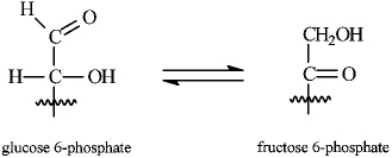 Refer to instructions. Write the mechanism for this isomerization.
 (Essay)
4.9/5 (77)
(77) Instructions: Consider the reaction below to answer the following questions: 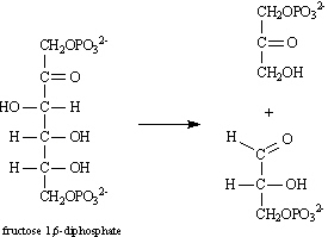 Refer to instructions. This reaction is an example of:
a. an aldol reaction
b. a Claisen reaction
c. a reverse Claisen reaction
d. areto aldol reaction
Refer to instructions. This reaction is an example of:
a. an aldol reaction
b. a Claisen reaction
c. a reverse Claisen reaction
d. areto aldol reaction (Short Answer)
4.7/5 (82)
(82) Instructions: Match a term or structure from the list below to each of the following definitions or names.
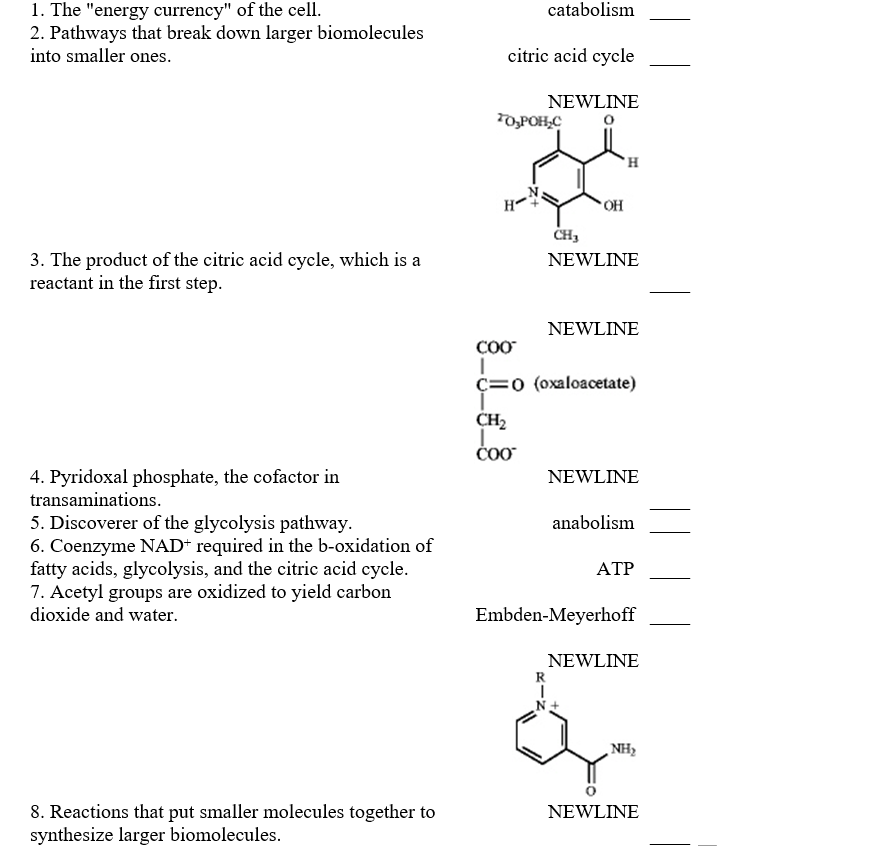
(Essay)
4.9/5 (84)
(84) During the complete catabolism of a molecule of glucose, the ultimate fate of the carbon atoms are
(Multiple Choice)
4.8/5 (86)
(86) Draw and name the major product of the reaction of a-glucose with ATP.
a-glucose-6-phosphate
(Essay)
4.8/5 (75)
(75) Instructions: Consider the reaction below to answer the following questions: 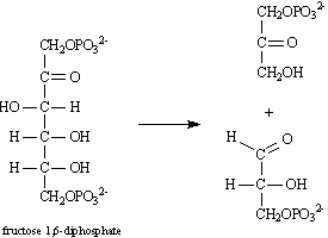 Refer to instructions. Draw arrows on the structure below showing electron flow in this reaction.
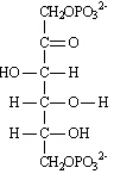
Refer to instructions. Draw arrows on the structure below showing electron flow in this reaction. (Essay)
4.9/5 (81)
(81) Which group of small molecules best fit the boxes associated with the reaction shown? 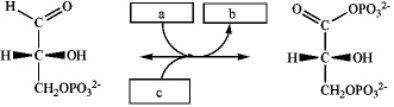 a b c
a b c (Multiple Choice)
4.9/5 (77)
(77) What product would be obtained from enzymatic transamination of 3-hydroxy-2-ketopropanoic acid? 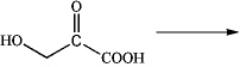
(Essay)
4.8/5 (90)
(90) 
Filters
- Essay(0)
- Multiple Choice(0)
- Short Answer(0)
- True False(0)
- Matching(0)